BlogCase Studies
The Human Bridge Between Clients and the Product

Anastasia SCustomer Success Manager
4 min read
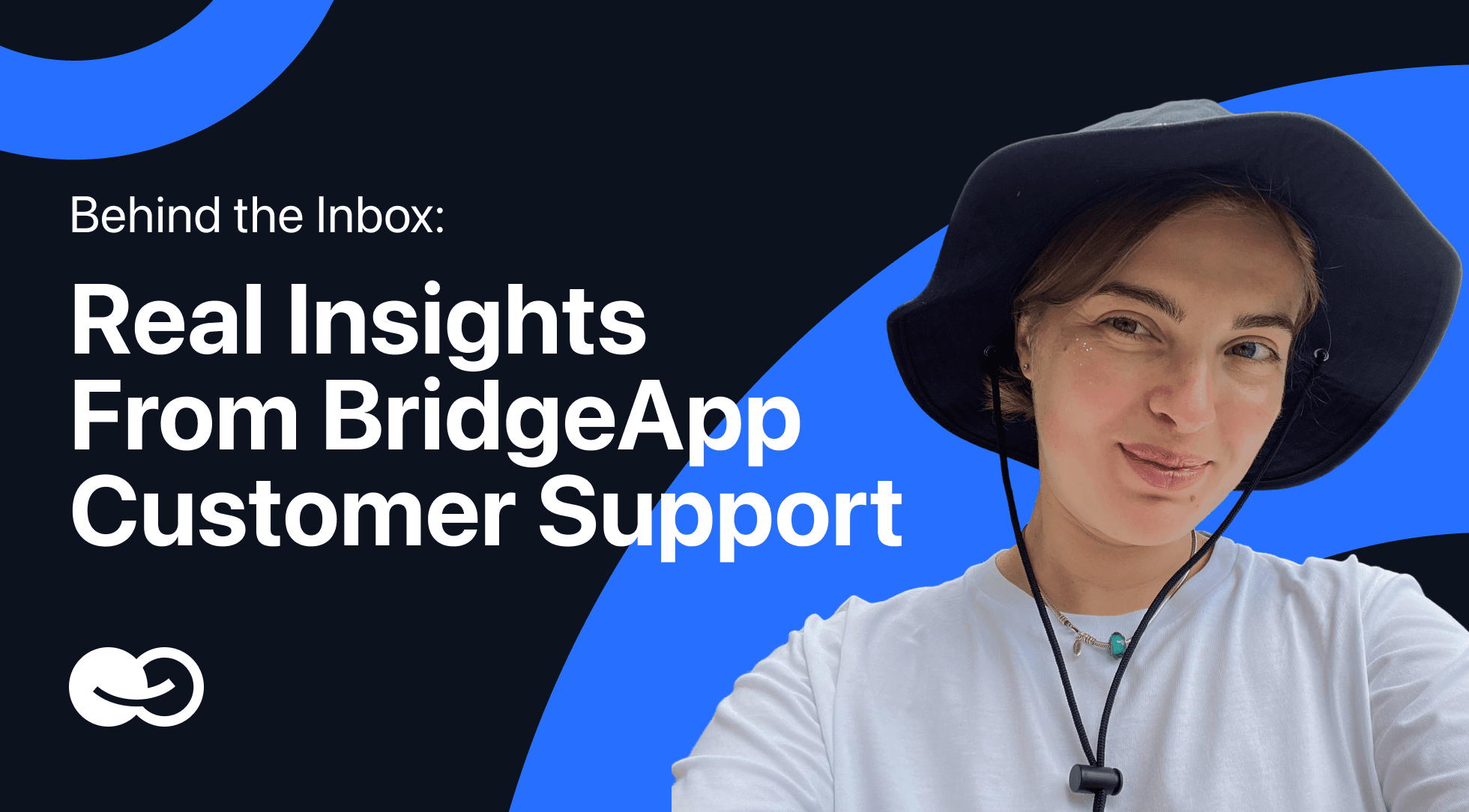
Meet Anastasia — the friendly voice behind BridgeApp Customer Support. If you’ve ever contacted BridgeApp, chances are she was the first person to greet you. She brings calm to complex issues, clarity to confusing moments, and a bit of warmth to every conversation.
Support is often the first — and sometimes the only — human touchpoint a customer has with a product. That’s why thoughtful, careful communication matters so much. The way support teams respond — fast, clear, and empathetic — can deeply influence how clients view the entire product. A great experience can turn a confused user into a loyal advocate, while a poor one can damage trust instantly.
Even in the age of advanced AI, human-first communication remains at the heart of great support. Technology can optimize processes, speed up response times, and help agents work smarter — but it can’t replicate genuine empathy.
That’s why personalization is so important. Using a customer’s name, referencing past context, and adjusting tone to their emotional state builds a real connection. And this connection becomes even more powerful when human intuition is paired with AI capabilities.
AI copilots can surface account history, highlight relevant resources, and pre-fill technical details — allowing support agents to stay fully present and focus on the human side of the conversation.
The Feedback Loop That Builds Better Products
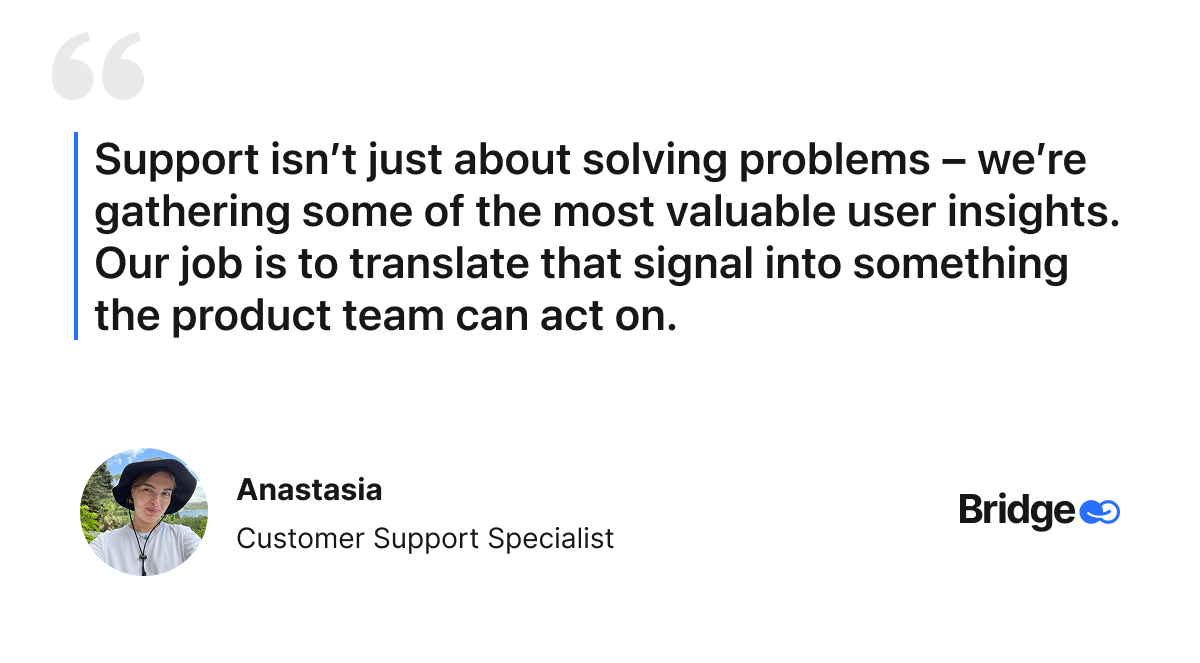
Strong cross-team communication is one of the most underrated forces behind truly customer-centric products. Support sits at the intersection of user pain points, actual product behavior, and real-world situations.
No dashboard or analytics tool captures context as precisely as the conversations support teams handle every day. That’s why structured feedback is not just operational — it’s strategic.
When insights are grouped by themes, frequency, and user impact, they become a powerful asset for product managers. Instead of guessing what matters most, product teams gain a high-resolution picture of how customers really use the product, where they struggle, and what outcomes they’re trying to achieve.
For support teams, this collaboration is an opportunity to influence the product far beyond ticket resolution. By translating user stories and repeated frustrations into actionable insights, support becomes an active contributor to product evolution.
Taking Ownership: When Things Go Wrong
Not every day goes smoothly — and that’s exactly when support work matters most. Anastasia remembers countless moments when a customer arrived frustrated or blocked by something urgent. In those situations, her first step never changes: take ownership immediately.
A sincere apology, calm reassurance, and a clear confirmation that the issue is understood set the tone for the entire interaction. From there, expectations are everything: giving approximate timeframes, outlining next steps, and promising follow-ups — then keeping that promise.
Proactive updates transform uncertainty into confidence. Even before the issue is fully resolved, customers feel supported, informed, and never left in the dark.
As Anastasia puts it:
“If something goes wrong, I take the responsibility — not the customer. My job is to guide them through the uncertainty.”
Diagnose Faster: Ask Proactive Questions Early
Great support looks smooth on the surface — but behind that smoothness lies structure. Most customers don’t provide all the details needed to diagnose an issue in their first message. That’s why being proactive isn’t optional — it’s essential.
Proactive questioning saves time, reduces friction, and shows customers that you are attentive and respectful of their time.
Sometimes a customer asks for something the product simply can’t do yet. And in those moments, the limitation itself matters far less than how you communicate it.
Anastasia recalls a client who needed an automation flow not yet supported in BridgeApp. The easy response would have been: “This feature isn’t available.”
But that closes the conversation.
Instead, she explained the limitation clearly, offered two workarounds, and recommended the closest alternative to achieve a similar outcome.
The customer didn’t just accept it — they appreciated the effort, stayed engaged, and even provided feedback that later informed the roadmap.
People don’t expect products to be perfect.
They expect support to help them move forward.
Offer Alternatives
When a feature isn’t available, the goal isn’t to say “no” — it’s to guide the customer forward. Strong, solution-oriented responses include:
- A clear and brief explanation of the limitation (without overcomplication)
- One or two practical workarounds the user can apply immediately
- The closest alternative to achieve the desired outcome
- Passing the request to the product team when it’s relevant
Providing alternatives shows initiative, expertise, and genuine investment in the customer’s success. Workarounds don’t just reduce frustration — they build trust by demonstrating your commitment to helping users progress, even when the ideal solution isn’t available yet.
Conclusion
At its core, great customer support is a partnership — between the customer, the support team (human and AI), the product team, and the technology connecting them.
AI can accelerate workflows, but it’s human clarity, empathy, and ownership that turn everyday interactions into meaningful experiences. And when support insights flow into product decisions, the entire organization becomes more aligned, more responsive, and more customer-driven.
If you need any help getting started with BridgeApp, feel free to reach out to Anastasia through our help form or at support@mathandmagic.ai — she’ll be happy to guide you.
You can also explore BridgeApp through our quick video tutorials on YouTube:
👉 https://www.youtube.com/@Bridgeforteams
A great way to get familiar with BridgeApp in just a couple of minutes.
Prefer written guidance?
Our Help Center is always here for you:
👉 https://bridgeapp.ai/resources/help-center