BlogIndustry Insights
Best Confluence Alternatives in 2026

BridgeApp Team
8 min read
A Confluence alternative is any collaboration tool that allows teams to organize documentation, internal knowledge management, and project knowledge — without the complexity or cost associated with Atlassian Confluence. As many teams face rising costs, steep learning curves, and the need for better integrations with existing tools, they're actively exploring options that better fit their unique existing workflow. This guide provides a quick comparison of the best Confluence alternatives, a streamlined selection framework, and essential migration steps to help you transition smoothly.
What Is a Confluence Alternative and Why Should You Switch?
An alternative to Confluence is any easy-to-use platform that lets your team organize multiple documents, internal knowledge base content, and project resources — without Atlassian Confluence's complexity or cost. As many teams discover, the same advanced features that make Atlassian Confluence powerful for large development teams also make it overwhelming for small teams, new teams, and anyone without significant technical knowledge.
Top 3 reasons teams switch from Atlassian Confluence
Cost — Atlassian Confluence pricing scales aggressively. Small businesses and small teams often find themselves paying for specialized features they never use, while tiered plans make it hard to predict what team collaboration actually costs at scale.
Steep Learning Curve — The learning curve for Atlassian Confluence is well-documented. Without dedicated technical expertise, most users struggle to configure spaces, manage access control, and maintain consistent content management — making adoption slow and fragile.
Integration Limitations — Many teams find that Atlassian tools work well together but create friction with existing tools outside the Atlassian ecosystem — particularly Google Docs, Google Drive, MS Teams, and modern AI tools.
The good news: the right Confluence alternative doesn't just solve these problems — it can fundamentally improve how your team handles internal knowledge management, real-time collaboration, and project management in a single workspace.
How Should I Evaluate Confluence Alternatives?
Evaluating the right Confluence alternative means checking how each collaboration tool fits your team's existing workflow, budget, security needs, and existing tools. With dozens of options available, a structured framework prevents you from getting distracted by additional features that don't serve your team's collaboration needs.
1. User Interface and Usability: Is the intuitive interface genuinely intuitive — or does it just look clean in screenshots? The best Confluence alternatives minimize the learning curve so most users can contribute to the internal knowledge base without technical knowledge or extended onboarding. A visual editor, rich text editor, and logical hierarchical organization are strong signals.
2. Pricing and Free Plan: Compare tiered plans carefully, including what's included in the free plan and where costs scale. Small teams and small businesses should pay particular attention to per-seat pricing — the difference between a free plan and a paid tier can be significant as teams grow.
3. Migration from Atlassian Confluence: Can you bring your previous versions, page structures, and attachments over cleanly? The best Confluence alternatives provide clear migration paths with version history preserved and minimal manual cleanup.
4. Integrations with Existing Tools: Does the platform connect with your existing workflow? Google Docs, Google Drive, MS Teams, Google ecosystem tools, and AI tools are the most common integration requirements. An alternative to Confluence that creates new silos is just trading one problem for another.
5. Access Control and Security: Strong access control, data sovereignty options, and compliance features are non-negotiable for development teams and regulated industries. Evaluate whether control access is granular enough for your organizational structure — and whether data sovereignty means anything beyond a marketing claim.
6. Real-Time Collaboration: Real-time collaborative editing capability — the ability for multiple documents to be edited simultaneously across team members — is now a baseline expectation, not an advanced feature.
Evaluation Checklist
- User interface — genuinely easy to use without technical expertise?
- Free plan — viable for small teams and personal use?
- Migration — can we transfer Atlassian Confluence data cleanly?
- Integrations — connects with our existing tools?
- Access control — granular enough for our content management needs?
- Real-time collaboration — supports multiple documents simultaneously?
- Data sovereignty — do we control where our team's knowledge lives?
Which Confluence Alternatives Are Best for Each Use Case?
| Platform | Cost | Open Source | Key Integrations | Migration Support | Ideal For |
|---|---|---|---|---|---|
| BridgeApp | Free plan (unlimited seats) / paid tiers | ❌ | Integrate any of your tools via MCP to build complex workflows | Full migration support | Teams wanting one platform for docs + comms + project management |
| Notion | Free (limited) / $8/user/mo | ❌ | Slack, Google Drive, Zapier | Basic import | Small teams, personal use |
| ClickUp | Free (limited) / $5/user/mo | ❌ | Slack, GitHub, Google ecosystem | Import tools | All sizes, project management focus |
| Coda | Free (limited) / $10/user/mo | ❌ | Google Drive, Slack, Zapier | Import from Google Docs | Small teams, data-heavy docs |
| Slite | $8/user/mo | ❌ | Slack, GitHub, Trello | Manual import | Small teams, basic documentation |
| MediaWiki | Free | ✅ | Various extensions | Community support | Technical teams, open source alternative |
| Obsidian | Free / $25 one-time | ✅ | Markdown, plugins | N/A | Individual personal use |
Best All-in-One Alternative: BridgeApp
For teams that want the right Confluence alternative without simply trading one steep learning curve for another, BridgeApp is the strongest option in 2026. It's the only platform on this list that treats internal knowledge management as one component of a fully unified workspace — rather than a standalone wiki platform that still requires other tools for communication, project management, and real-time collaborative editing.
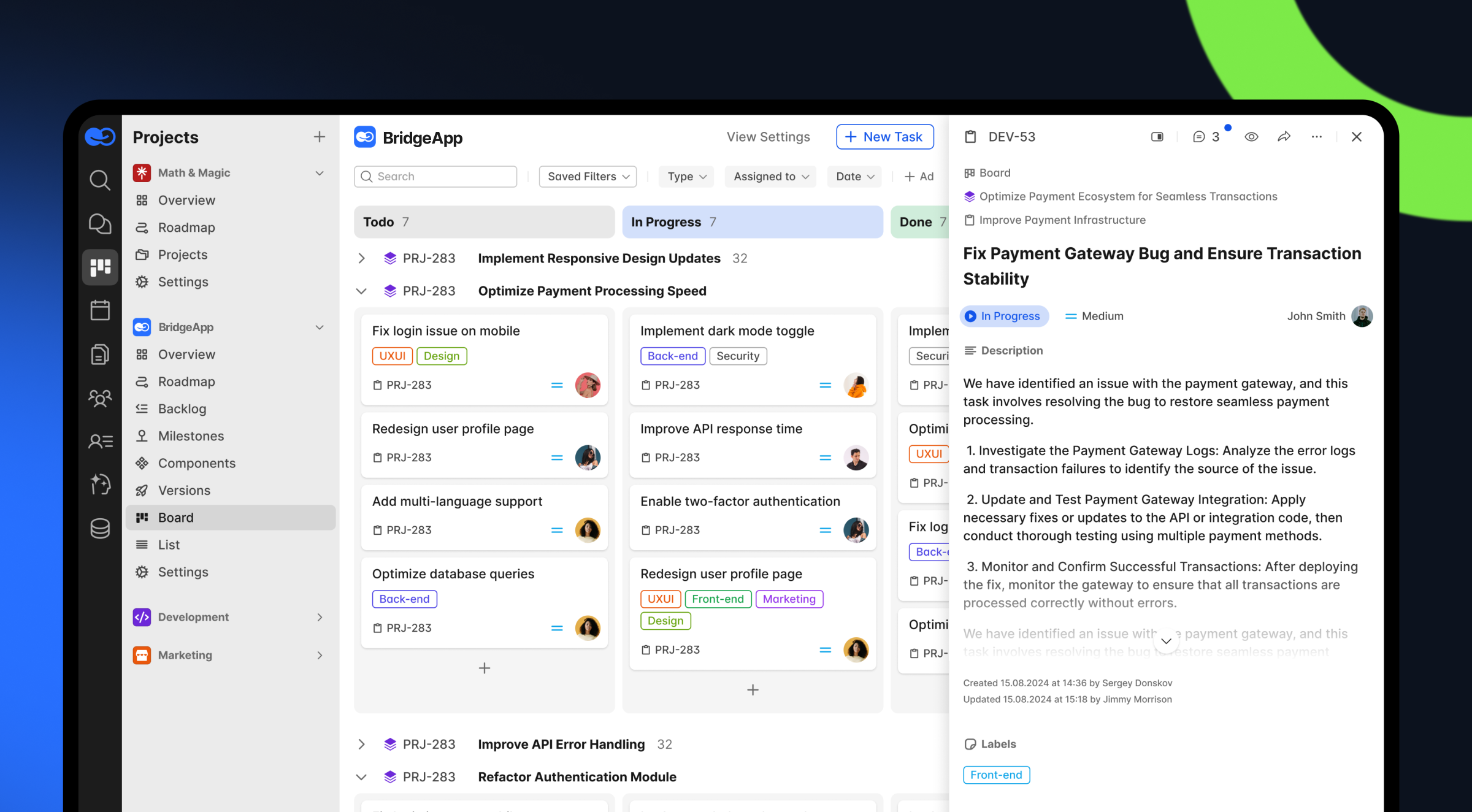
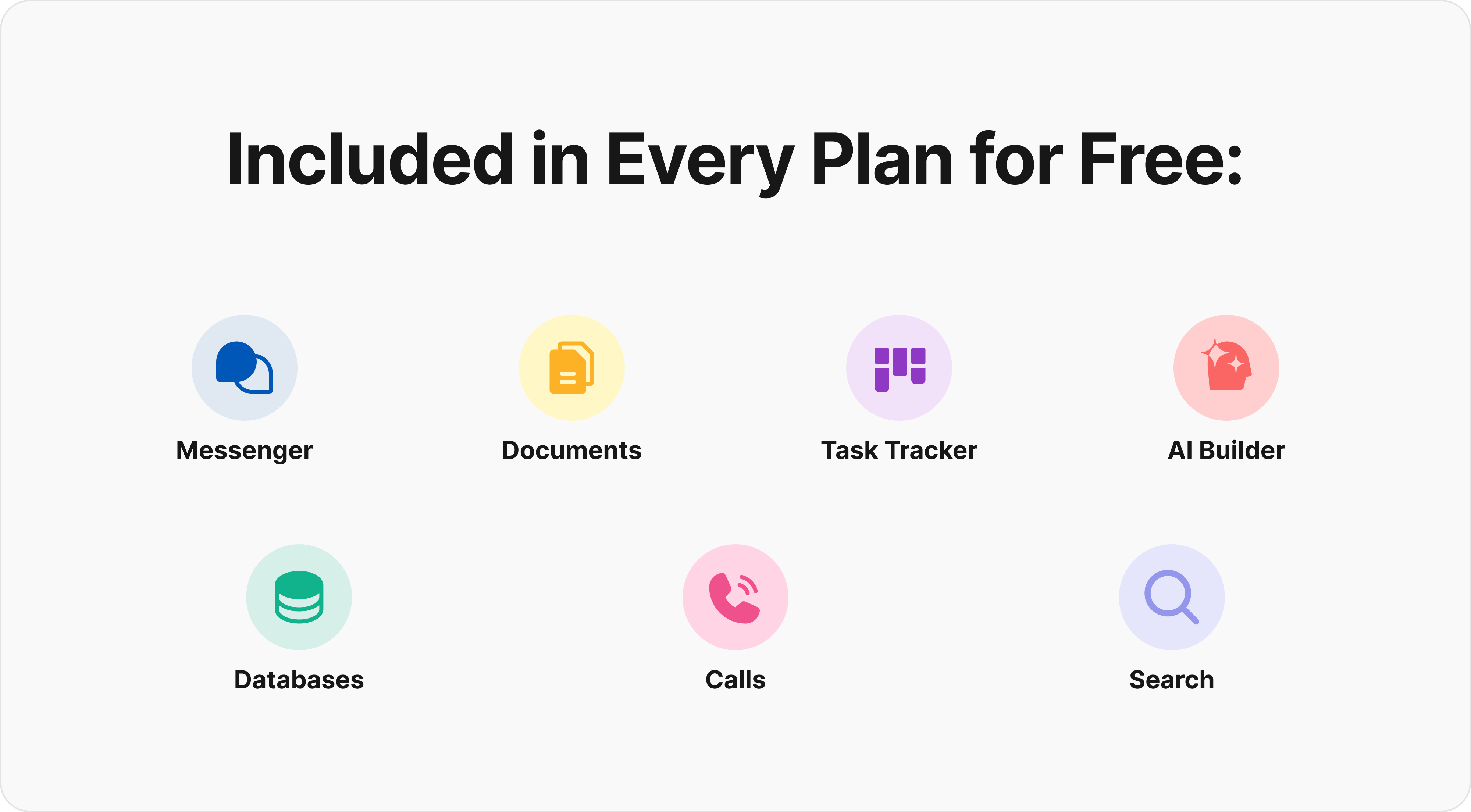
BridgeApp replaces Atlassian Confluence and 5–6 other tools simultaneously: team collaboration chat, project management tool with Kanban and backlog views, collaborative document editor with unlimited nested pages, custom databases, AI tools-powered agents, and built-in audio/video calls — all in a central hub accessible from mobile devices, desktop, or browser. Integrate any of your tools via MCP to build complex workflows powered by BridgeApp's AI engine.
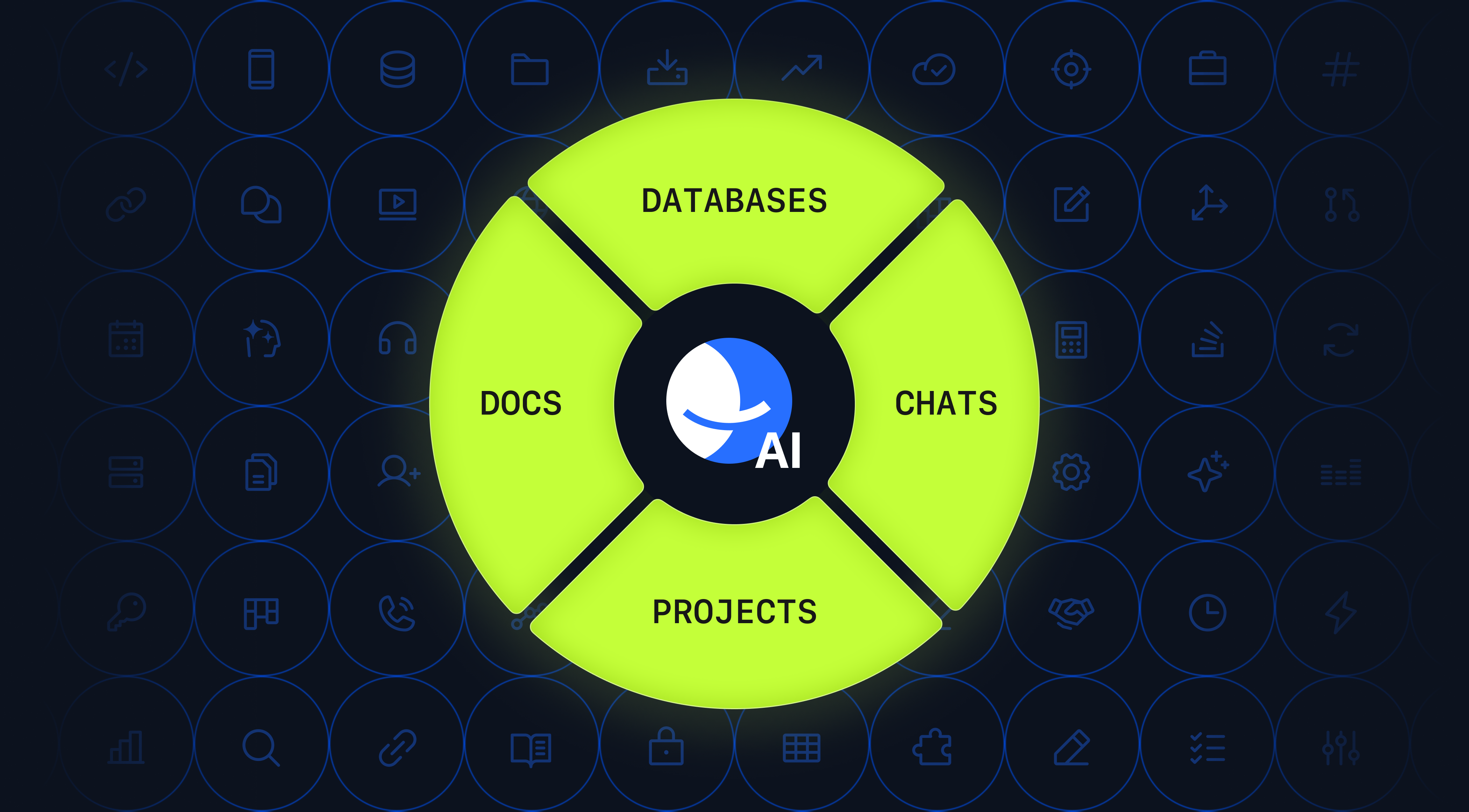
Critically, BridgeApp offers a free plan with unlimited seats — one of the very few Confluence alternatives where small teams and small businesses aren't penalized for growth.
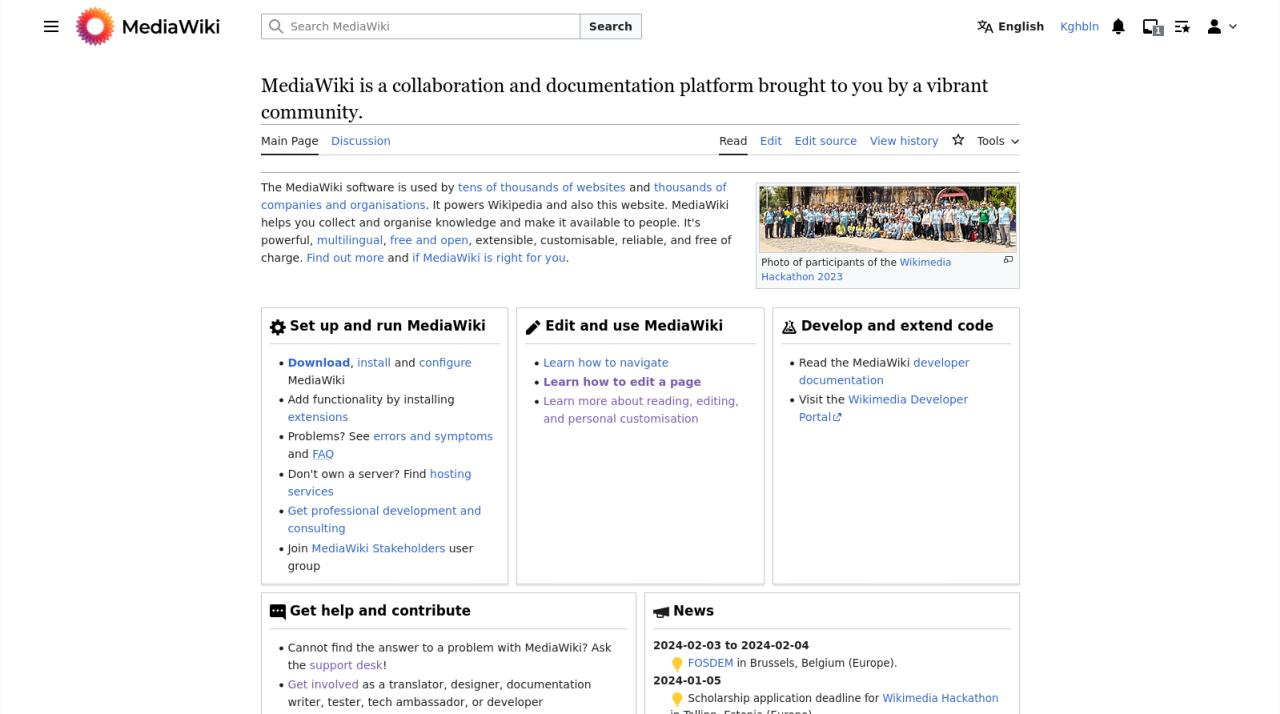
Best for Open Source Flexibility: MediaWiki
For technical teams that value customization and data sovereignty above all else, MediaWiki remains a strong open source confluence alternative. Extensive customization options via extensions give development teams full control — but expect a significant technical expertise requirement to set up and manage documents at scale.
Best for Small Teams on a Budget: Notion
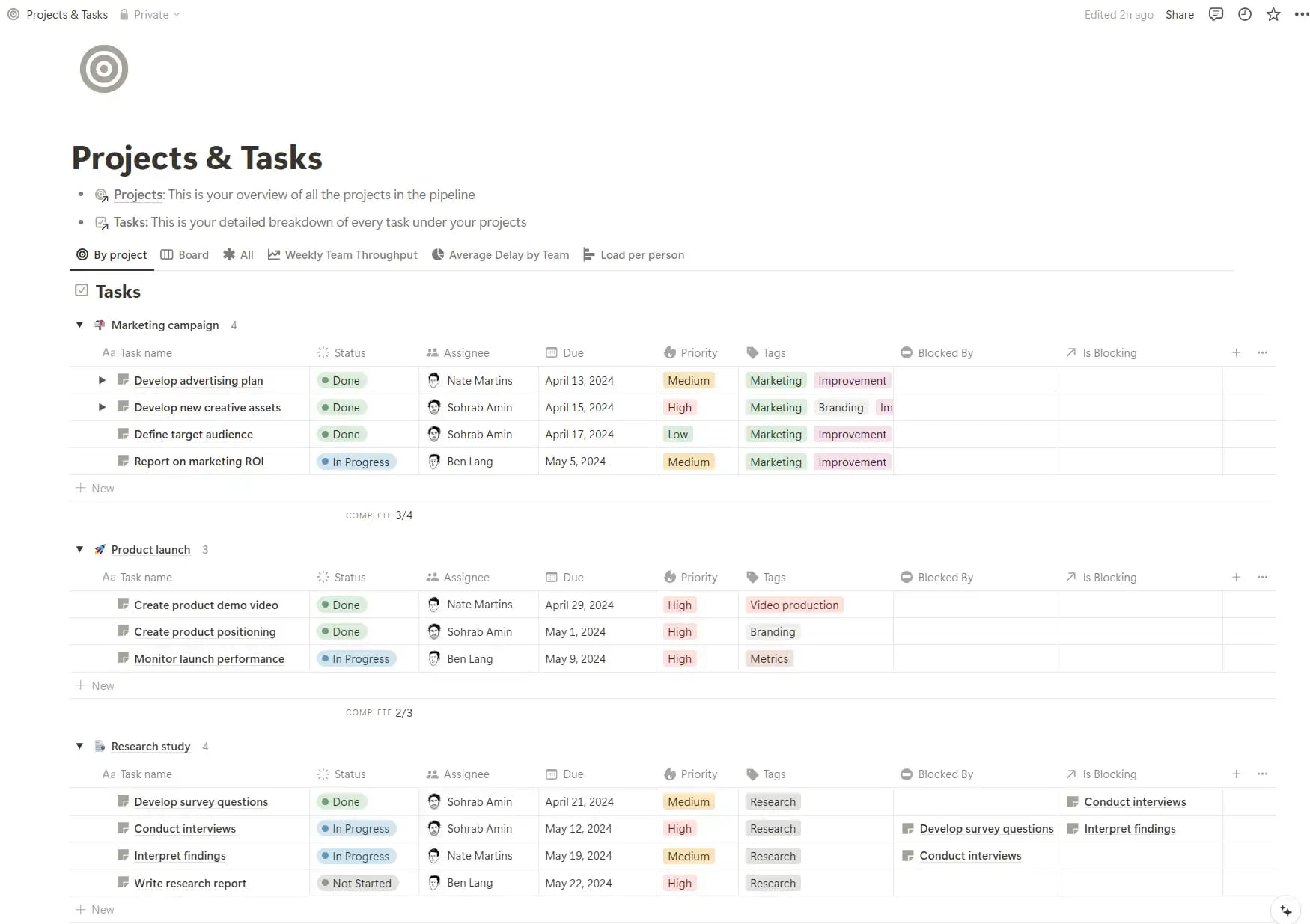
For small teams prioritizing simplicity and a free plan, Notion offers a clean visual editor, good hierarchical organization, and solid integrations with the Google ecosystem. Its learning curve is gentler than Atlassian Confluence, though it lacks features for complex access control, version history depth, and native real-time collaborative editing at scale.
Best for Project Management Focus: ClickUp
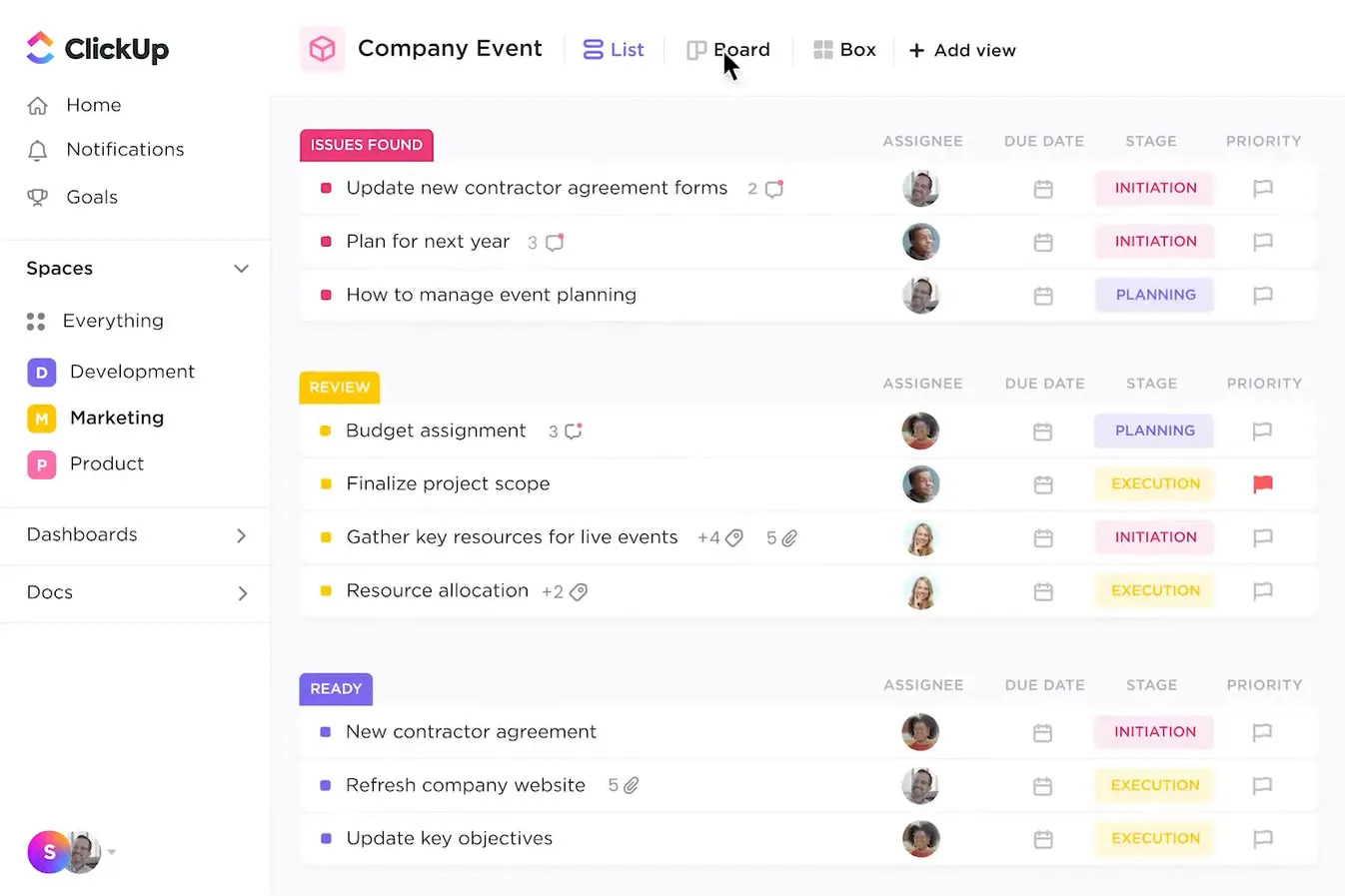
For teams where project management and basic documentation live side by side, ClickUp provides a genuinely capable one platform approach — with progress tracking, task management, and document creation in one interface. It integrates well with existing tools, including Google ecosystem apps and GitHub, making it popular with development teams.
What's the Best Way to Migrate from Confluence to a New Platform?
A smooth migration from Atlassian Confluence means protecting your team's knowledge, version history, and existing workflow — while minimizing disruption.
| Step | Action | Watch Out For |
|---|---|---|
| 1 | Export your Atlassian Confluence data — include all pages, attachments, and previous versions | Incomplete exports leave gaps in version history |
| 2 | Choose your target platform based on key features, tiered plans, and existing tools compatibility | Not all Confluence alternatives support Atlassian Confluence imports natively |
| 3 | Run trial imports with multiple sample documents to identify content management and formatting issues | Formatting inconsistencies are common — test with representative content |
| 4 | Review access control and permissions — map your Atlassian Confluence permission structure to the new platform | Missing access control settings can expose sensitive team knowledge |
| 5 | Final migration and go-live — communicate the switch, provide learning curve support, and verify all links | Broken internal links are the most common post-migration complaint |
Where BridgeApp simplifies migration: BridgeApp's migration support covers full data transfer from Atlassian Confluence, including page hierarchy, attachments, and version history. The intuitive interface and built-in rich text editor mean most users adapt quickly — reducing the re-training steep learning curve that undermines many Confluence alternatives migrations.
Top Confluence Alternatives Compared on Key Features
| Feature | BridgeApp | Notion | ClickUp | Confluence | Slite |
|---|---|---|---|---|---|
| Rich text editor | ✅ | ✅ | ✅ | ✅ | ✅ |
| Real-time collaborative editing | ✅ | ✅ | ✅ | ✅ | ✅ |
| Version history | ✅ | ✅ (limited free) | ✅ | ✅ | Limited |
| Hierarchical organization | ✅ Unlimited nesting | ✅ | ✅ | ✅ | Limited |
| Access control | ✅ Granular | Limited | ✅ | ✅ | Basic |
| Free plan | ✅ Unlimited seats | ✅ Limited | ✅ Limited | ❌ | ❌ |
| Data sovereignty | ✅ On-premise available | ❌ | ❌ | ❌ Cloud only | ❌ |
| Built-in project management | ✅ | Limited | ✅ | ❌ | ❌ |
| Built-in team communication | ✅ | ❌ | ❌ | ❌ | ❌ |
| AI tools integration | ✅ Native agents | ✅ Limited | ✅ Limited | Limited | ❌ |
| Mobile devices | ✅ | ✅ | ✅ | ✅ | ✅ |
| Markdown support | ✅ | ✅ | ✅ | Limited | ✅ |
| Open source alternative | ❌ | ❌ | ❌ | ❌ | ❌ |
The table tells a clear story: most Confluence alternatives solve one or two pain points — a better user interface, a gentler learning curve, a more accessible free plan. BridgeApp is the only option that solves the deeper structural problem: many teams don't just need a better wiki platform, they need a central hub where internal knowledge management, team collaboration, and project management exist in one platform — without requiring technical expertise to maintain.
How to Decide Which Confluence Alternative Is Right for Your Team
If you're a small team needing basic documentation + free plan: → Start with Notion or BridgeApp's free plan. Both offer a clean visual editor, solid hierarchical organization, and no upfront cost. BridgeApp adds native team collaboration and project management that Notion requires additional tools to replicate.
If you're a development team needing open source + full customization: → Evaluate MediaWiki or Obsidian. Both are genuine open source Confluence alternatives with strong markdown support and customization options — though expect a meaningful technical knowledge requirement.
If you need project management + documentation in one place: → ClickUp or BridgeApp. ClickUp handles progress tracking and basic documentation well. BridgeApp goes further by adding native team collaboration chat, AI tools, and data sovereignty options in the same workspace.
If data sovereignty and security are non-negotiable: → BridgeApp is the only mainstream Confluence alternative offering on-premise and private cloud deployment — giving development teams and regulated industries genuine control and access over where team knowledge lives.
If you're a small business wanting to consolidate multiple tools: → BridgeApp replaces Atlassian Confluence plus your communication tools, project management tool, and AI tools stack simultaneously — with a free plan that includes unlimited seats and no per-user penalty as teams grow.
FAQs: Confluence Alternatives
What is the best free Confluence alternative?
For small teams and personal use, Notion offers a capable free plan with a clean user interface and solid real-time collaborative editing. For teams that also need project management and native team collaboration in one platform, BridgeApp's free plan with unlimited seats is the stronger long-term choice — particularly as many teams outgrow Notion's limited features on the free tier.
Is there an open source alternative to Confluence?
Yes — MediaWiki and Obsidian are the most established open source confluence alternatives. MediaWiki suits technical teams managing large internal knowledge base content; Obsidian is better for individual personal use and local content management.
How do I migrate from Confluence to a new platform?
Export your Atlassian Confluence data, including previous versions and attachments, choose your target platform based on key features and existing tools compatibility, run trial imports to catch formatting issues, verify access control settings, then go live with team communication and support in place. BridgeApp's migration support handles the technical heavy lifting.
Can these alternatives integrate with Slack or MS Teams?
Most Confluence alternatives offer integrations with existing tools, including Slack and MS Teams. BridgeApp goes further by replacing the need for MS Teams or Slack as a separate tool — native team collaboration chat is built in, eliminating another integration dependency.
What's the best Confluence alternative for small teams?
For small teams prioritizing simplicity: Notion. For small teams wanting to avoid tool fragmentation: BridgeApp — which gives small businesses a central hub for docs, tasks, and communication with a free plan and unlimited seats that scale without penalty.
Are there alternatives with strong security and data sovereignty?
BridgeApp is the standout here — on-premise and private cloud deployment give teams complete data sovereignty and access control that no SaaS-only Confluence alternative can match. For development teams and regulated industries, this is often the deciding key feature.