BlogProduct Updates
BridgeApp Unveils Magic Coder: Agentic Coding Environment That Knows Your Entire System

BridgeApp Team
7 min read
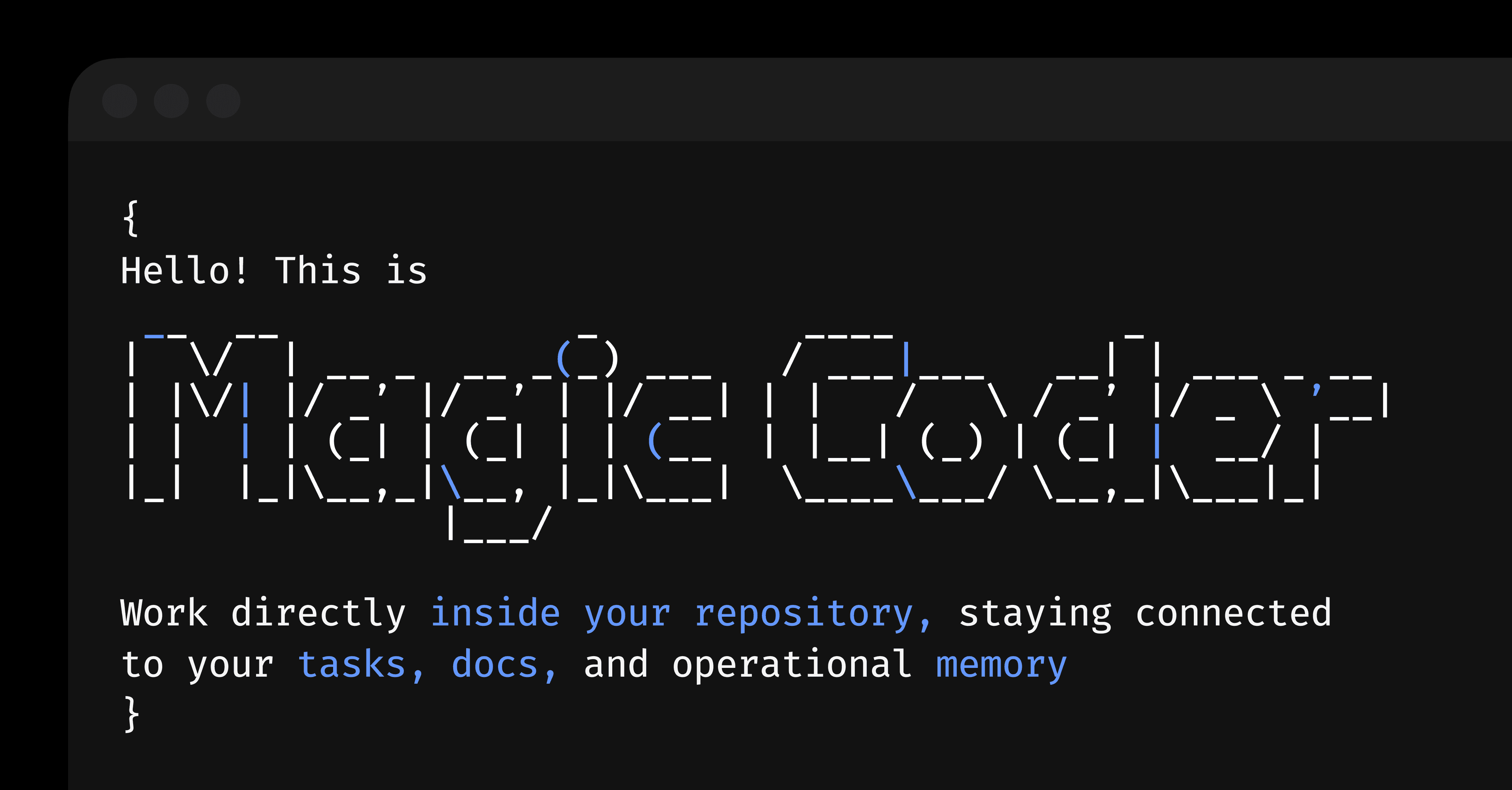
We're pulling the curtain back on Magic Coder, an agentic coding environment built directly into the BridgeApp ecosystem. The soft launch is here. The story starts earlier — with a problem the industry has been quietly ignoring.
The problem was never writing the code. It's everything after
Every engineering team has lived this. You ship fast. AI helps. The PR looks clean and merges green. Three months later, no one remembers why that module was built that way. The reasoning lived in a chat thread that scrolled off, a ticket nobody linked, a call no one wrote up. The code is still there. The context that made it maintainable is gone.
This is the real cost of AI-assisted development, and it has nothing to do with speed. Coding agents got fast. What they never got is memory of your organization — your architecture decisions, your conventions, the discussion behind the tradeoff. Every prompt starts from zero. The output is plausible, and orphaned.
Speed was never the bottleneck. What happens after was
Why we built this
BridgeApp folks have been building software for over 20 years. We know exactly how development works at scale — and we've spent that time thinking about how to encode that process into something that can run itself.
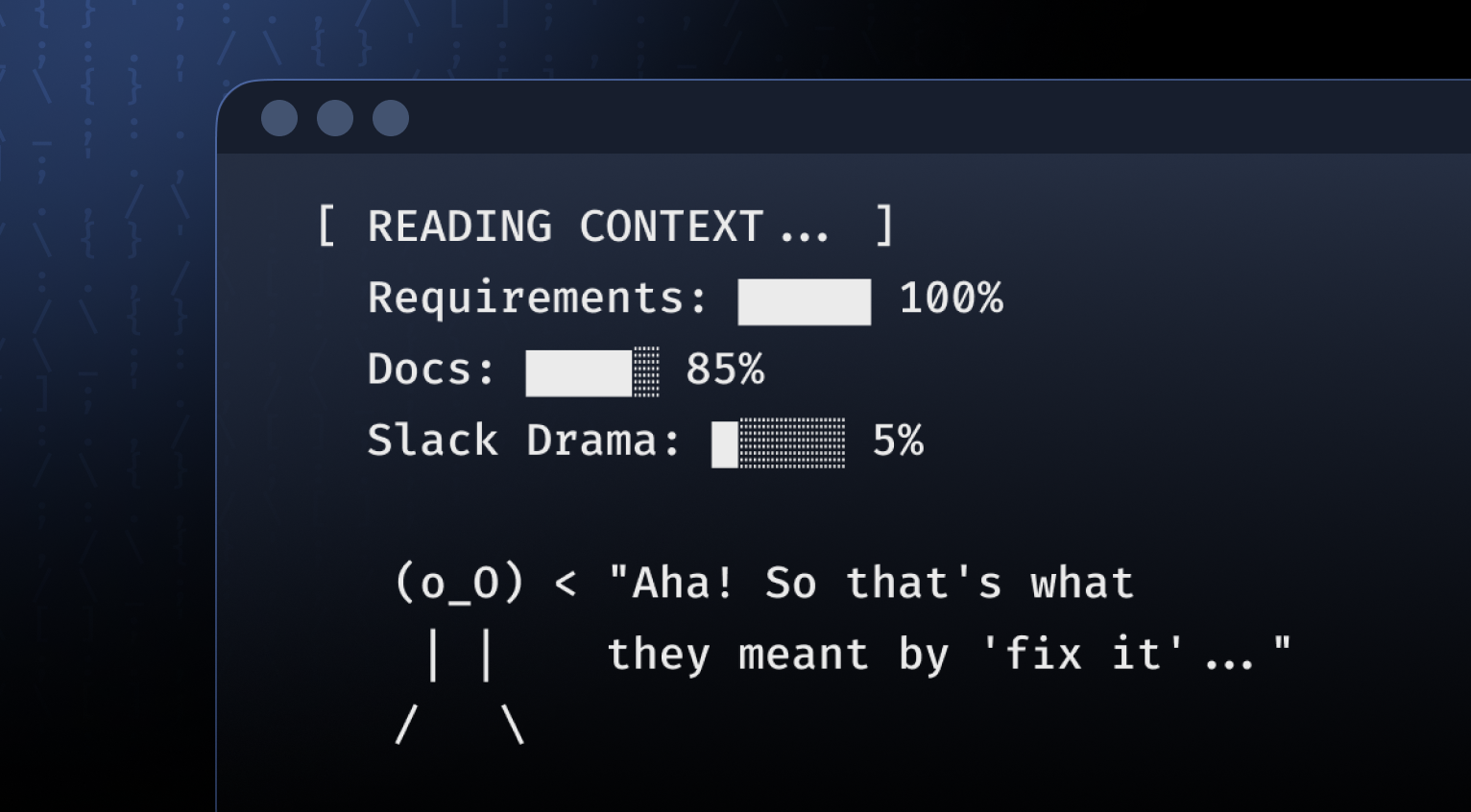
Why a standalone coding agent can't fix this
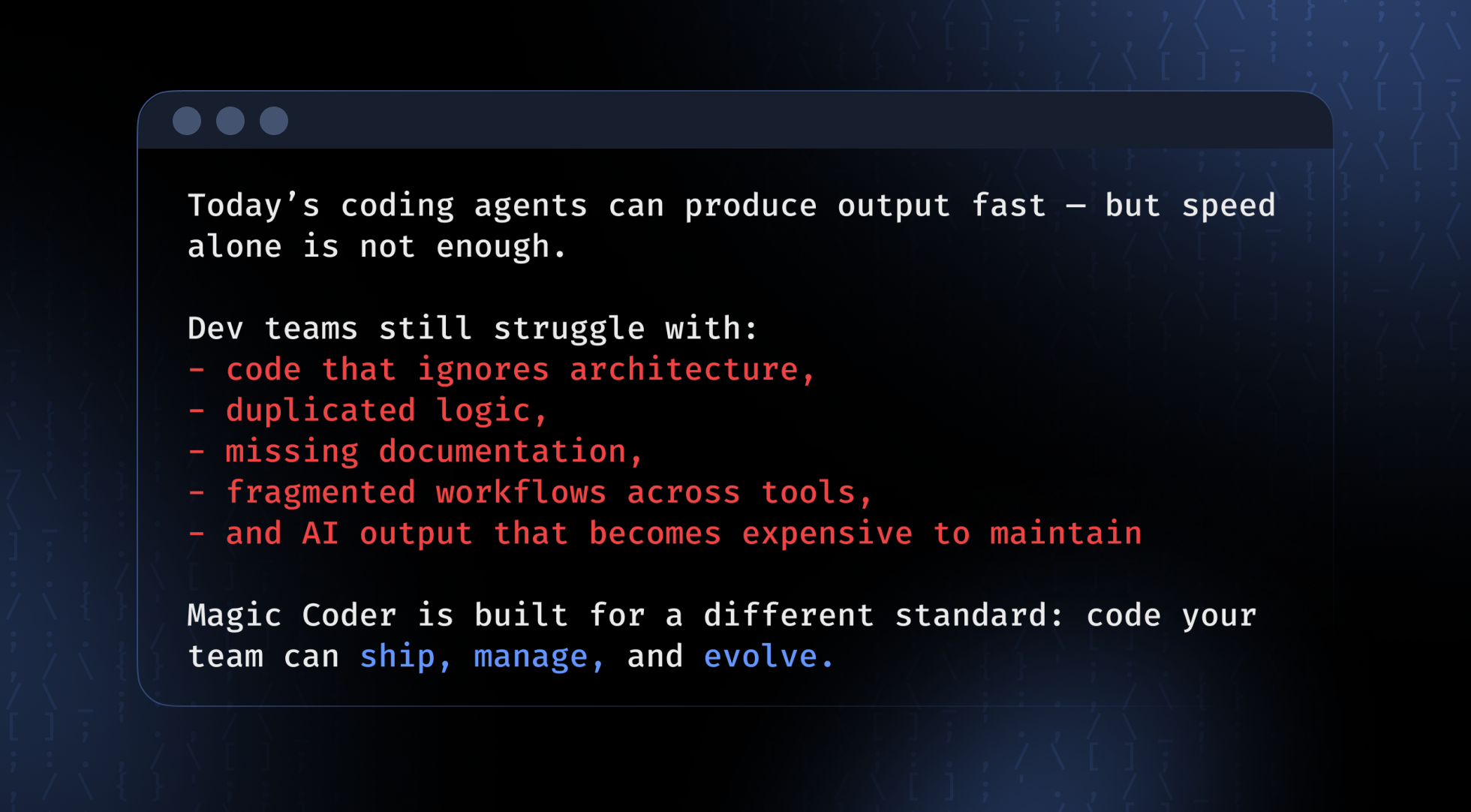
Today's coding agents can produce output fast. But dev teams still struggle with code that ignores architecture, duplicated logic, missing documentation, fragmented workflows across tools, and AI output that becomes expensive to maintain. A coding agent that lives outside your work has exactly one move: reconstruct context through pipes. Connect to the repo, scrape the tickets, ingest the docs — and hope the snapshot is current. That's integration, and integration is always a step behind the work.
Magic Coder takes the opposite path. It doesn't import context — it already has it, because in BridgeApp the work and the context are the same object. The tasks, the discussions, the decisions, the documents, the execution history: they aren't connected to the workspace; they are the workspace. Magic Coder is the layer that turns that into code.
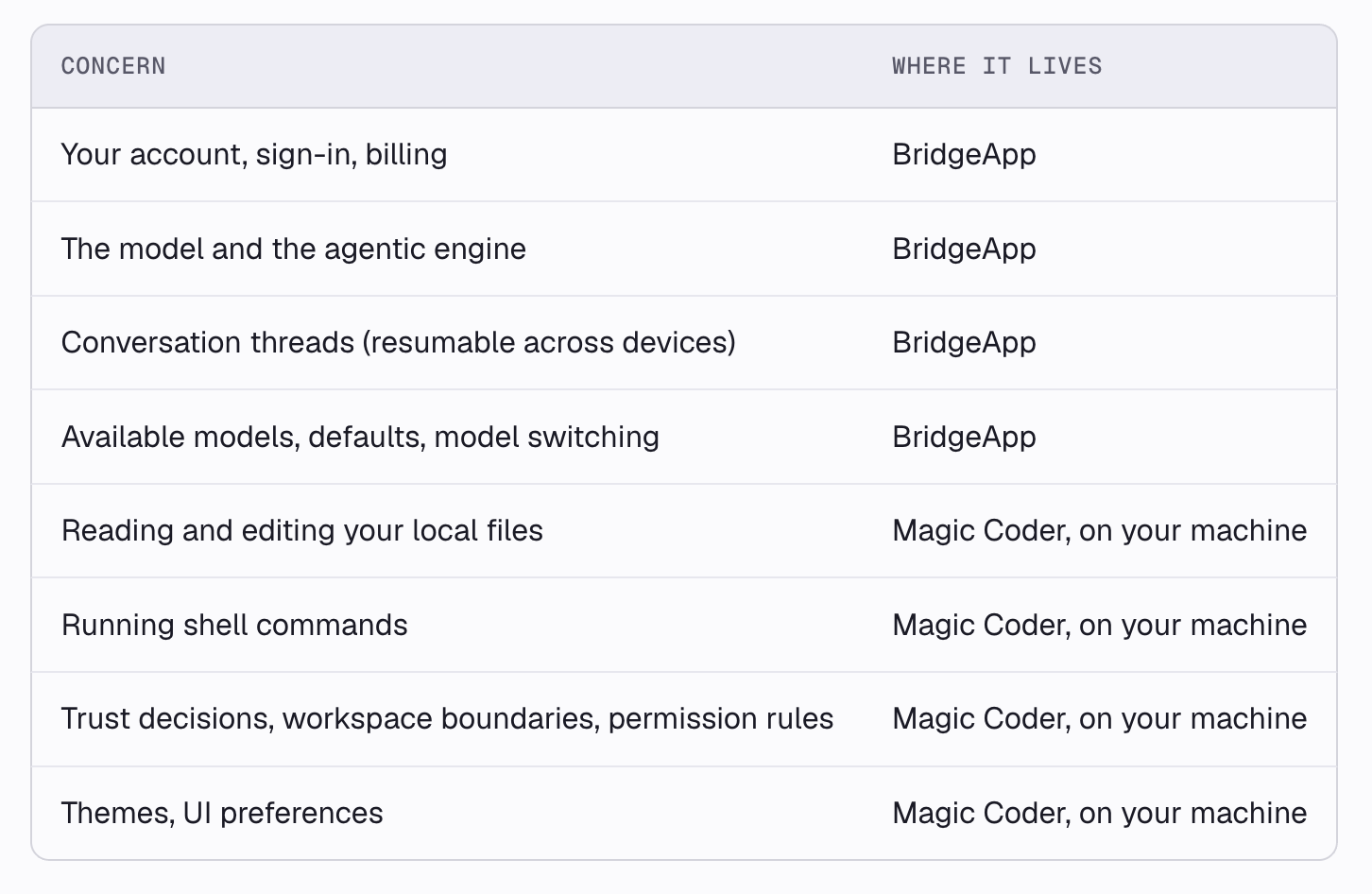
That's the part a standalone tool structurally cannot copy — not because the model is better, but because here the context was never separated from the work in the first place.
What Magic Coder actually does
Magic Coder is a real agentic coding environment, in the same category as the dedicated coding tools your team already uses. The difference is where it lives and what it can see.
- Architecture-aware, not prompt-to-snippet. It reads your codebase and works inside your existing structure — reusing what's there, following your patterns — instead of bolting on a disconnected layer someone has to reconcile later.
- End-to-end, in one environment. From the task and the discussion around it, through implementation, repo updates, and the documentation that explains the decision — all where the work was already happening.
- Standards that travel. Define your conventions, rules, and review expectations once in BridgeApp. Every task Magic Coder touches — and every engineer — works from the same playbook, across repos and branches.
- Works with your stack, not against it. GitHub, your existing tools, your pipeline. Magic Coder doesn't ask you to abandon what works — it sits where the coordination happens and turns it into shippable, owned code.
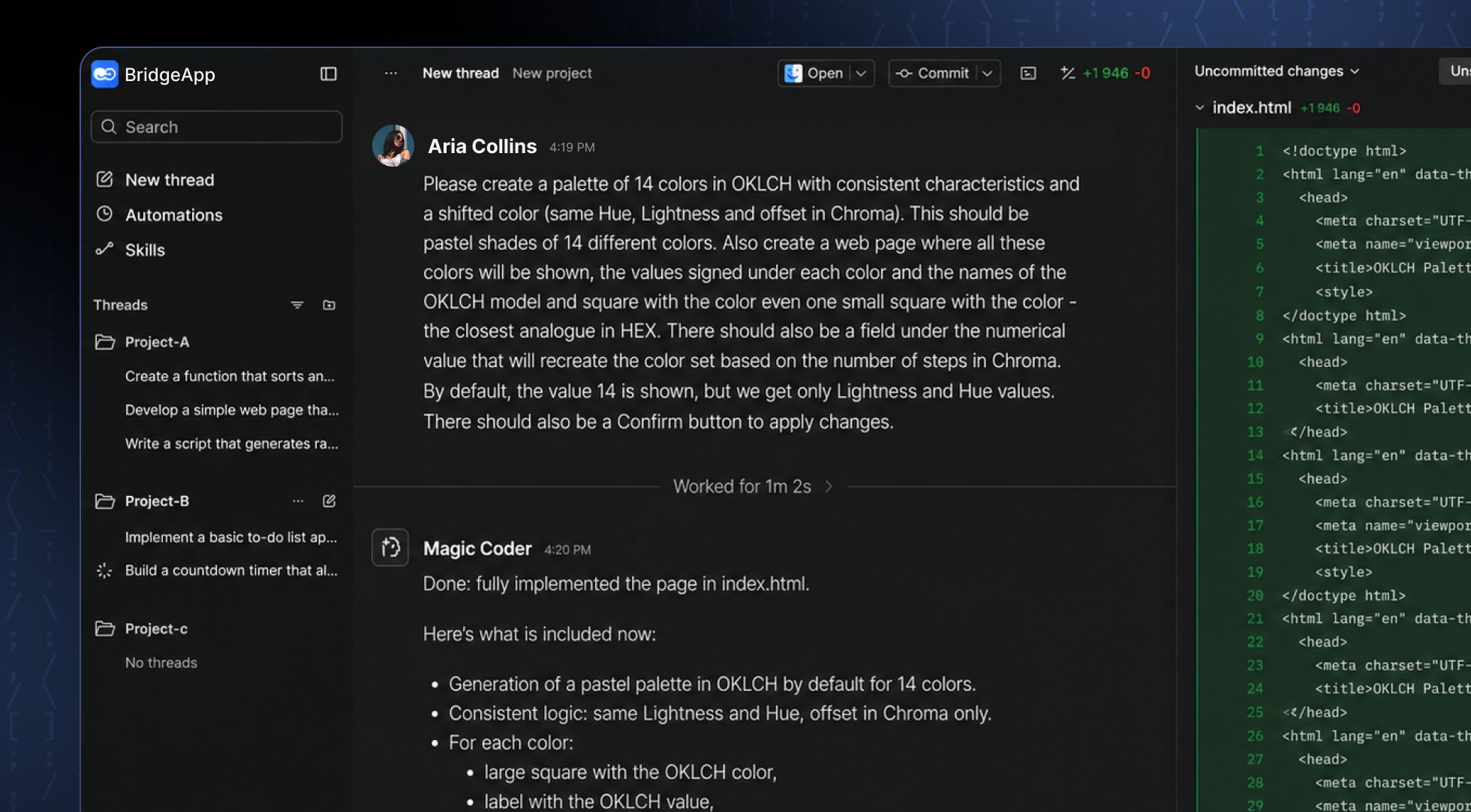
Ask Magic Coder to do something
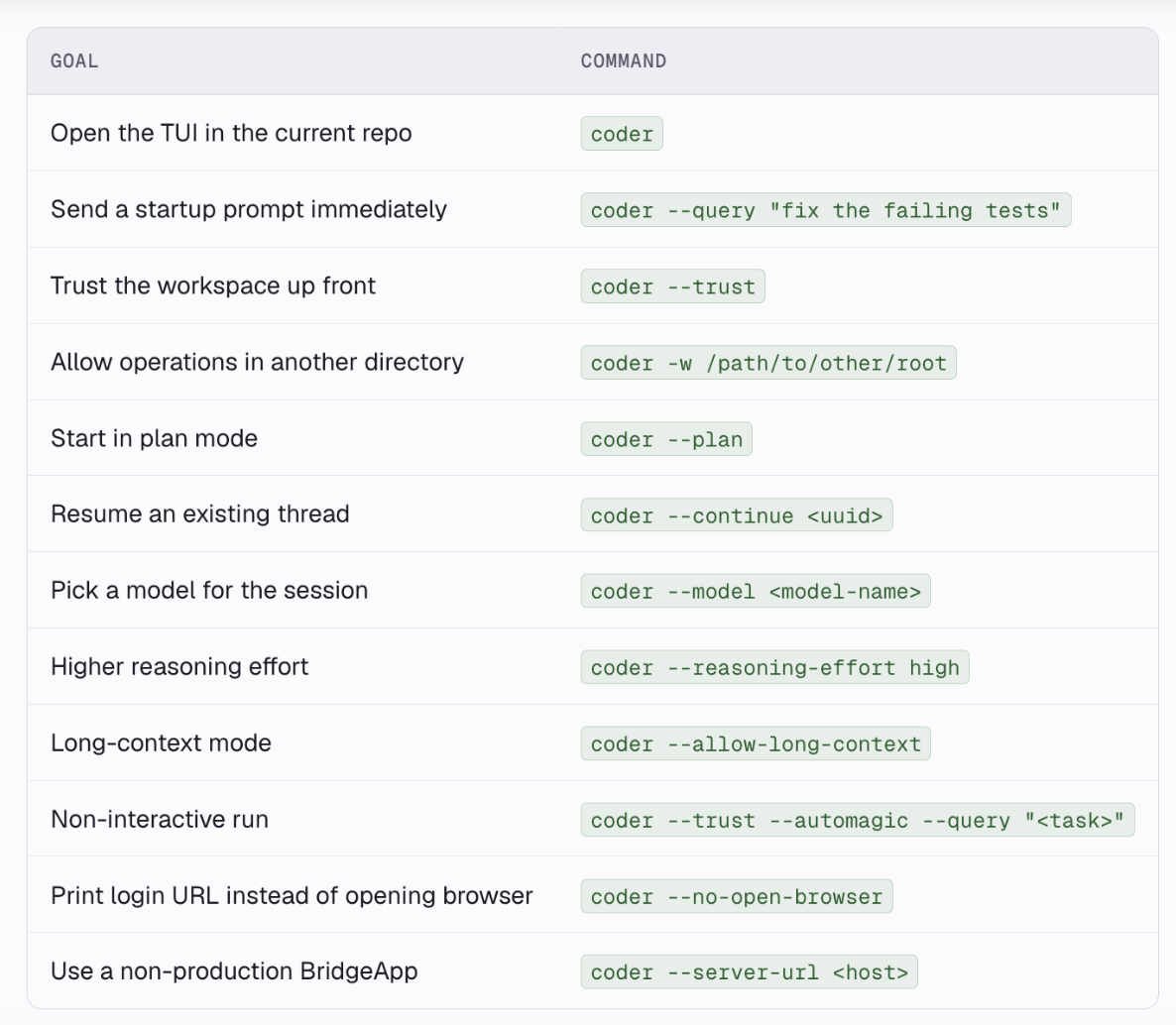
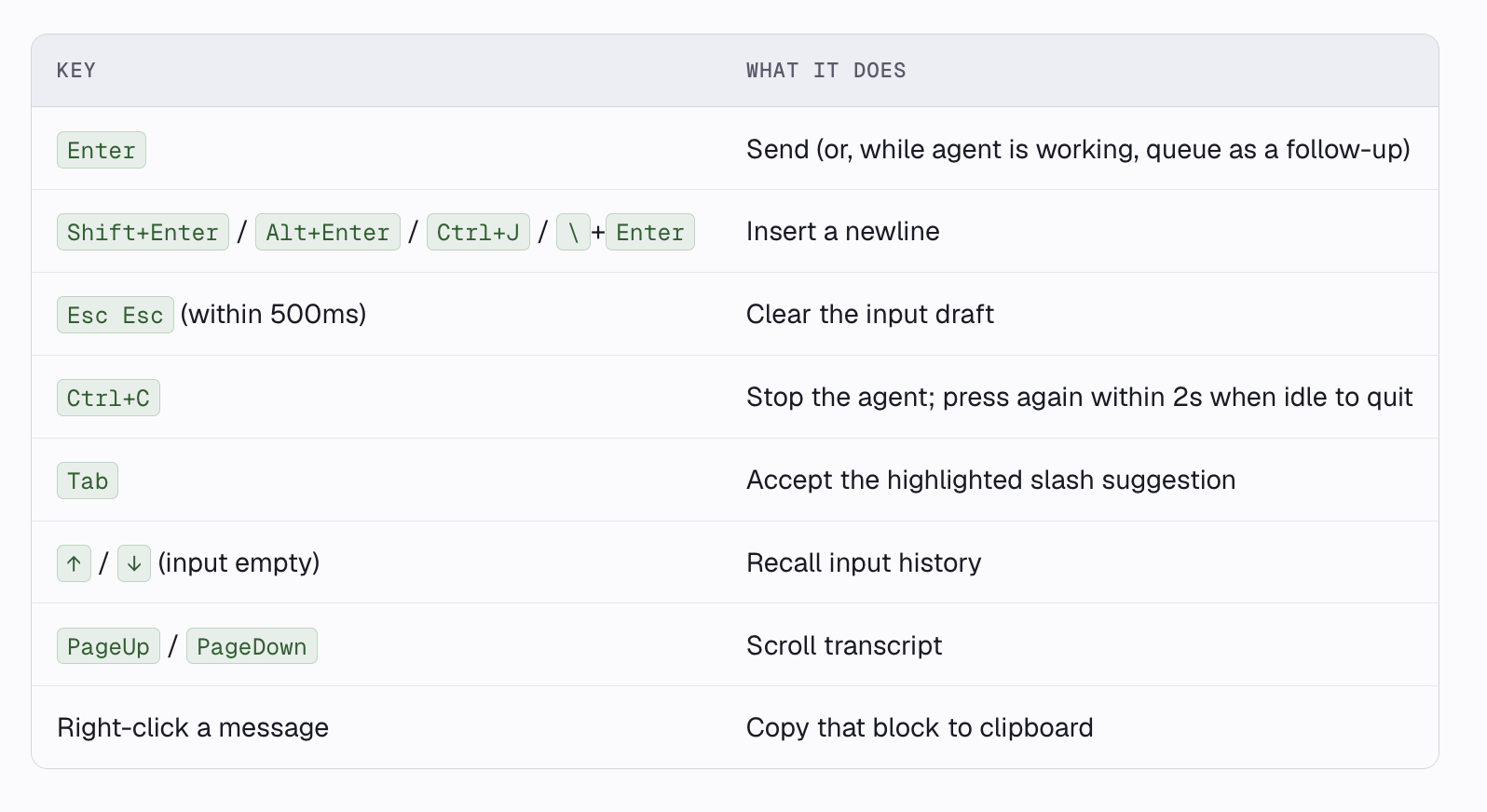
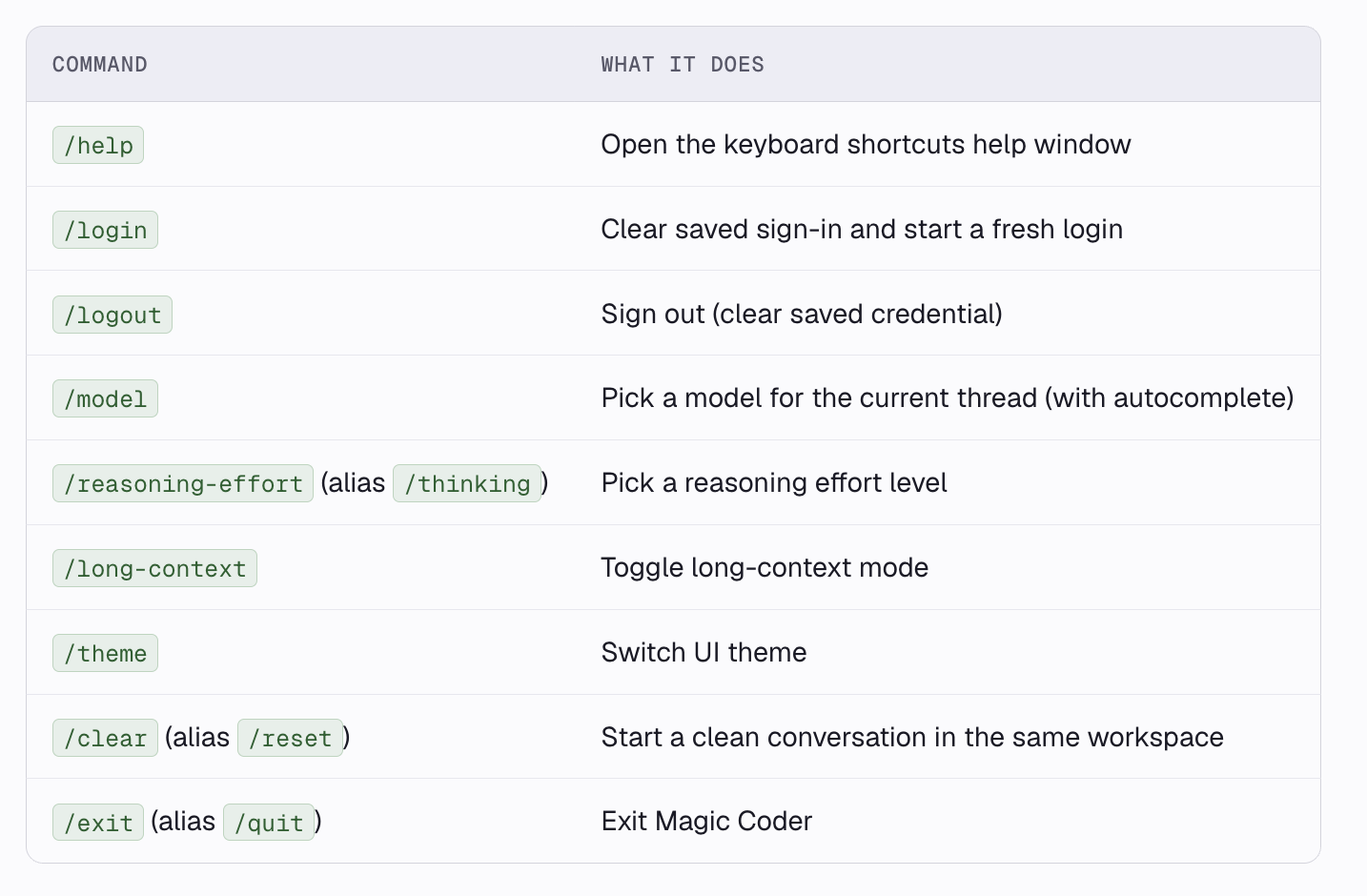
Type a real task into the input box and press Enter. Make it concrete — agents work better with specific goals than with vague exploration.
Good first prompts:
- “Read the project, summarize the architecture in 5 bullet points, and tell me which files do most of the work.”
- “Find the main entry point, run the tests, and report whether they pass.”
- “Add a --dry-run flag to the CLI that prints the plan instead of executing it.”
You’ll see the agent start to think. It will run list_dir to see what’s at the root, read interesting files with read_file, run grep for patterns, and either summarize or make changes.
The metric we actually watch
We could lead with throughput. We're not going to — because volume was never the problem, and more AI-generated code you can't maintain is a liability, not a win.
The number that matters is quality: how much rework a change needs before it ships. Fewer review comments per task. Cleaner handoffs. Documentation that exists because it was written as the work happened, not reconstructed afterward.
15 → 0.7 review comments per task, scored by an independent reviewer.
Throughput follows: 3 → 50 PRs per period once the quality holds.
When the context is right, the code needs less correction. That's the whole thesis.
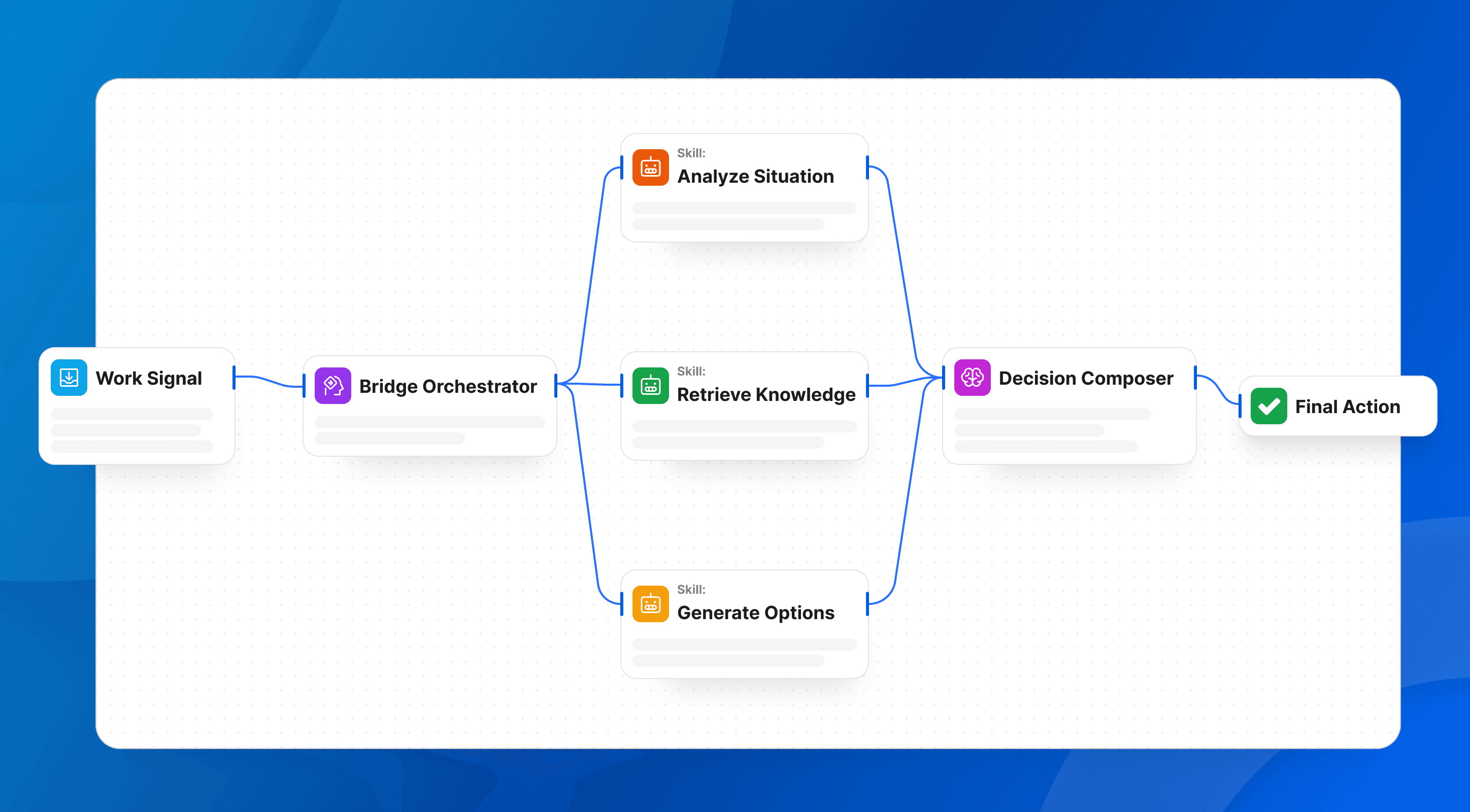
When you assign Magic Coder a task, here's what happens:
It starts with the task inside BridgeApp and reads everything around it — requirements, docs, discussions, project knowledge. It maps your existing codebase, identifies reusable components, and plans implementation against your current architecture. It writes code within your conventions and patterns — not in isolation. Then it pushes the work through the delivery workflow: implementation, testing, next-step handoff.
The human role doesn't shrink — it sharpens
The story where a human clicks “approve” and walks away isn't ours. Real engineering is judgment: what to build, which tradeoff to accept, what not to automate. Magic Coder doesn't remove that, it removes the work around it: the context-gathering, the boilerplate, the “wait, why did we do it this way” archaeology. So judgment is what your team spends its time on.
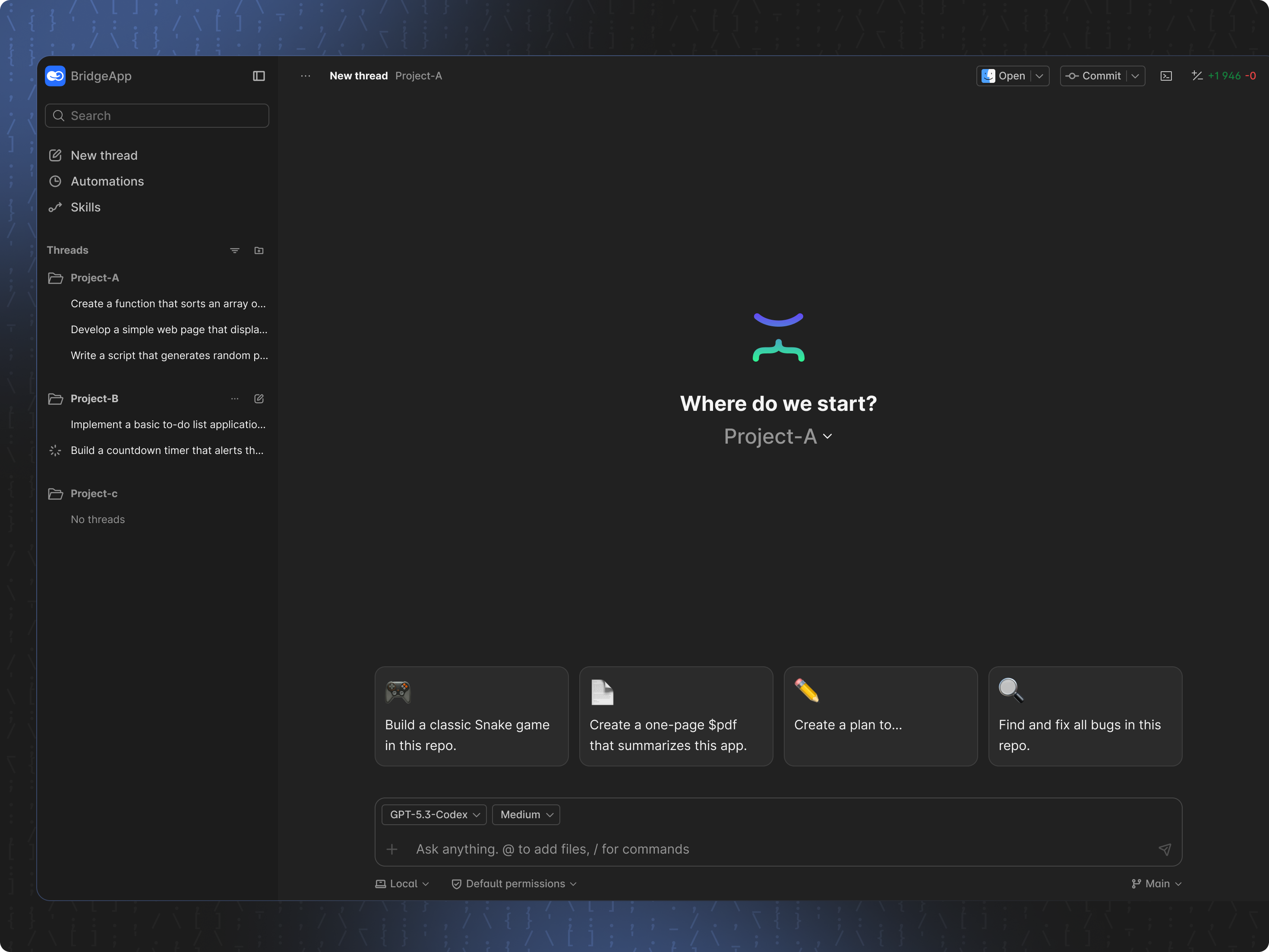
Human and AI as colleagues in the same environment, doing the work together — and the documentation writes itself, because it was never a separate task.
Who is it for?
Magic Coder is built for the engineering lead who's tired of inheriting AI-generated code with no paper trail — the one who measures a tool by how maintainable the output is six months out, not how fast the first draft lands.
Other teams curious about it? Come on in. We're happy to welcome anyone who wants to explore it — including:
- CTOs and engineering leaders who want AI-assisted development that's actually manageable at scale.
- Product teams closing the gap between idea and shipped functionality.
- Enterprise teams that need centralized standards, control, and long-term maintainability.
Getting started
Magic Coder runs inside BridgeApp, because that's where the context lives. Create a workspace, bring your tasks and docs into it, and assign Magic Coder its first task straight from the board.