BlogIndustry Insights
Mastering AI Unit Testing: Key Strategies for Effective Implementation

BridgeApp Team
15 min read
AI unit testing is reshaping how development teams write, maintain, and scale their test suites. Instead of manually writing every test case from scratch, engineering teams now use generative AI to draft tests, uncover blind spots, and keep suites aligned with rapidly changing code. This article walks through what AI unit testing actually does, how to implement it step by step, and what QA teams should prepare for going forward.
Key Takeaways
- AI unit testing uses artificial intelligence - especially generative AI and large language models - to generate, run, and maintain unit tests across languages like Java, Python, C#, and JavaScript. It automates test case generation and data preparation, freeing developers to focus on higher-value work.
- The main benefits are faster test creation through generated tests, better coverage of edge cases, and automated test maintenance that keeps suites in sync with evolving code.
- AI unit testing augments, not replaces, QA teams and developers. Humans still define what good unit tests look like and review AI output for correctness.
- Tools such as GitHub Copilot, Magic Coder by BridgeApp, and other AI tools can be integrated directly into IDEs and CI/CD pipelines to support regression testing and continuous delivery.
- The article covers implementing AI unit testing step by step, real-world workflows, and future trends QA teams should prepare for in 2026 and beyond.
What Is AI Unit Testing?
AI unit testing is the use of artificial intelligence to generate, improve, and maintain unit tests for individual functions, classes, and microservices in a software development workflow. Rather than relying solely on developers to write every assertion by hand, AI tools automate test case generation for unit tests, propose edge cases, and create synthetic data - all within the testing process teams already follow.
This article focuses on the practical use of generative AI and specialized AI tools inside development environments, not academic research. The "ai unit" in this context refers to any testable unit of behavior: a method in a Java service, a Python function, a React component, or even prompt and tool-selection logic inside an AI agent.
AI can automatically generate diverse test cases for scenarios that would otherwise require significant manual effort. Typical capabilities include:
- Generated tests from source code and method signatures
- Automatic suggestion of edge cases and boundary conditions
- Realistic synthetic data creation for test fixtures
- Automated test maintenance when APIs or signatures change
For example, an AI assistant might analyze a C# OrderService class and generate NUnit tests covering valid orders, null customer IDs, and expired discount codes. Or it could create Jest tests for a React checkout component, testing form validation states and network error handling. In a study of GPT-3.5 generating tests for 25 npm packages, the tool achieved median statement coverage of about 70.2% and branch coverage of 52.8% - far above the comparison tool's 51.3% and 25.6%.
Why AI Unit Testing Matters in Modern Software Development
Between 2024 and 2026, software development shifted hard toward microservice architectures, weekly or daily releases, and complex cloud-native systems. These realities make traditional unit testing increasingly difficult to sustain at scale. Test automation powered by AI addresses this directly.
AI unit testing enhances code coverage by uncovering complex scenarios and edge cases that manual testing routinely misses. AI-generated tests can significantly reduce developer workload, letting engineers focus on test strategy and critical business logic rather than writing boilerplate. AI tools can also quickly identify high-risk areas for testing, directing effort where it matters most.
The concrete benefits include:
- Faster feedback loops. AI generates test scaffolding in seconds, cutting hours of rote writing.
- Higher test coverage. AI testing tools can analyze execution paths to enhance code coverage, catching gaps humans overlook.
- Stronger regression testing. Suites stay current with code changes, reducing escaped defects.
- Reduced QA bottlenecks. QA teams shift from writing boilerplate to reviewing strategy and risk.
- Improved developer experience. Less context switching, faster CI/CD feedback cycles.
- Better bug detection across platforms. Using AI can enhance bug detection in mobile applications and web applications alike.
According to Capgemini's World Quality Report 2024, 62% of respondents say the top benefit of generative AI in quality engineering is reduction in testing resources. Organizations adopting AI unit testing also report improved collaboration between QA and engineering, as mundane test writing is offloaded and humans focus on what actually requires judgment. AI unit testing can improve code coverage by uncovering complex scenarios that would otherwise slip through.
Traditional Unit Testing: Pain Points AI Is Designed to Solve
Classic unit testing relies on standardized testing frameworks like JUnit, pytest, xUnit, and Jest. These are mature and powerful - but they don't solve the human bottleneck. At scale, teams struggle with several concrete pain points.
First, boilerplate and duplication. Many tests repeat fixture setup, mock configuration, and assertion patterns. A change in a shared DTO used across dozens of methods triggers widespread test breakage and tedious manual fixes. Second, difficulty covering rare edge cases - null inputs, overflow conditions, concurrency bugs. These get skipped when developers are under delivery pressure. Third, brittle tests. Tests tightly coupled to internal implementation details break on harmless refactors, eroding trust and wasting time. Fourth, manual maintenance of thousands of test files becomes a drag on velocity.
Consider a 2025-era microservice architecture where each service carries 1,000+ test cases. Refactoring a core data model means touching hundreds of tests across multiple repositories. AI tools can quickly identify high-risk areas for testing in these sprawling codebases, but without them, teams experience "test fatigue" - engineers skip writing unit tests, comment out failing tests, or let regression testing fall behind feature work.
These specific pains are what implementing AI unit testing aims to relieve. And the tooling has matured enough to deliver real results, as long as teams approach it with clear objectives and consistent testing procedures.
Core Capabilities of AI Unit Testing (What AI Actually Does)
AI tools bring several distinct capabilities to the testing process. Here's what they actually do:
- Test generation from source code. AI reads classes, methods, comments, and enough context to propose unit tests that follow the project's test framework - JUnit 5, pytest, NUnit, Jest, or others. AI tools can automate test case generation across entire code segments, not just individual methods.
- Automated edge case discovery. AI can identify edge cases and testing gaps in code by scanning logic for boundary conditions: null values, max/min limits, empty collections, concurrency issues. AI tools can identify edge cases that humans often overlook, and AI can suggest test scenarios and edge cases based on the code analysis.
- Synthetic test data generation. AI tools can generate realistic synthetic test data for testing - customer records, transaction payloads, IoT events - avoiding exposure of sensitive production data. This data enhances reliability of test suites while keeping them privacy-friendly.
- Mock and stub generation. AI generates mocks for databases, HTTP clients, queues, and other external dependencies, reducing the manual effort of setting up test harnesses. This keeps isolated tests focused on the code's behavior rather than infrastructure.
- Automated test maintenance. AI helps reduce the maintenance burden of test suites after code changes. When methods are renamed, parameters shift, or new fields are added, AI updates assertions and test setups - directly addressing automated test maintenance needs.
- Failure analysis and repair. AI can analyze test failure logs to suggest fixes and identify root causes. AI can suggest potential fixes for test failures automatically, speeding up resolution cycles.
- CI/CD integration and prioritization. AI can prioritize tests based on code complexity and history, running the most relevant tests first after a commit. AI can suggest tests based on code complexity and history of bugs, improving regression testing efficiency across CI/CD pipelines.
AI can also enhance code coverage by uncovering edge cases that static analysis alone would miss.
What Characterizes Good Unit Tests in an AI-Driven World
Even with powerful AI tools, teams still need a clear definition of good unit tests to guide and review AI output. Without standards, generated tests can drift toward brittleness and low value.
Core properties remain the same: tests should be small and focused, deterministic (producing the same result given the same input), fast, and isolated from external dependencies. Following patterns like Arrange-Act-Assert keeps structure consistent. Coverage expectations should span typical flows, negative flows, and edge cases - invalid input, network timeouts, boundary values. AI can help identify missing paths, but teams must prevent overfitting to implementation details.
Maintainability matters just as much. Clear naming conventions (like MethodName_WhenCondition_ThenOutcome), minimal duplication, and avoiding over-specified assertions (exact exception messages, internal variable names) help tests pass through refactors without breaking. AI-generated tests may require manual review to ensure quality - especially around assertion correctness. Human oversight is crucial for testing critical business logic in unit tests that protect revenue or safety.
QA teams and tech leads should codify these standards in documentation and prompts so that AI-generated tests align with project-specific best practices. This is how you integrate unit testing with AI while maintaining test reliability across your codebase.
Implementing AI Unit Testing: Step-by-Step Workflow
Implementing AI unit testing works best as a phased rollout, not a big-bang transformation.
A practical AI-assisted unit testing workflow includes identifying intended behavior, proposing test scenarios, and generating tests. Start with a pilot: pick one service or module, choose target languages and frameworks, select AI tools, and define clear objectives - such as improved test coverage or reduced time per PR for writing unit tests.
A typical workflow looks like this:
- Developers write or refactor code on a feature branch.
- AI analyzes the source code segment context - method signatures, expected inputs, existing tests - and proposes generated tests.
- Engineers review, refine, and approve or edit the tests before commit.
- Tests are added to the repository and automatically run in CI/CD pipelines on every pull request.
For example, a Java backend team triggers AI to analyze a PaymentService class using JUnit 5. The AI suggests 10 unit tests covering normal payment flows, invalid card numbers, expired tokens, null inputs, and concurrency scenarios. A developer approves eight, edits two, and commits.
AI can also assist in generating characterization tests to establish behavior before refactoring code - locking in current behavior as a safety net, then updating tests as the refactor progresses. Context is important when using AI tools for generating tests, including method signatures and expected inputs.
Governance matters: decide which branches allow AI to create tests automatically and which require code review approvals. Humans remain accountable for final behavior, and every change - human or AI - flows through normal review processes.
Working with Generative AI: Prompts, Patterns, and Guardrails
Generative AI is only as useful as the instructions it receives. When writing unit tests for complex business logic, prompt design makes or breaks the output.
Recommend tests by including in prompts: language, test framework, mocking library, desired structure (AAA), coverage requirements (normal, edge, exception), and naming conventions. For example: "Generate pytest unit tests for this function, focusing on realistic edge cases and avoiding tests that duplicate each other. Use standard Python mocking. Name tests as function_name_when_condition_then_outcome."
Common issues with naive generated tests include overuse of mocks, tests tightly coupled to private implementation details, or fragile assertions on exact log messages and string outputs. One study comparing ChatGPT and Pynguin found that approximately one-third of assertions generated by ChatGPT were incorrect in some categories - prompt engineering significantly improved results.
Treat AI as a junior developer whose work must always be checked. Developers should inspect AI output for correctness, readability, and maintainability.
A hybrid approach works well: let AI write the first draft, then have a senior engineer validate the testing strategy, assertion quality, and alignment with actual code behavior. This is how you continually improve the quality of AI-assisted tests without losing control.
AI Unit Testing for AI Systems and Agents
AI unit testing is not only for traditional software. AI agents, LLM-powered features, and multi-agent workflows - now common in 2024–2026 - also need rigorous testing of their individual components.
In agent systems, a "unit" might be a prompt template, tool-selection logic, memory retrieval module, or reasoning chain. These are non-deterministic by nature. Testing strategies must include deterministic checks for formats and schemas (e.g., JSON structure validation) plus probabilistic or semantic checks for content quality, sometimes using an LLM-as-judge approach that mimics real world scenarios.
Trajectory evaluation tests multi-step agent behavior end-to-end: ensuring tools are called in the right order, errors are handled correctly, and fallback logic activates when expected. Regression testing for AI agents often requires running tests multiple times and using statistical thresholds - for instance, "95% of runs must pass" - to account for variability in individual units of agent behavior.
How Magic Coder by BridgeApp Supports AI Unit Testing
Magic Coder by BridgeApp is an architecture-aware AI assistant built into the BridgeApp workspace. Unlike generic AI coding tools, it analyzes entire repositories - not just single files - enabling it to generate tests that respect real code architecture, cross-service dependencies, and existing test conventions in languages like TypeScript, Java, C#, and PHP.
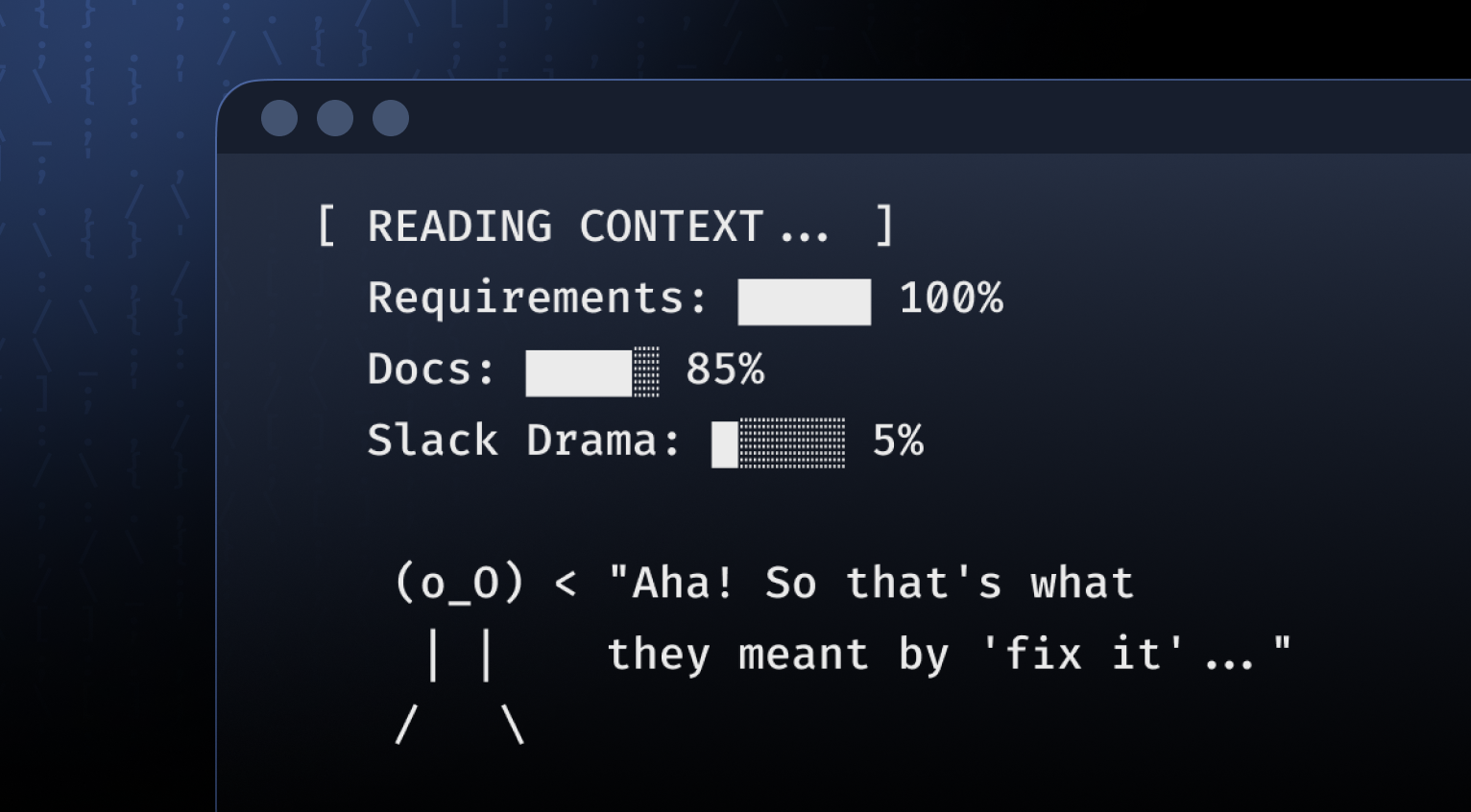
BridgeApp's multi-agent capabilities let teams configure specialized QA agents for tasks like generating unit tests, reviewing test quality, and suggesting missing edge cases within the same project context. The platform's pipeline supports a state machine where agents never advance a task to "done" - the pipeline stops at "Waiting for Merge" by design, ensuring human oversight at every stage.
For automated test maintenance, Magic Coder can scan for failing or outdated test cases when code changes and propose targeted updates. This reduces test maintenance overhead without bypassing human code review. It also supports flake audits and test suite migrations - for example, refactoring Selenium tests to Playwright while preserving folder structure and conventions.
A compact scenario: a team working on an order-processing microservice uses Magic Coder to propose PHPUnit tests, add regression tests after a bug fix, and keep those tests aligned as the schema evolves over several sprints. Tasks originate in BridgeApp Projects, test plans live in Documents, and execution runs through Magic Coder - so QA teams can trace from user stories to generated tests in a single place.
Best Practices for Implementing AI Unit Testing at Scale
Rolling out AI unit testing across an organization requires discipline. Here's a checklist teams can use as internal guidelines:
- Start small. Pilot AI unit testing on one service, language, or team. Regularly track test coverage, reduced bug count, and faster onboarding metrics before scaling.
- Align with existing strategies. Ensure generated tests support test driven development or BDD workflows rather than bypassing deliberate test design.
- Educate your team. Train developers and QA engineers on how to evaluate AI-generated tests, detect overfitting, and enforce patterns for high quality tests.
- Maintain prompt libraries. Keep templates and examples in shared documentation so usage of AI tools is consistent across squads and over time, supporting consistent testing procedures.
- Run tests in CI/CD. Ensure generated tests automatically run on pull requests. Dangerous auto-fixes - like silently disabling tests - must be forbidden without human approval.
- Optimize test suites. AI identifies redundant tests to optimize test suites and can reduce overall test execution time by optimizing which tests run. AI unit testing can reduce test execution time by 30%.
- Audit regularly. Regular audits of the test suite are necessary to manage test bloat and maintain quality. Mutation testing can enhance the effectiveness of AI-generated test suites by checking fault detection capability.
- Address security and compliance. Ensure that code and test data passed to external AI providers complies with organizational policies. Sensitive data automatically must be anonymized or excluded.
Teams should also analyze performance metrics over time to measure whether AI-assisted testing is delivering on its promise - and adjust their testing strategy accordingly.
Future Trends in AI Unit Testing
Looking ahead to 2026–2030, AI unit testing will evolve alongside rapid improvements in generative AI and testing tooling.
Increasingly autonomous testing agents will watch CI/CD pipelines, detect flaky tests, propose test refactors, and coordinate with human reviewers to keep suites healthy. Deeper integration with DevOps means AI-driven test selection and prioritization based on live telemetry, production error traces, and code change impact analysis - helping teams recommend tests and optimize regression testing runs dynamically.
Support for testing complex AI agents and multi-agent systems will mature, with standardized evaluation frameworks, statistical regression testing, and better observability across tool calls and reasoning steps. Governance needs will grow too: organizations will require policies and audit trails around AI-generated tests - including who approved them, what models or prompts were used - especially in regulated industries.
Teams adopting AI unit testing early - using platforms like BridgeApp - will be better positioned to handle these future trends without rewriting their pipelines from scratch.
FAQ
This section addresses common questions not fully covered above, aimed at engineering leaders, QA managers, and senior developers.
Is AI unit testing suitable for small projects or only large enterprises?
AI unit testing can benefit both, but the return on investment is usually higher for medium to large codebases with frequent code changes. For very small or short-lived projects, simple manual testing may be sufficient. A practical rule of thumb: once a service has dozens of classes and hundreds of tests, AI-assisted unit test generation and maintenance typically start paying off in reduced developer time. Even smaller development teams can benefit when working on web applications or mobile applications with complex logic.
Can AI unit testing completely replace manual test writing?
No. AI should be treated as an accelerator, not a replacement. Humans still need to design critical scenarios, business-rule-heavy tests, and system-level integration tests. AI is strongest at producing initial drafts, boilerplate, variations for regression testing, and missing edge cases. Developers remain responsible for correctness and coverage decisions. AI unit testing can struggle with complex or rare software defects, which is why quality assurance always requires human judgment.
How do we prevent AI-generated tests from becoming flaky or brittle?
Enforce clear quality guidelines - avoid asserting exact timestamps, random IDs, or long free-text messages - and encode those guidelines into prompts and review checklists. Flaky tests should be analyzed like any other defect: identify the root cause, adjust the test or code, and use AI tools primarily to help refactor tests, not to simply auto-disable failures. AI can analyze test failure logs to identify root causes, which helps maintain code quality and keeps tests pass rates high.
Which programming languages and frameworks work best with AI unit testing today?
The most commonly supported ecosystems include Java (JUnit, TestNG), C# (.NET with xUnit/NUnit, including Visual Studio integration), Python (pytest, unittest), JavaScript/TypeScript (Jest, Mocha, Vitest), and PHP (PHPUnit). Most major AI tools are tuned for these. Magic Coder by BridgeApp is designed to work against Git repositories in these languages, leveraging repository context to generate tests aligned with existing project patterns and catching bugs early in the development cycle.
How do QA teams stay in control when AI starts maintaining tests automatically?
Any automated test maintenance must pass through normal code review processes: AI may propose diffs, but QA leads and senior engineers approve or reject them. Enable detailed logging and audit trails for AI-generated changes so teams can trace when and why a test was modified. This is especially important for regulated domains like finance or healthcare, where efficient methods for traceability are non-negotiable. The goal is to let AI write and recommend tests while humans retain final authority over what ships.