BlogProduct Updates
BridgeApp Turns Your Workspace into an Automated AI Development Pipeline

BridgeApp Team
7 min read
For two years, BridgeApp has been building an AI workspace where docs, tasks, AI agents with skills, MCP connections, and copilots live together in one context. And this is where it gets bigger: one virtual team, running the whole thing end to end — from "to do" to a pull request, no human handoffs and copy-pasting between tools.
What two years of building was actually for
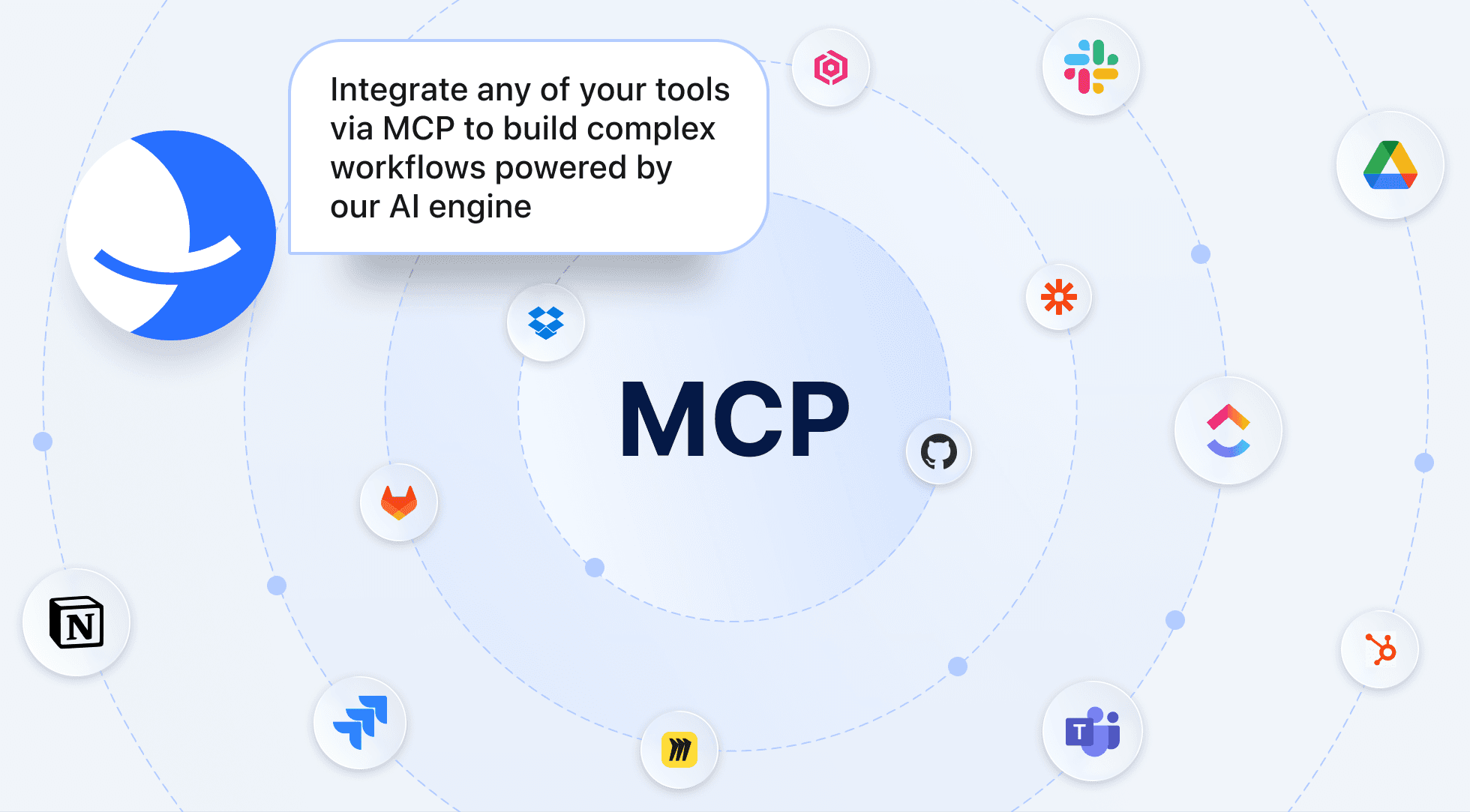
Everything you've built with us in BridgeApp now stays. Every doc, every task, every chat, your AI agents with their skills, your MCP connections, knowledge bases, your copilots — none of it goes away.
Now we're building on top of that. That same workspace becomes the base for a virtual team — agents that pick up a task, carry it through planning, execution, and review, and hand off a finished pull request, running the end-to-end development process for you.
We started with development as our flagship case. But honestly, the same mechanism fits almost any business process, not just code.
The old picture: AI sped things up, but humans are still the bottleneck
By now, every team we know is using coding agents like Codex from OpenAI, Claude Code from Anthropic, and Cursor as a model-agnostic aggregator.
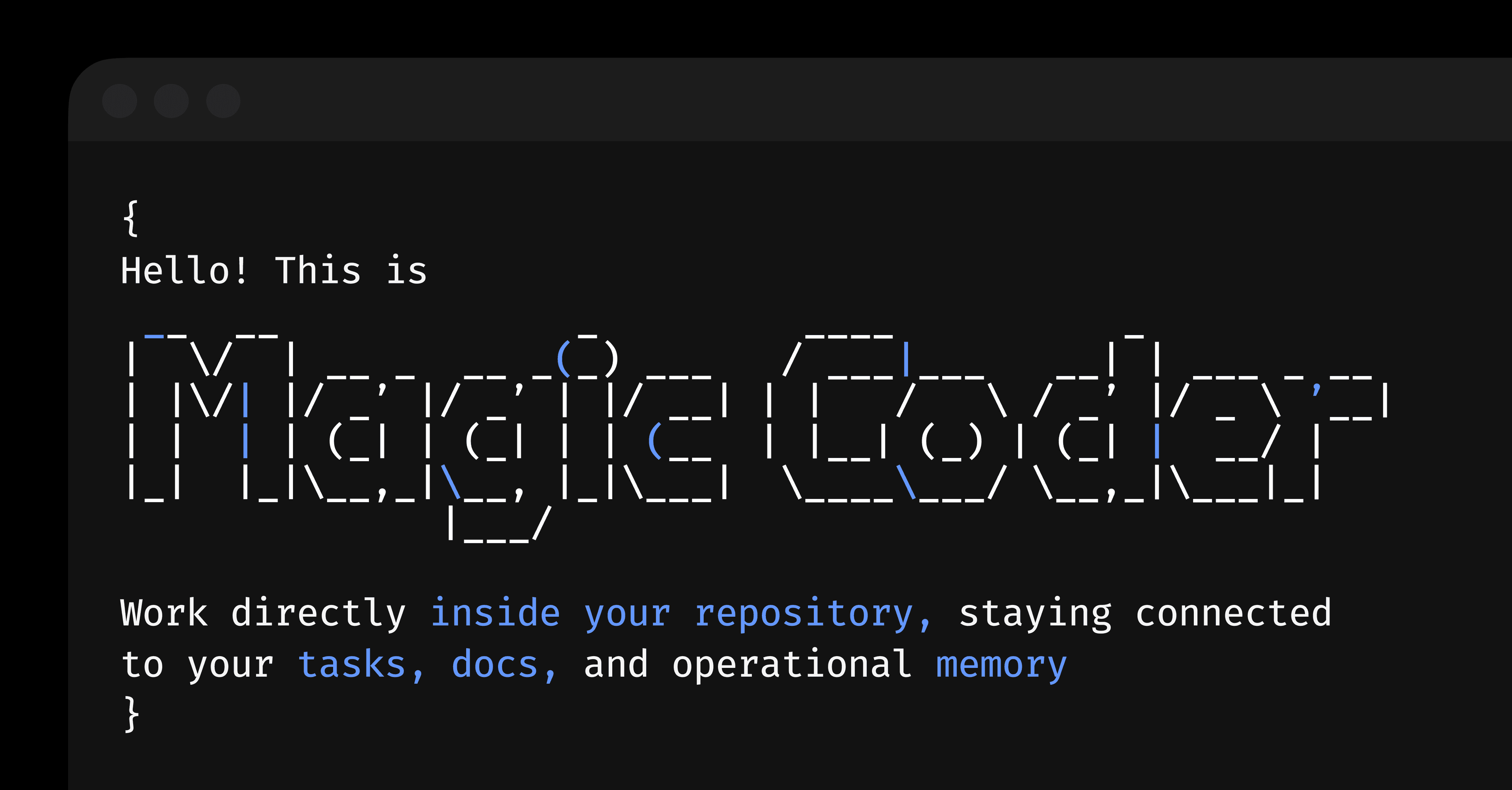
🔥 BTW: we just soft-launched a Magic Coder, our new agentic coding environment. We built it to live inside the BridgeApp workspace, and the two make each other better. Docs and details are right here.
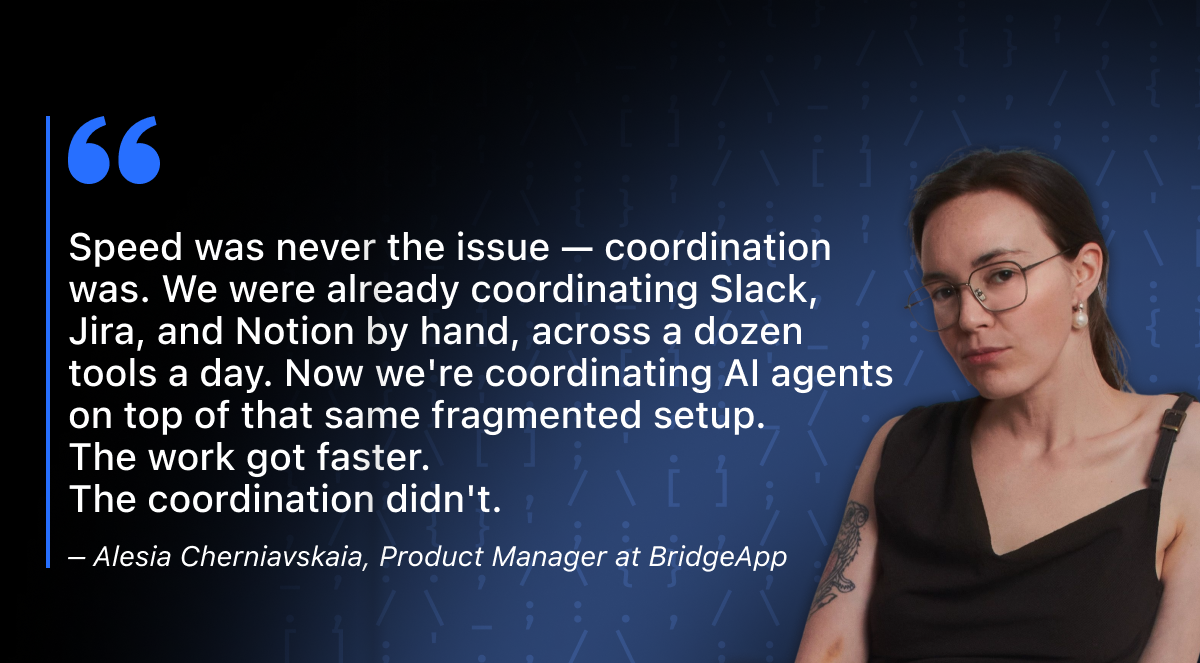
And here's what actually happens day to day: A dev person manually carries context from one place to another — from a Jira ticket into a coding agent. From Slack chat into a coding agent. From a Google Meet call to Notion knowledge base. Checks every step. Writes comments on what needs fixing. Tags humans. And then - one more ticket into a coding agent… then picks up the review feedback, writes more comments — and around it goes.
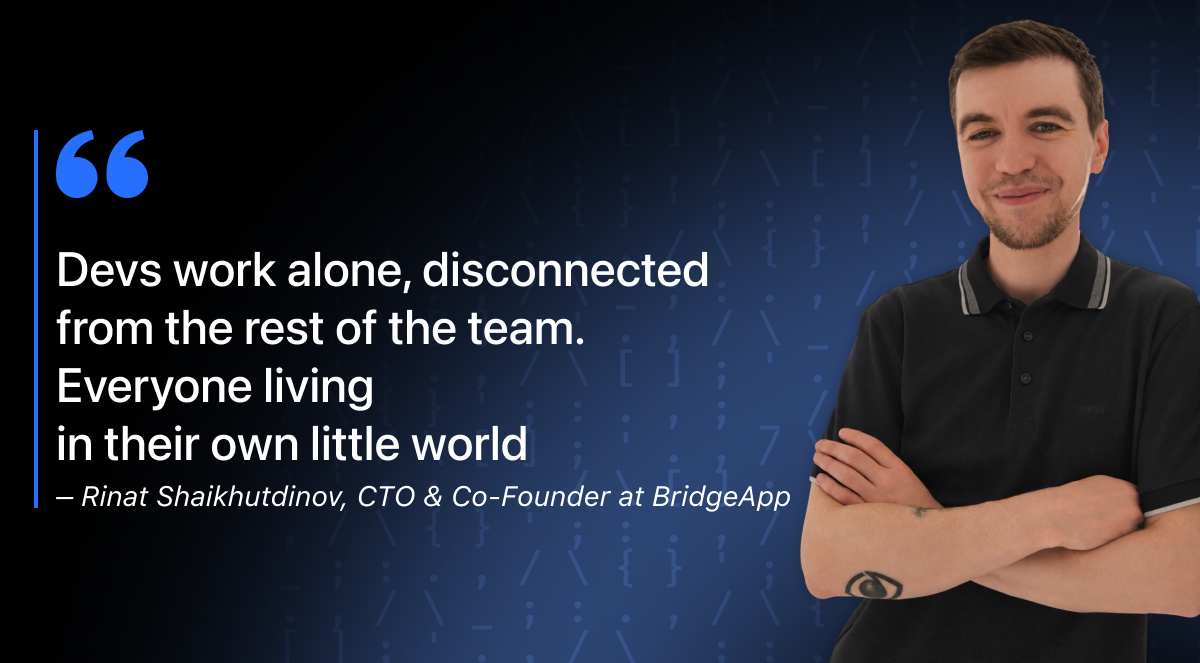
Tool sprawl is the bottleneck now. AI helps developers produce 10x more, but someone still has to carry that output between 10–15 tools a day, switching context 1000+ times. That's where AI slop comes from too: code written without the full picture, because the picture lives in ten different places.
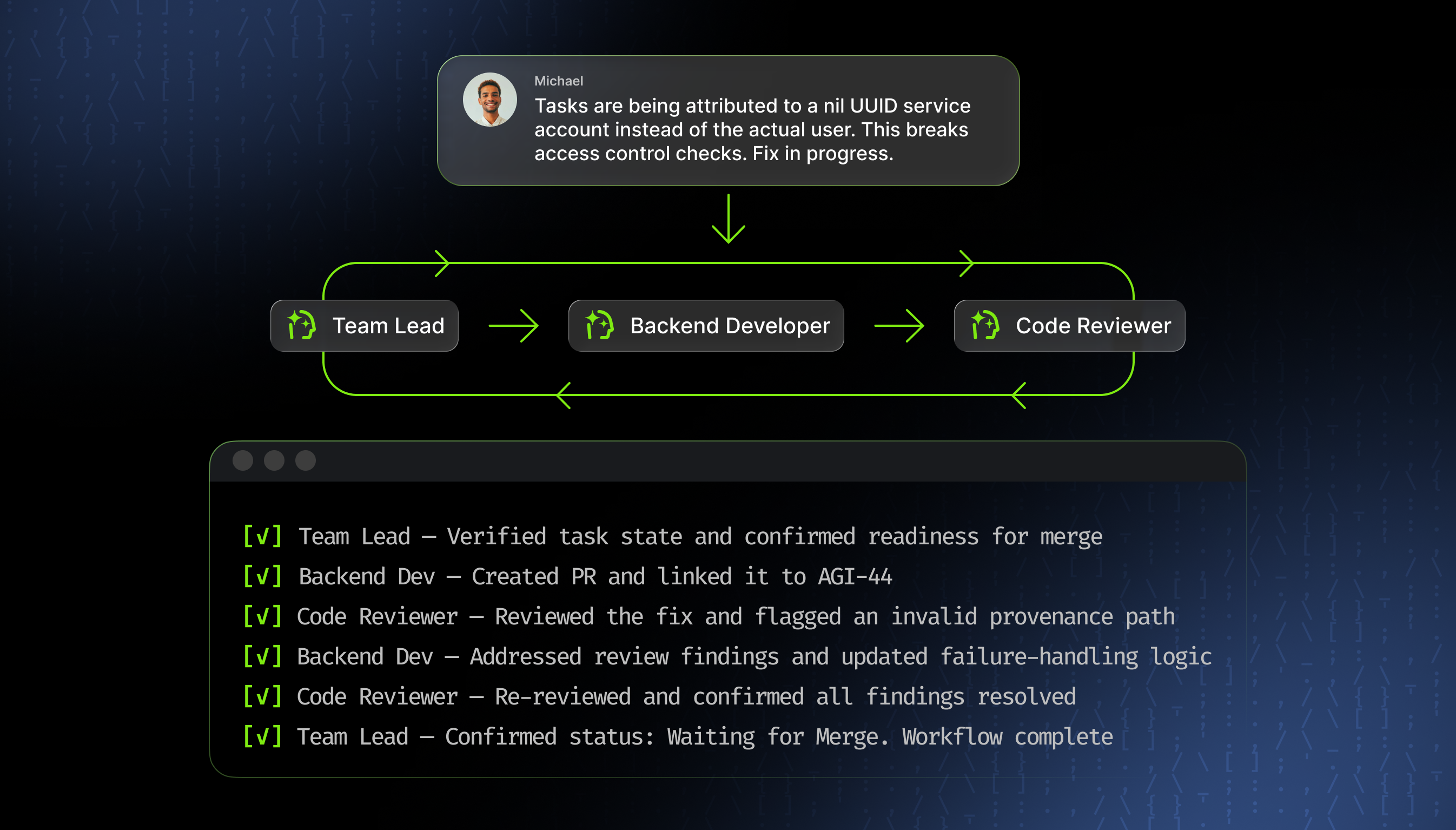
What we shipped? (instead of duct-taped together across five different tools)
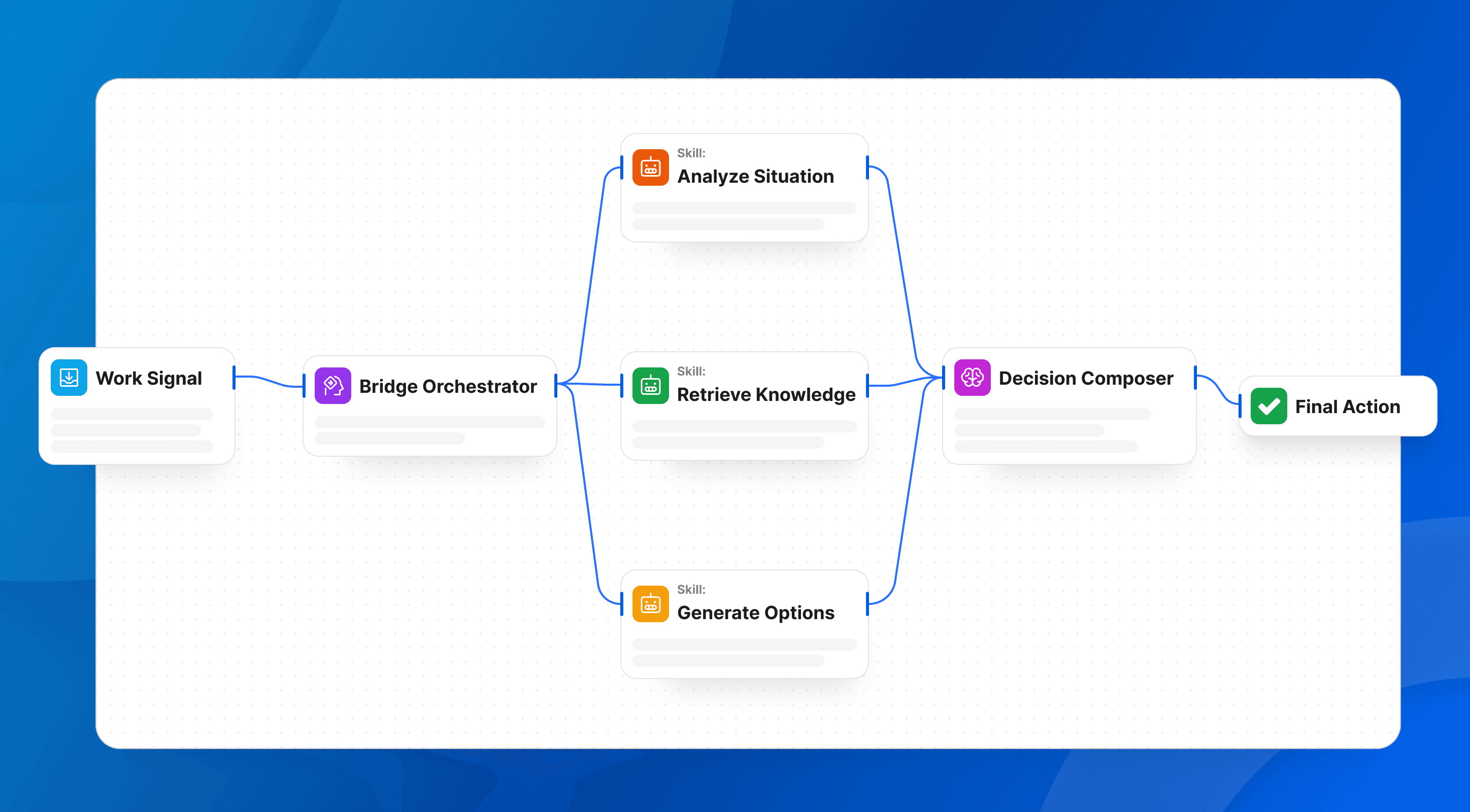
So we did the obvious thing and built the orchestration layer — the missing piece that connects people, AI agents, tasks, and context into one place, instead of leaving everyone to glue it together themselves. We picked development as the first place to prove it. It's a case where the value is immediately visible to any business.
Think of it less as "a coding assistant" and more as the control layer for agentic development. Work flows through defined roles, stages, review loops, and approval points. Splitting the work into clear, atomic responsibilities isn't just tidier — it's what makes the output reliable. Each agent gets a narrower job and the full context for that job, checks happen between stages instead of at the very end, and a human can step in at exactly the points that matter.
And there's a checkpoint between every stage! Which also answers the question every team eventually asks: what happens if an agent gets something wrong? It gets caught at the next checkpoint, not three weeks later in production.
Now the virtual team appears inside every BridgeApp’s project: an Architect agent, a CTO agent, a Backend agent, a Frontend agent, an Analyst, a QA agent. Any agent with any skills you need. Each one runs its own model under the hood — backend might run on Claude Code, frontend on Codex, whatever performs best for that job. Because we're model-agnostic, anyone on the team — even a non-developer, say an AI engineer or marketing manager — can pick the model their agent runs on.
Inside project settings, you can find a Project Brief: connect your GitHub and GitLab repos, and our AI and Copilot index the entire codebase to understand the context. You add what you're actually building and which repo owns what.
From there, you configure the process itself as kanban columns: To Do → planning → plan review → execution (writing code) → code review → re-check → merge to repo. Each role has its lane — system analyst, code reviewer, developer, and so on.
The formula behind quality code: three pillars
- Planning. Before any code gets written, AI produces a plan — and a human reviews, iterates, and approves it.
- Documentation. Every step and every plan gets documented. Different AI agents in the pipeline use those docs at every step to validate results and keep working from a shared understanding.
- Re-check cycles run multiple times before anything ships.
This is the orchestration layer running in BridgeApp: managing context and documentation at every step, so each AI agent down the line knows exactly who did what, and why, on the step before it.
The numbers
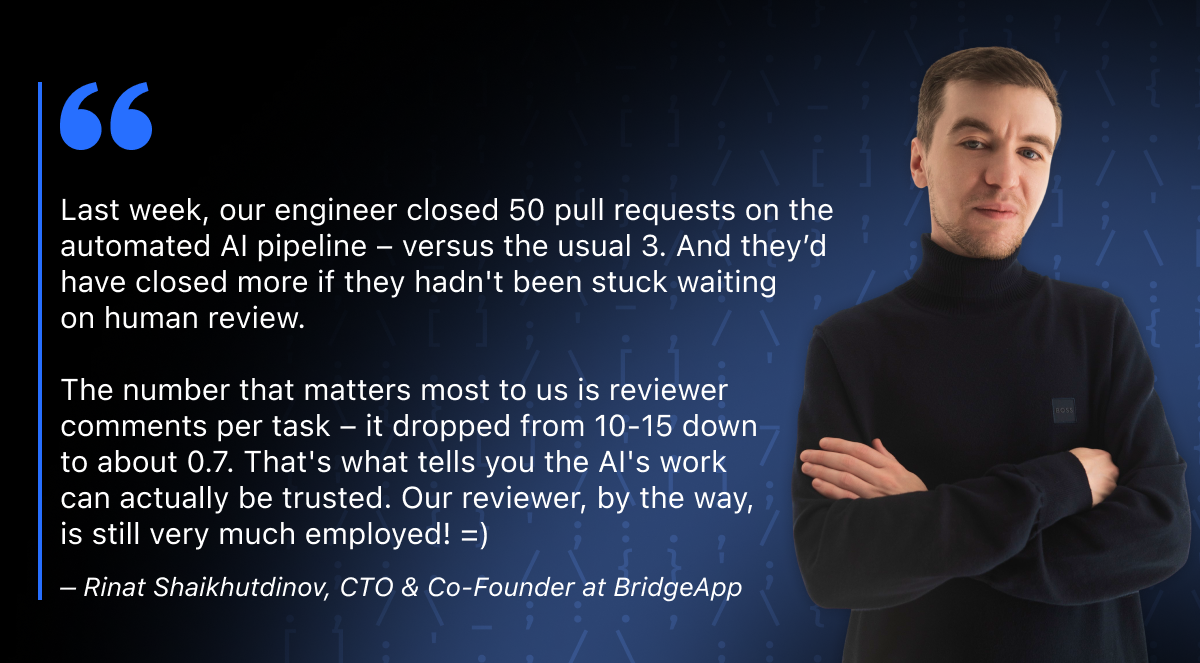
Cost per completed task dropped roughly 10x — from hundreds of euros in human time down to tens of euros with AI.
So here's the question worth asking at your next planning meeting: when AI touches your codebase, do you actually know what it did, why, and who signed off on it?
If the honest answer is "not really," that's exactly the gap we built BridgeApp to close: automation that plugs into your existing process, with approvals and a full record at every step.
If you want to see what that looks like on a real task, let's set up a demo — and from there, a pilot on one piece of your actual backlog.