BlogIndustry Insights
AI-Native Companies Don't Ask Agents for Advice — They Delegate the Whole Workflow

Maria ZhuHead of content
7 min read

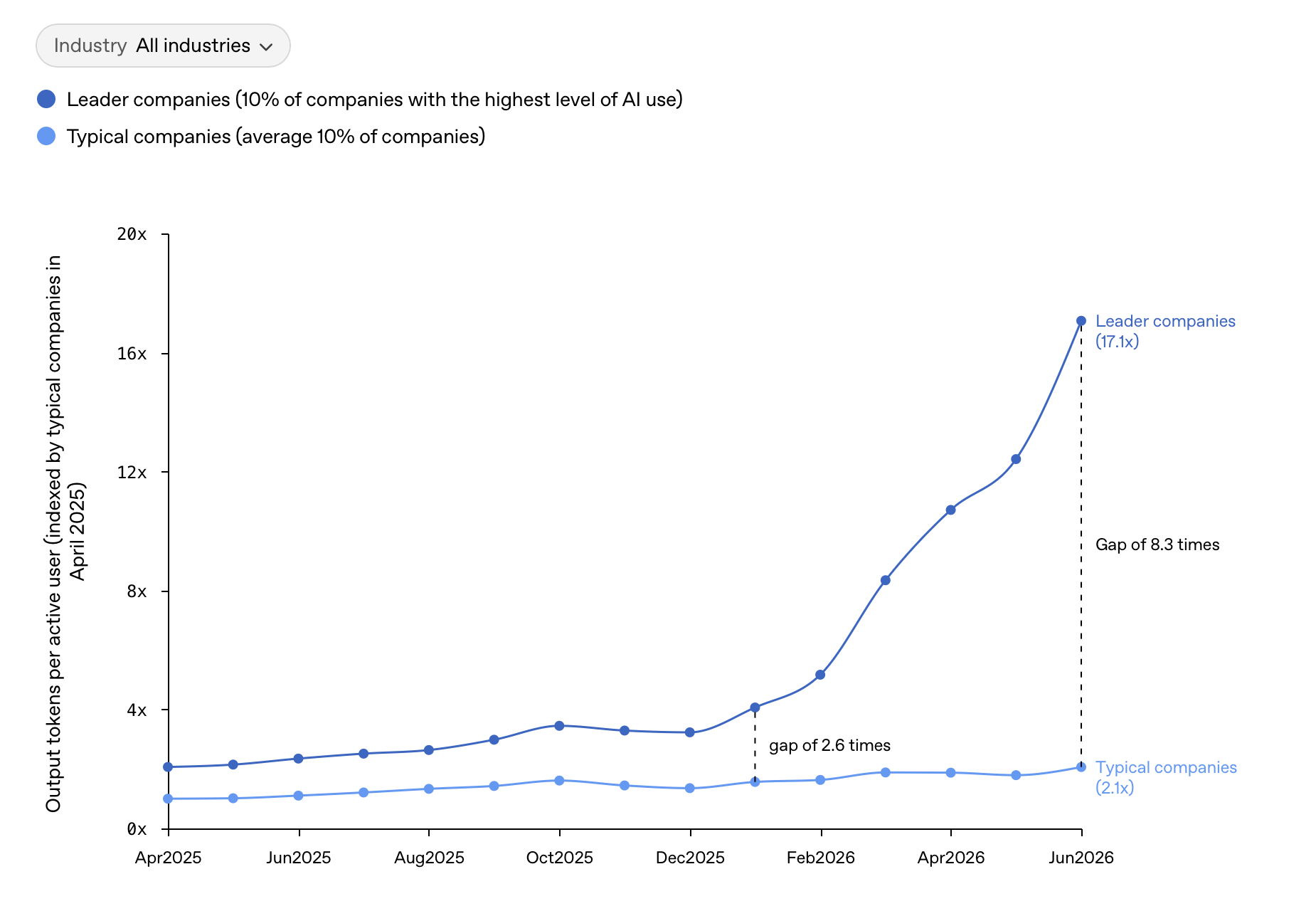
OpenAI's latest Enterprise Signals show enterprise AI moving from assistance to execution at sharply different speeds. Frontier companies — those in the top 10% of AI usage — now generate 8.3x as many output tokens per active user as typical companies, up from 2.6x in January. That widening gap points to a deeper operating shift: leading firms connect agents to company context and tools, delegate more substantive work, and make successful workflows easier to repeat. For leaders, the real challenge is turning that depth into work people can trust, measure, and improve — while still leaving room to experiment with use cases whose value isn't obvious on the first try.
📌 This article is based on two recent OpenAI research pieces — Enterprise Signals: how the AI-native advantage is widening and How AI-native companies turn workflows into operating capability. We've summarized their findings below and linked back to the original research throughout.
Over the past year, the gap between companies that have actually put AI agents to work and everyone else has widened sharply. OpenAI's latest Enterprise Signals report found that companies in the top 10% of AI usage now generate 8.3x more output tokens per active user than a typical company — up from just 2.6x in January. That gap isn't about access to better models; frontier and typical companies use the same underlying models. It comes down to how leading teams have organized agentic AI work around agents, context, and tools.
Here's what separates AI-native companies from the rest, based on OpenAI's data and case studies — and where an AI agent workspace like BridgeApp fits into that picture.
Enterprise AI Is Increasingly Agentic
Enterprise AI is moving from answering questions to actually doing the work. That shift started in software development, driven by Codex. Now ChatGPT Work is carrying agentic AI beyond engineering, letting employees across an entire organization move from asking for help to delegating substantive tasks outright.
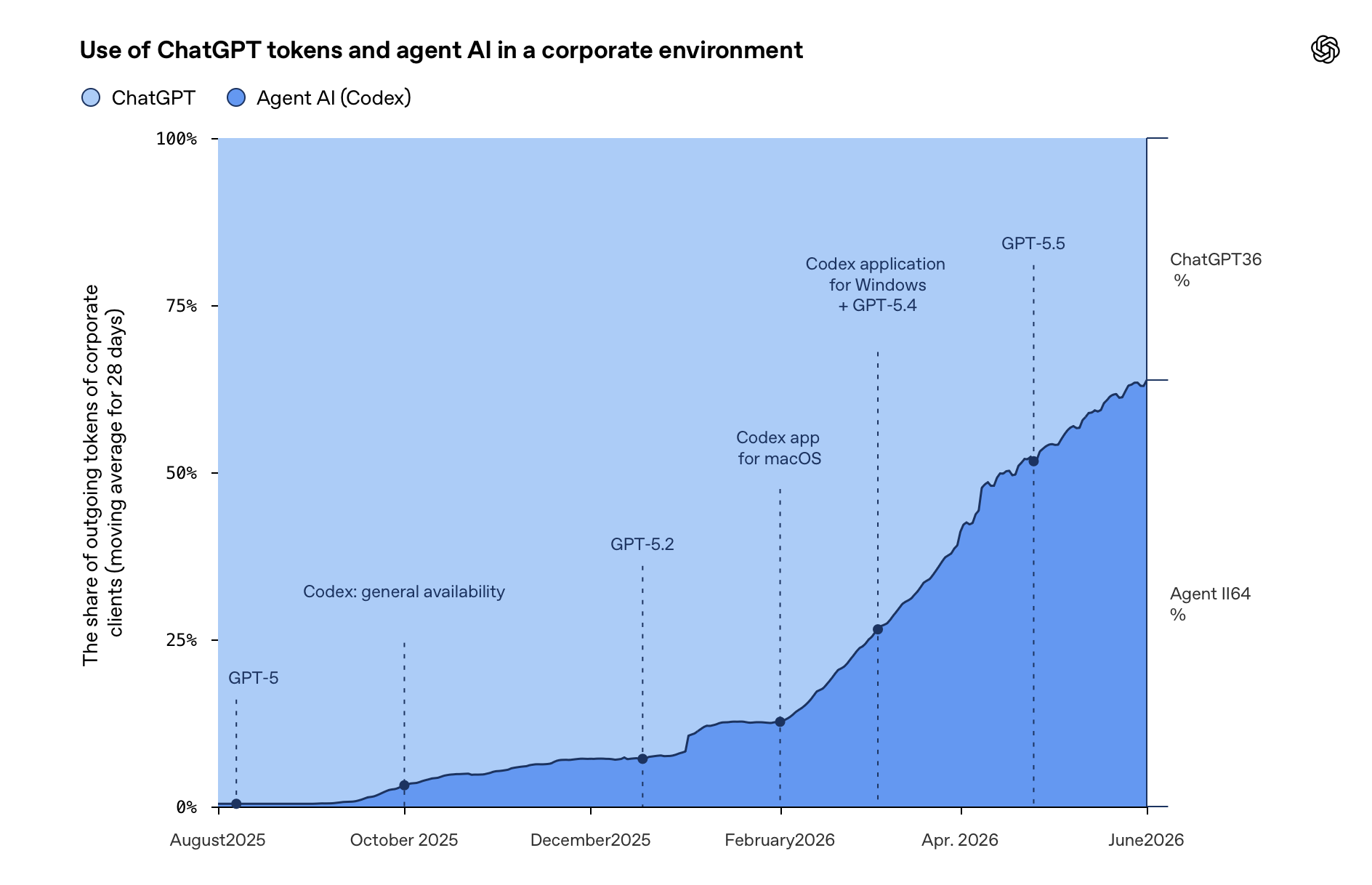
By June 2026, agentic AI (measured here through Codex tokens) accounted for 64% of combined Codex and ChatGPT output tokens among enterprise customers. ChatGPT and agentic AI run on the same underlying frontier models — the difference lies in how that intelligence gets applied.
ChatGPT helps people ask questions, develop ideas, and work through problems. Agentic AI (Codex, ChatGPT Work) gives the model tools to act on your computer directly — it can look up information, edit files, and carry out multi-step tasks autonomously or under supervision. Long, complex tasks tend to demand significantly more compute, which helps explain why token usage on agentic work has grown so fast.
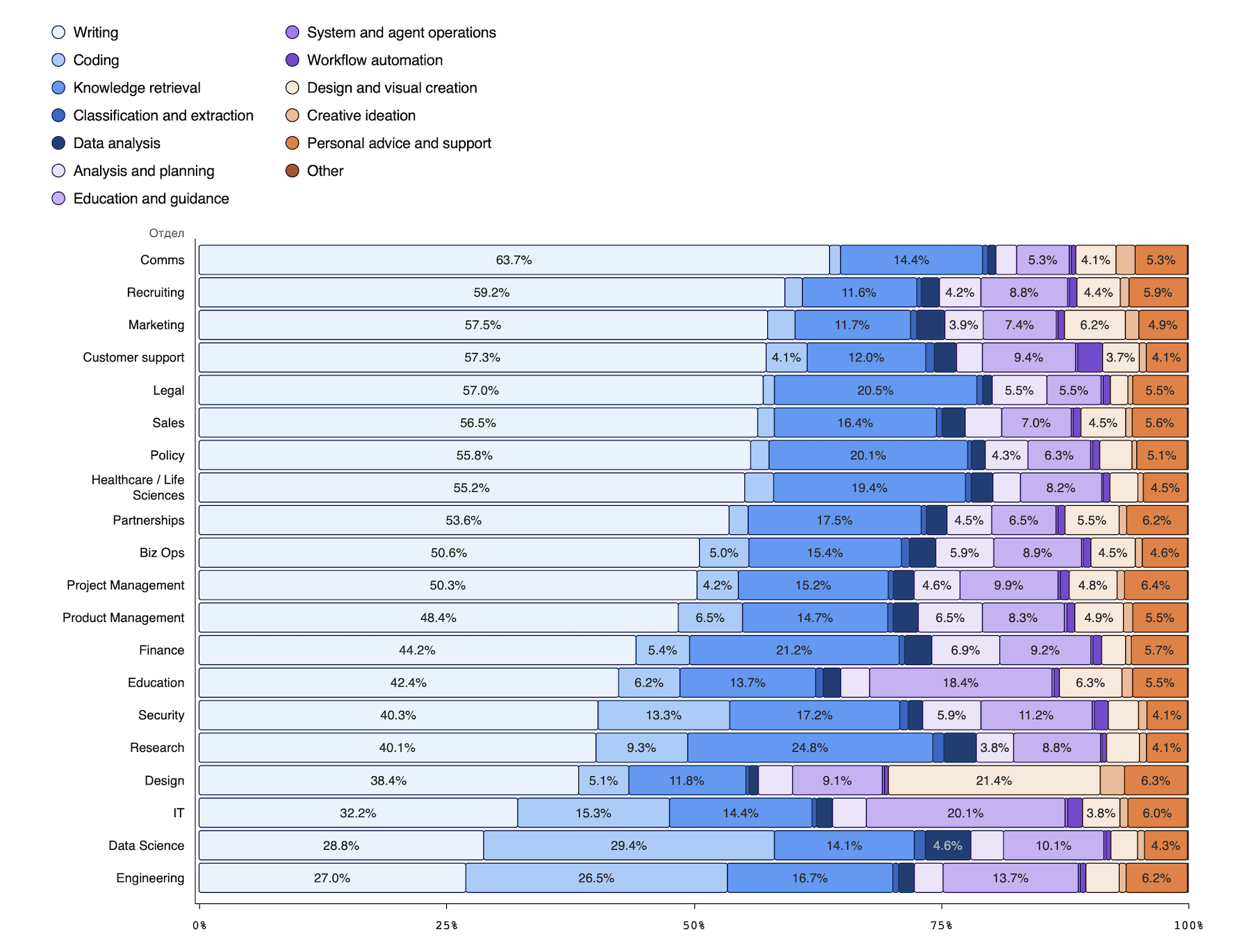
Agent adoption is also moving well beyond software development itself. Since February, the number of active enterprise users of agentic AI grew 108x in legal, 41x in sales and recruiting, and 26x in marketing, compared to "only" 5x in engineering. Software was the first place AI agents took hold because it has clear context (code) and a clear pass/fail signal (tests). That same logic is now spreading to any knowledge work that can be described just as precisely.
The Frontier Gap Keeps Growing
Each month, OpenAI ranks its enterprise customers by output tokens per active user. Frontier companies are the top 10% by monthly AI usage; typical companies fall between the 45th and 55th percentile. By June, frontier companies were generating 8.3x more output tokens per active user than typical companies — up from a 2.6x gap back in January.
That gap shows up industry by industry, too. It's widest in information and technology (11.7x) and narrowest in manufacturing (5.3x). Typical companies, by contrast, look fairly similar across industries, and their token usage has grown only modestly over the past year — somewhere between 1.9x and 2.8x. That points to something specific: a lot of organizations are still using AI as a simple chat assistant, and have real room to grow by handing agents more complex work.
What Sets Frontier Companies Apart
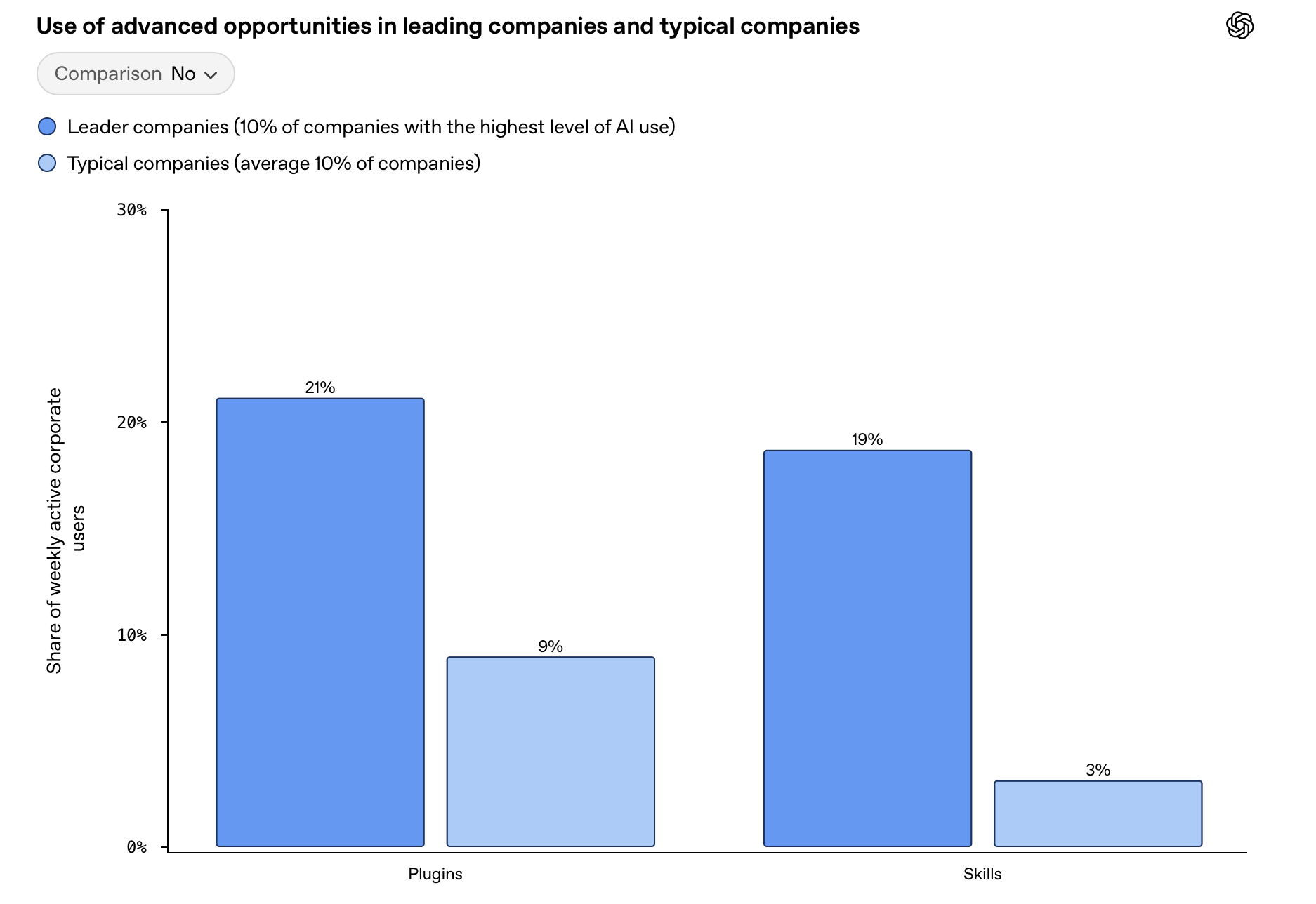
One detail stands out in OpenAI's research: leading companies use extended capabilities — skills and plugins that give an agent access to the right data and tools — far more often. Among active users at frontier companies, 21% use plugins and 19% use skills on a weekly basis, compared to just 9% and 3% at typical companies. In other words, leaders aren't just opening a chat window more often — they're systematically giving their agents context and permission to take specific actions.
Three Real Workflows: Basis, Clay, and Exa Labs
In a companion piece, OpenAI breaks down how three companies — Basis, Clay, and Exa Labs — turned scattered AI experiments into durable operating workflows. The pattern is consistent across all three: teach an agent a stable process first, give it persistent context as the work changes day to day, and only then let it carry opportunities through to a tested result on its own.
- Basis (AI agents for accounting firms) cut first-day employee onboarding from two hours to 30 minutes. New hires get immediate access to an agent and a pre-built onboarding skill that introduces them to the company and sets up integrations in the background.
- Clay (a self-learning revenue engine for go-to-market teams) gives every account a persistent workspace and a dedicated subagent. Each subagent updates its deal folder overnight from CRM records, email, calls, and Slack; every morning, a coordinating agent turns those updates into a short list of priority actions for the seller.
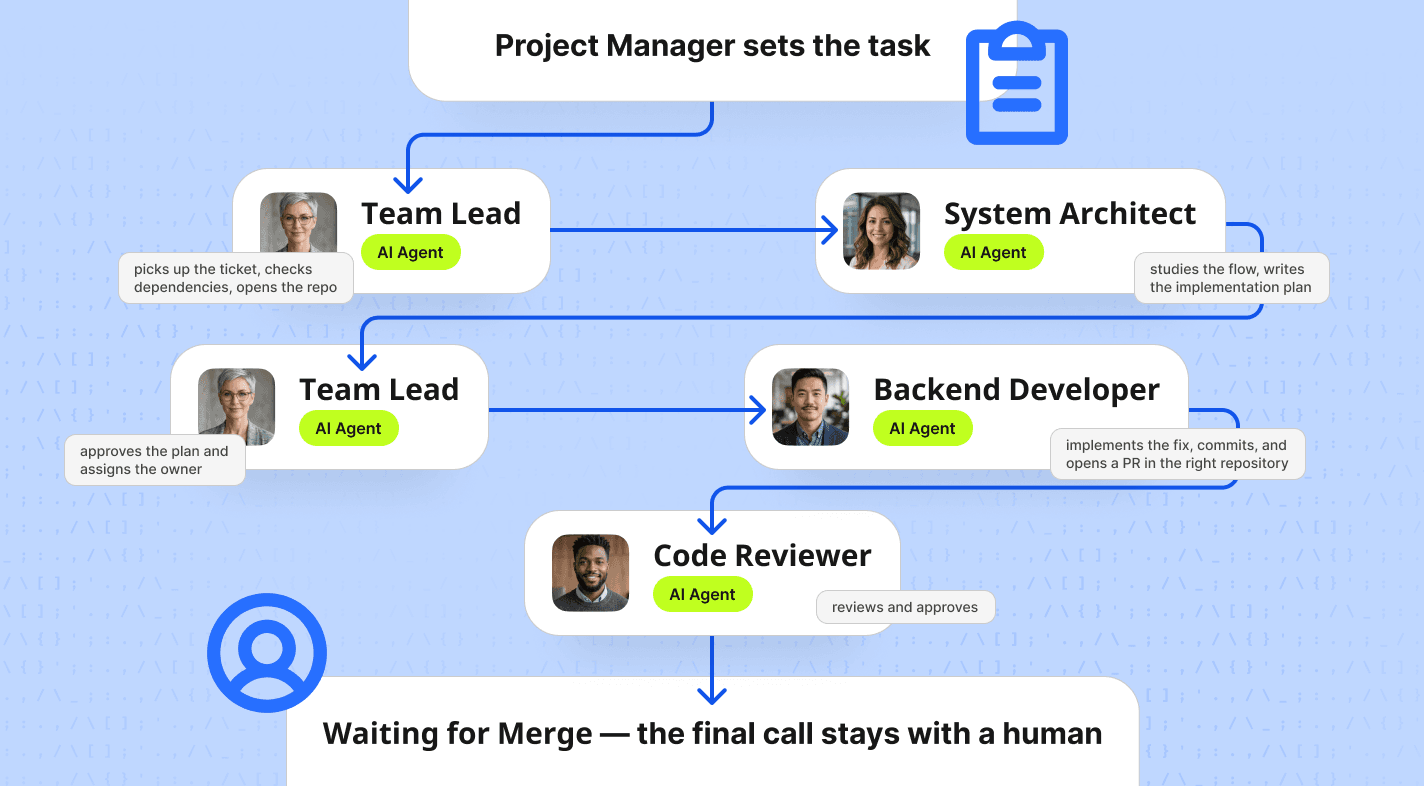
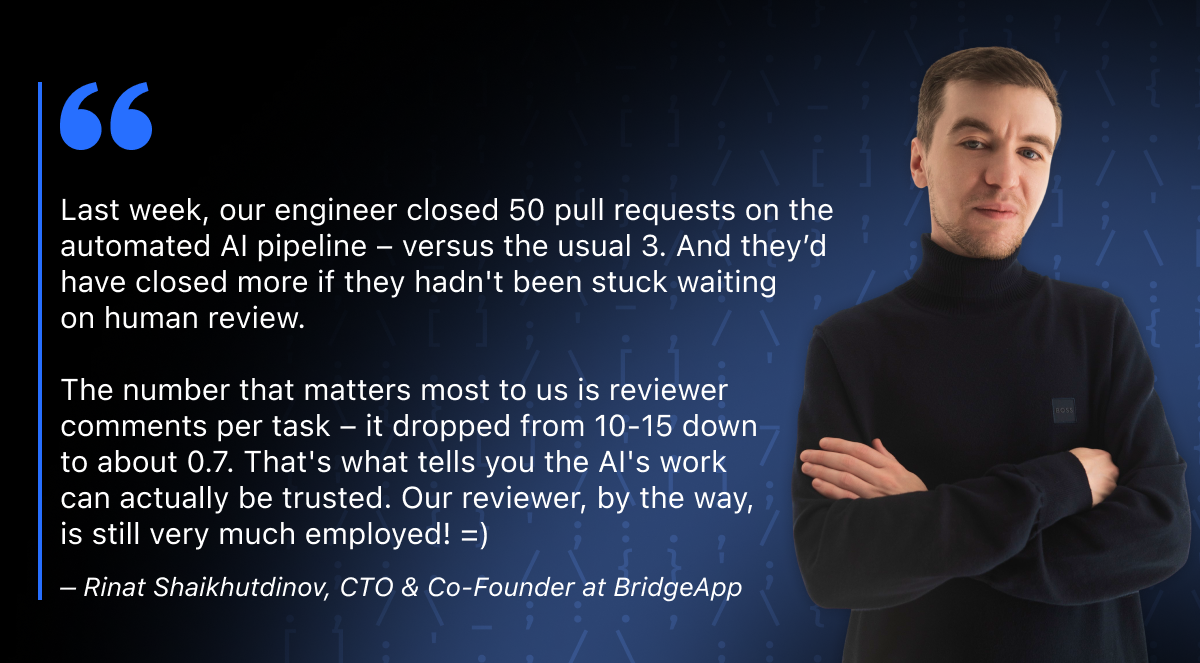
- Exa Labs (search infrastructure for AI agents) has an agent monitor its ecosystem for integration opportunities, open pull requests, run tests, and draft update summaries — while a human always makes the final call on what actually ships externally.
In all three cases, the agent isn't left unsupervised. Access rights are defined up front, checkpoints are built in, and results are validated by tests or human review before they affect anything outside the workflow.
Why This Needs Infrastructure, Not Just a Chat Window
The throughline in both OpenAI reports is the same: for an agent to do real work — not just answer questions — it needs three things at once: context, tools, and the ability to carry a task through to completion without constant back-and-forth with a human. Plenty of tools offer one of these in isolation. The trouble starts when a company tries to wire them together — task history, tool permissions, memory, result validation, and automatic retries on failure — and finds there's no natural place to do it. Done by hand, that turns into a pile of scripts and tribal knowledge that doesn't survive one person's vacation.
That's the layer between "we have a powerful model" and "an agent actually owns the process end to end" — and it's what an AI agent orchestration platform like BridgeApp is built to close.
How BridgeApp's Workspace Puts This Into Practice
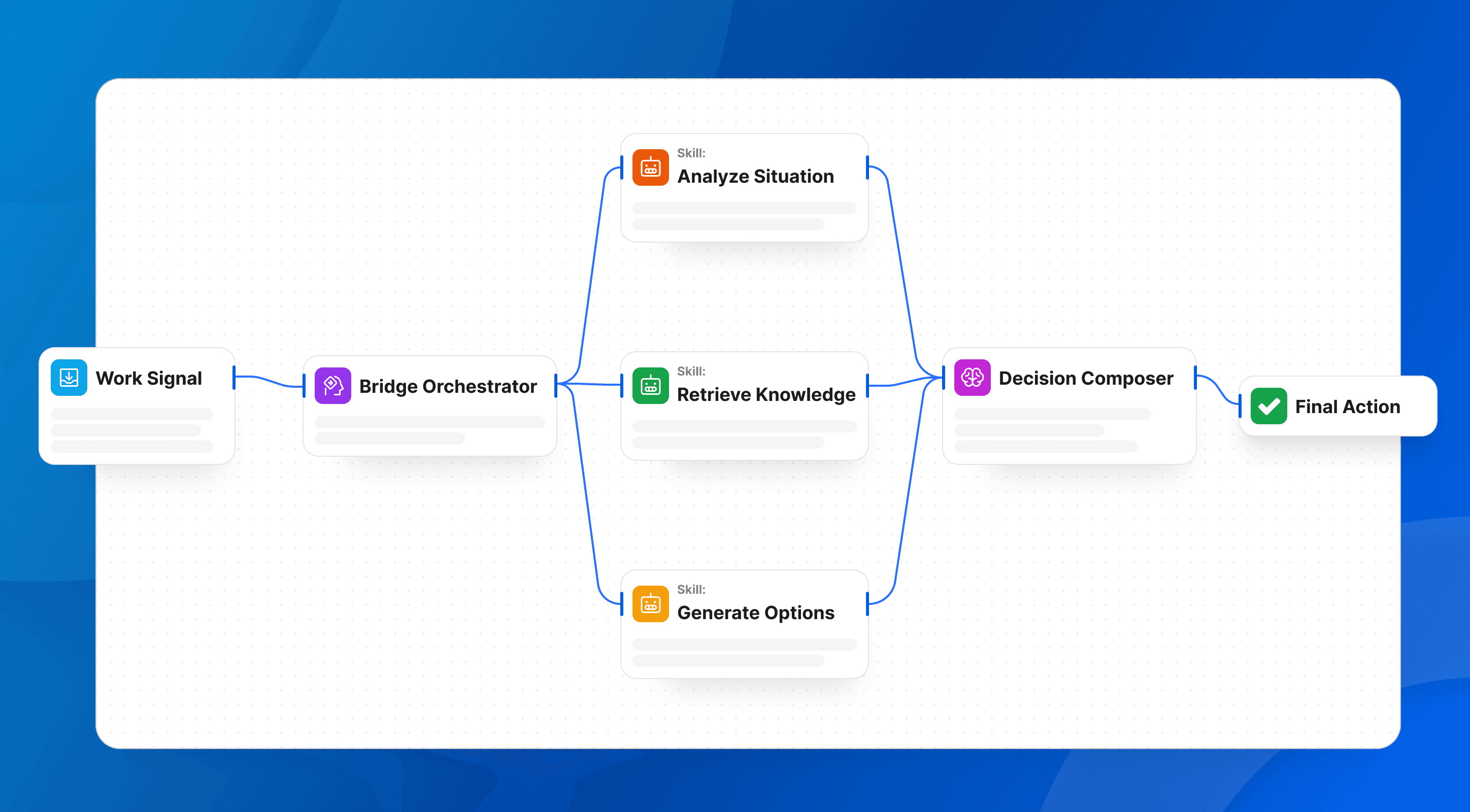
BridgeApp takes AI agents into production as a full-fledged team — not a standalone chatbot, but a managed multi-agent workflow where tasks, context, agent work, validation, and next steps connect into a single process inside one workspace. You set the goals and the rules; context doesn't need to move by hand between steps.
- Orchestration — The board is the workflow itself, shown as a directed graph. Tasks run strictly in order, don't duplicate on trigger, and can be cancelled and restarted. Work keeps going after a failure — not "however it goes" in a script on someone's laptop.
- Flows and automations — Execution graphs you describe yourself: typed nodes with state kept between steps. Runs trigger on a system event or a schedule. Every run's history can be pulled up and checked — no silent failures.
- Multi-agent — Subagents run on the server and in parallel, each with its own saved history, inheriting exactly the context they need. Built-in limits on depth, timeouts, and token/step budgets.
- Memory — Organization-level memory for each agent, private or shared, with safe behavior on failure. Cleaned up in the background while the agent is idle — deduplicates, resolves conflicts, forgets outdated facts.
- Code understanding — A new repository becomes a queryable code graph: who calls what, call chains, links between services, plus layer-by-layer documentation. Edits land in the right files instead of just looking plausible.
- Knowledge / RAG — Search over your knowledge base with per-agent access control and result re-ranking. Documents are versioned and re-chunked on publish, so knowledge stays current without manual re-indexing.
- Access governance — Rules and skills apply by priority; tool access goes through a multi-level MCP mechanism with full audit trails, and skills unlock for an agent gradually. Access is granted centrally — no employee can quietly widen their own permissions.
- Secure execution — Code runs in isolated micro-VMs. Git access is issued short-term and scoped to a specific task; secrets are encrypted at rest. Every permission change is logged to the audit trail.
- Model layer — A single layer over OpenAI, Anthropic, DeepSeek, Moonshot, Groq, and others, with model and reasoning depth selectable per conversation. Automatic retries with increasing delay give you resilience against provider outages.
- Token economics — A byte-stable prompt prefix for caching, per-provider cache accounting, and careful compression of long conversations without losing meaning — noticeably cheaper per token than a naive agent loop.
That maps almost directly onto the question OpenAI's research keeps circling back to: how do you get an agent to do the work, not just suggest it?
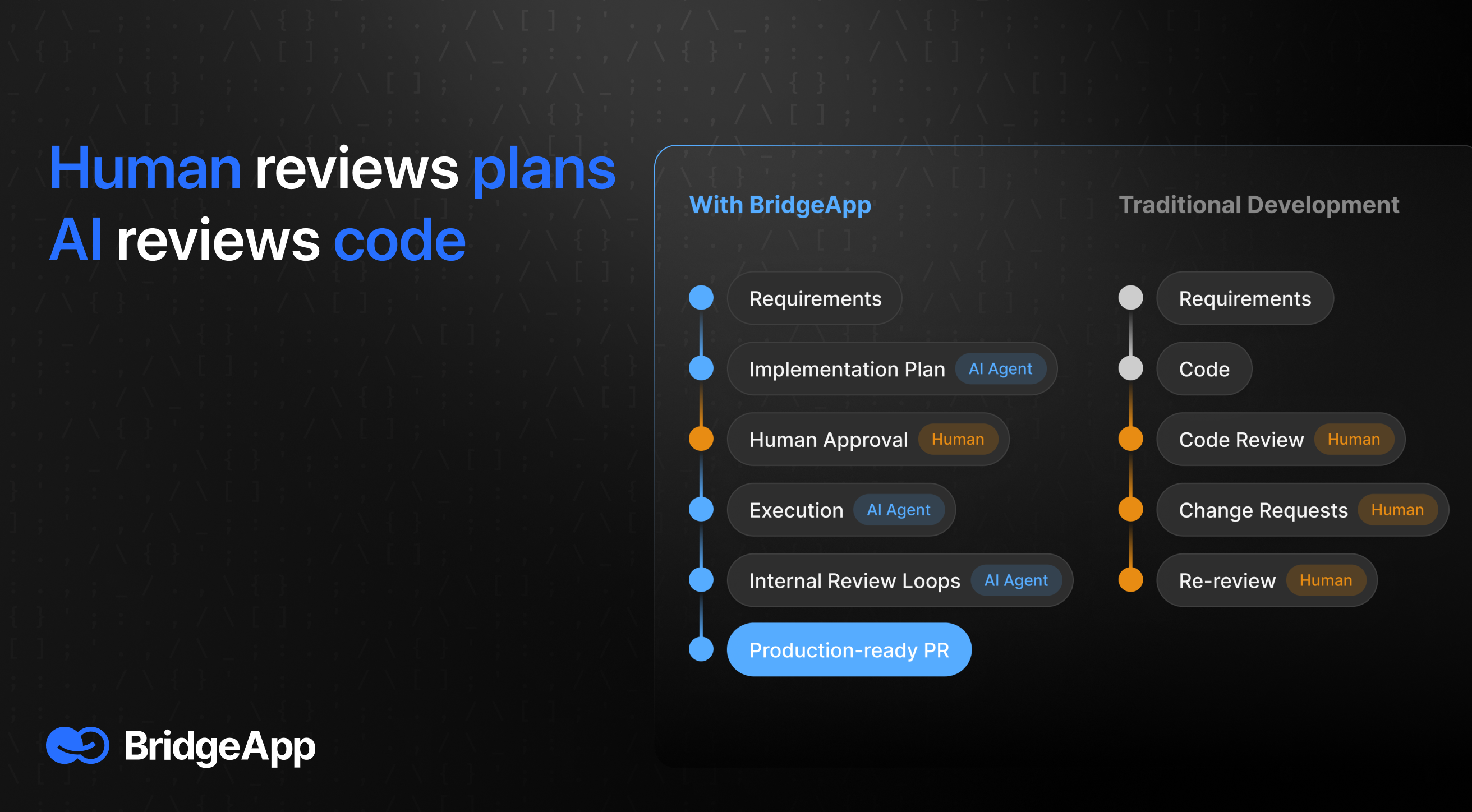
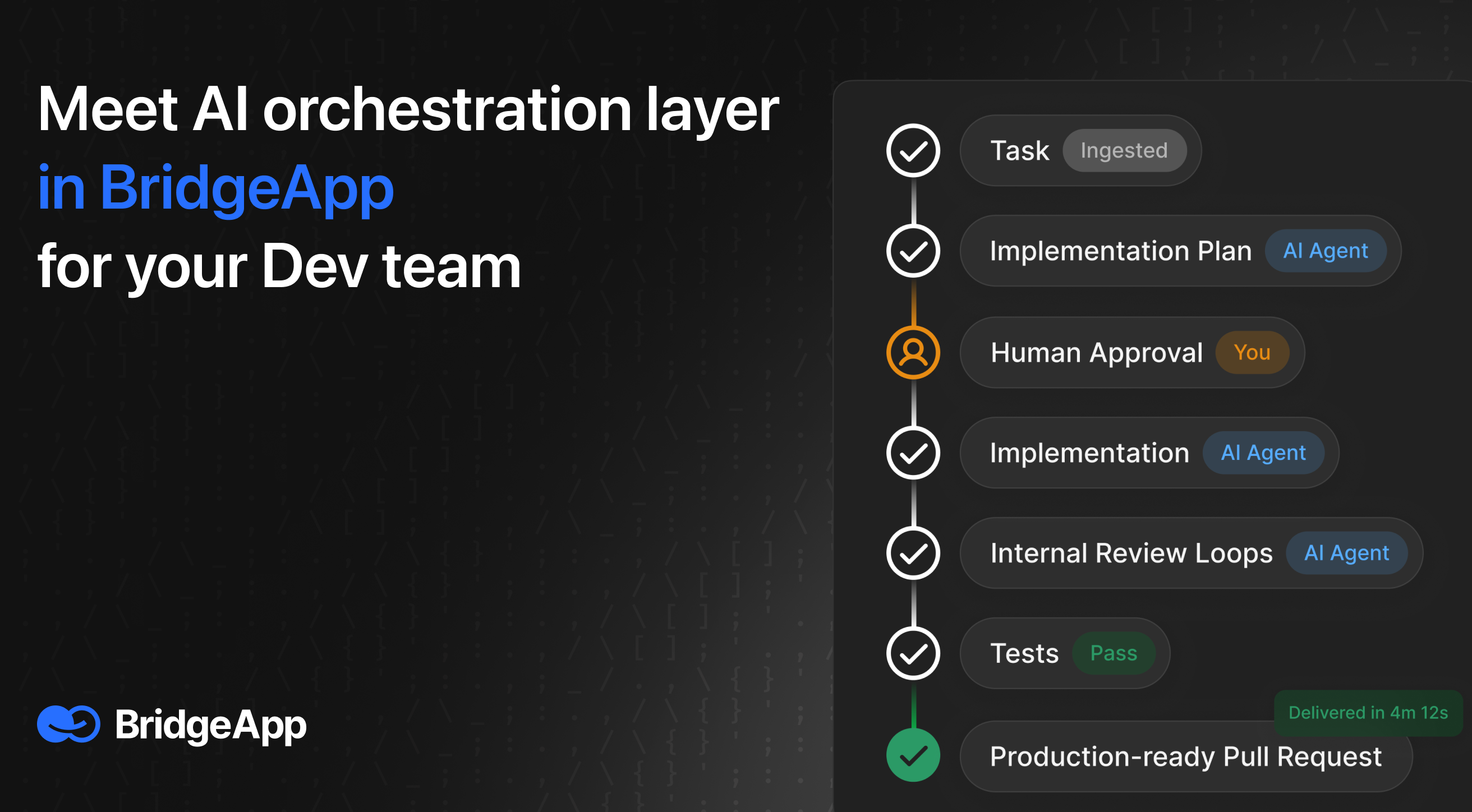
BridgeApp's workspace is the infrastructure layer — orchestration, memory, access control, and execution — that turns that question from a strategy slide into something a team can actually run.