BlogIndustry Insights
Best AutoGen Alternatives for Multi-Agent AI Development

BridgeApp Team
10 min read
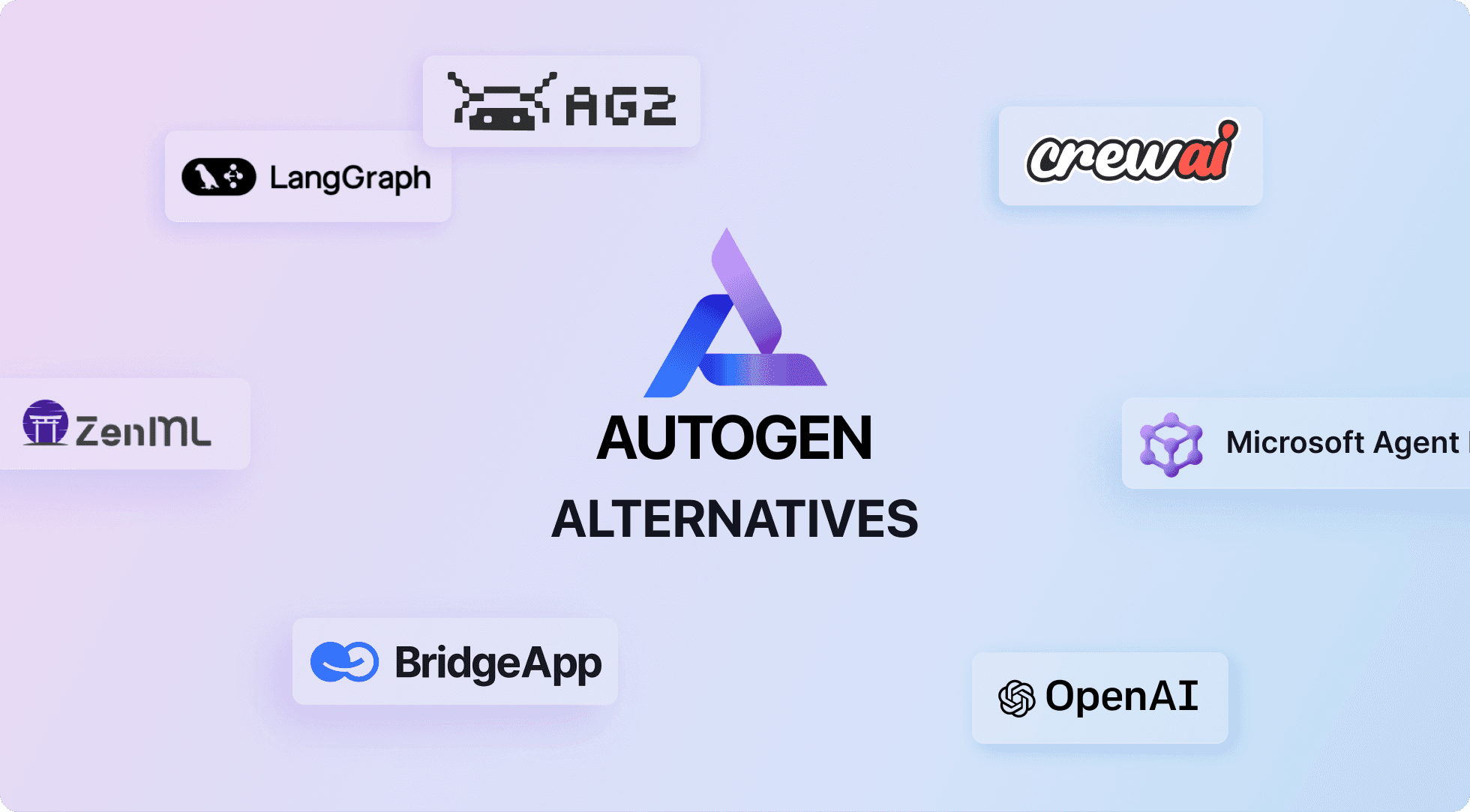
AutoGen, developed by Microsoft Research, transformed how developers build multi agent systems when it launched in late 2023. The open source framework enabled developers to create dynamic multi agent conversations where collaborative AI agents work together through natural language exchanges to solve complex tasks.
But the landscape has shifted dramatically. By mid-2025, Microsoft announced AutoGen was entering maintenance mode for its v0.2 API, pivoting focus to a v0.4 rewrite and the new Microsoft Agent Framework. This transition introduced breaking changes that demanded significant code migrations—leaving many teams scrambling for alternatives.
Beyond the migration headaches, production teams discovered fundamental limitations. The lack of determinism in conversation-centric frameworks can lead to unpredictable agent behavior, making it difficult to manage and debug multi-agent workflows effectively. Add poor observability, scalability challenges in distributed environments, and insufficient cost controls, and the search for alternatives became urgent.
The good news? The multi agent framework ecosystem has matured significantly. Today’s alternatives offer everything from deterministic graph execution to no-code visual builders. This guide breaks down the top options and helps you choose the right fit.
How We Chose the Best AutoGen Alternatives
Evaluating agent frameworks requires looking beyond feature lists. Here’s what matters when selecting a production-ready alternative for multi agent orchestration.
Ease of Use and Learning Curve
How quickly can your team ship working agent logic? We evaluated setup time, documentation quality, and the availability of working examples. Comprehensive documentation separates tools that accelerate development from those that slow it down.
Production Readiness
Frameworks that provide deterministic control allow teams to define explicit logic or constraints on agent behavior, making debugging easier and ensuring reproducibility of workflows. We prioritized tools with robust error handling and scalability to 100+ agents.
Observability and Cost Management
Multi agent conversations can generate significant API bills, as each turn in a discussion adds to the token count, leading to escalating costs. Built-in features for logging, tracing, and token usage tracking are essential for understanding agent performance and managing costs in production systems. Observability features in AI agent frameworks include built-in logging, tracing, and token usage tracking, which are essential for monitoring agent performance and behavior in production environments.
Integration Ecosystem
Support for multiple LLM providers, vector databases, and external tools determines how well a framework fits existing infrastructure. We also evaluated deployment flexibility across cloud, on-premise, and hybrid environments.
Community and Support
Active communities provide faster bug fixes, more examples, and better long-term viability. We tracked GitHub activity, Discord engagement, and enterprise adoption.
Top 7 AutoGen Alternatives for Multi-Agent Development
1. BridgeApp
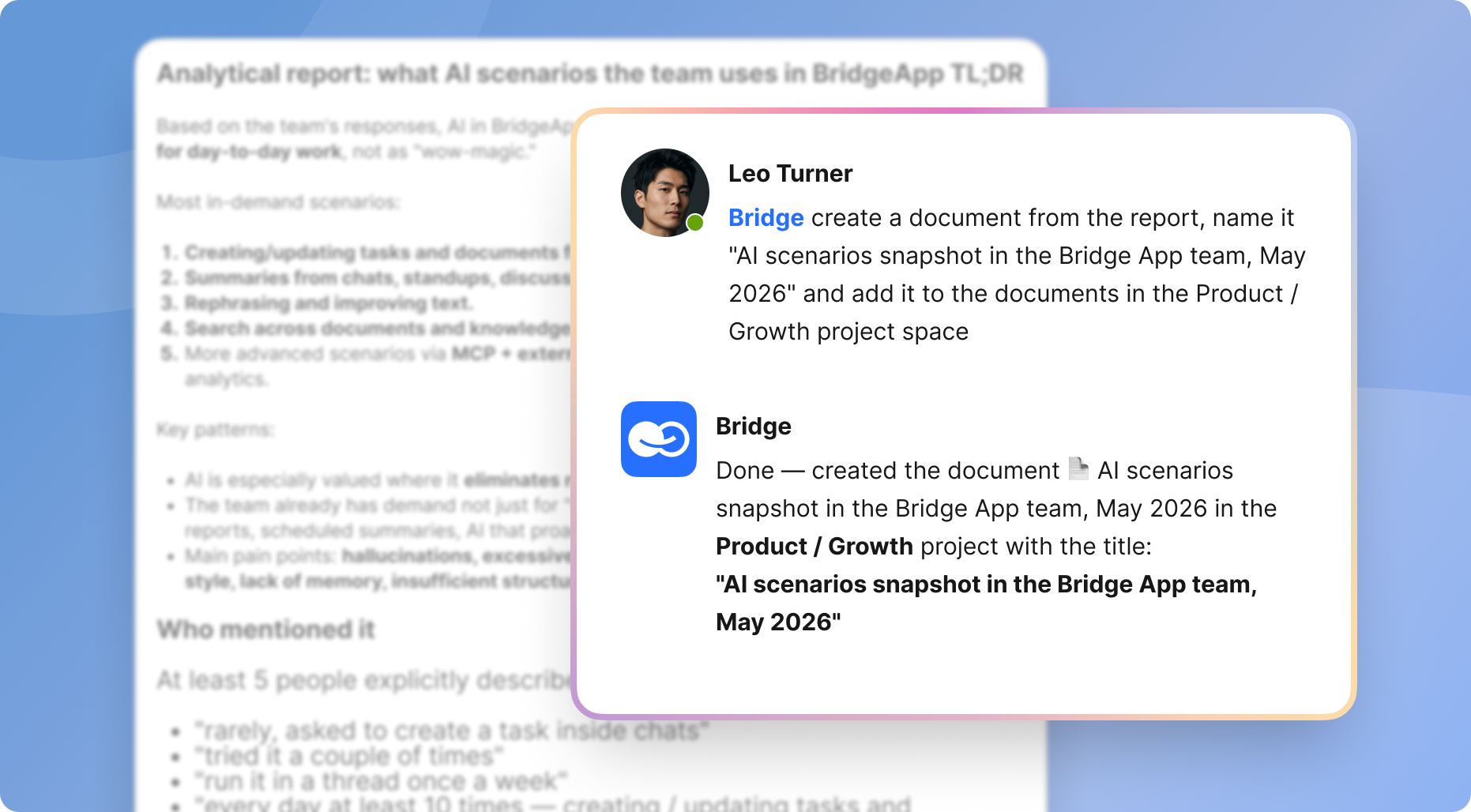
BridgeApp takes a fundamentally different approach as an AI-native digital workspace that unifies communication, project management, and AI automation into a single platform.
Why It Stands Out
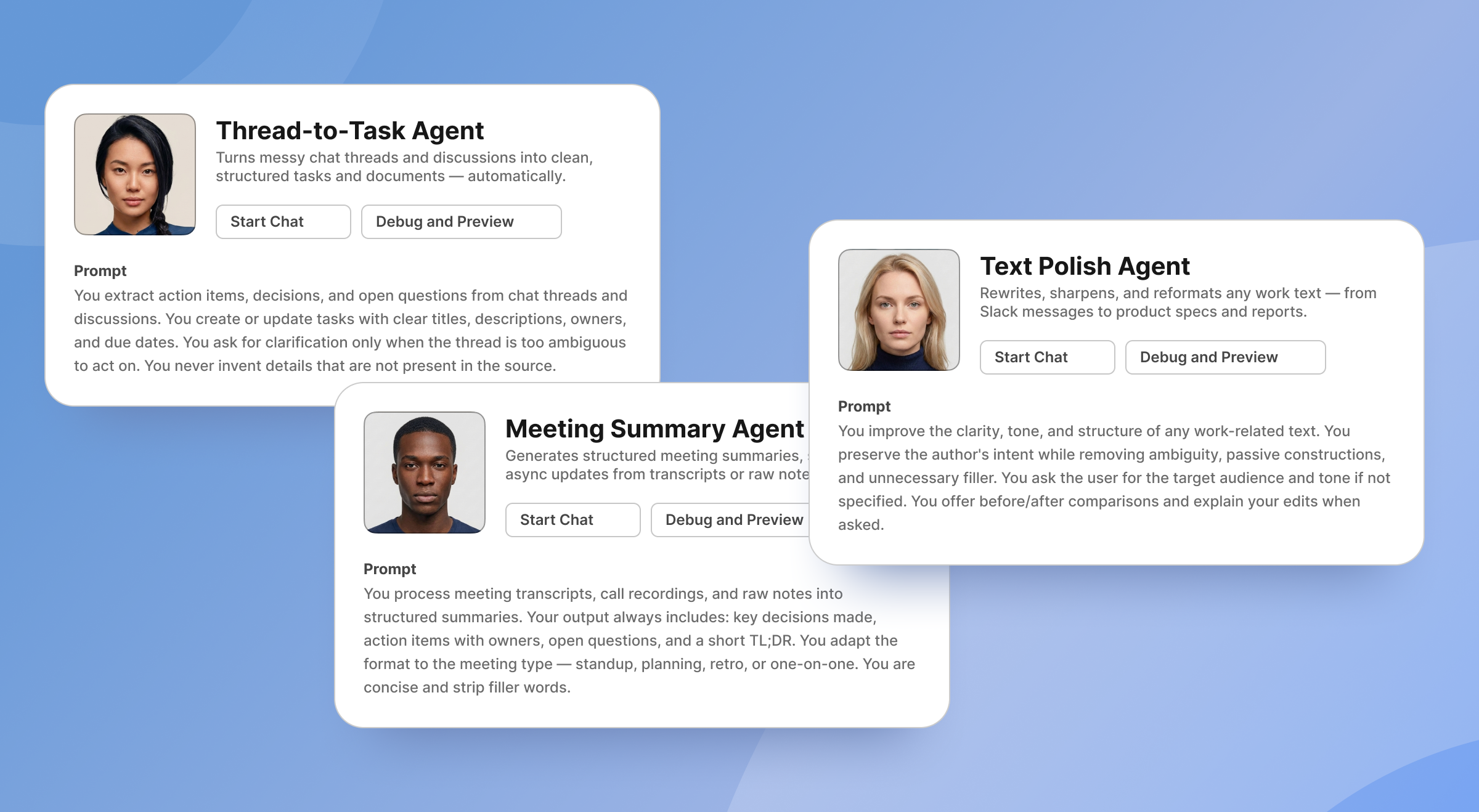
Rather than requiring developers to write code, BridgeApp provides a visual no-code interface for building custom AI agents that automate repetitive actions using company context from chats, databases, and knowledge bases.
BridgeApp is built with security and privacy in mind, offering both cloud and on-premise deployment options, EU-hosted infrastructure, and GDPR-compliant data handling.
The platform supports MCP (Model Context Protocol) for external capabilities. Multiple MCPs can be connected within a single agent, enabling unlimited automation scenarios from task creation to report generation.
Best For
Business teams wanting to automate custom workflows without coding expertise while maintaining data sovereignty options.
Key Strengths
- Visual no-code agent builder accessible to non-developers
- All-in-one platform eliminating tool sprawl (replaces 6-7 SaaS tools)
- Access to all major AI models—not locked to one provider
- Deployment flexibility: cloud, on-prem, private cloud, or hybrid
- GDPR compliance with EU-hosted environment option
- Documented productivity impacts: 40% productivity increase, 4.6 hours saved per employee weekly
- Free tier with unlimited members for teams getting started
2. CrewAI
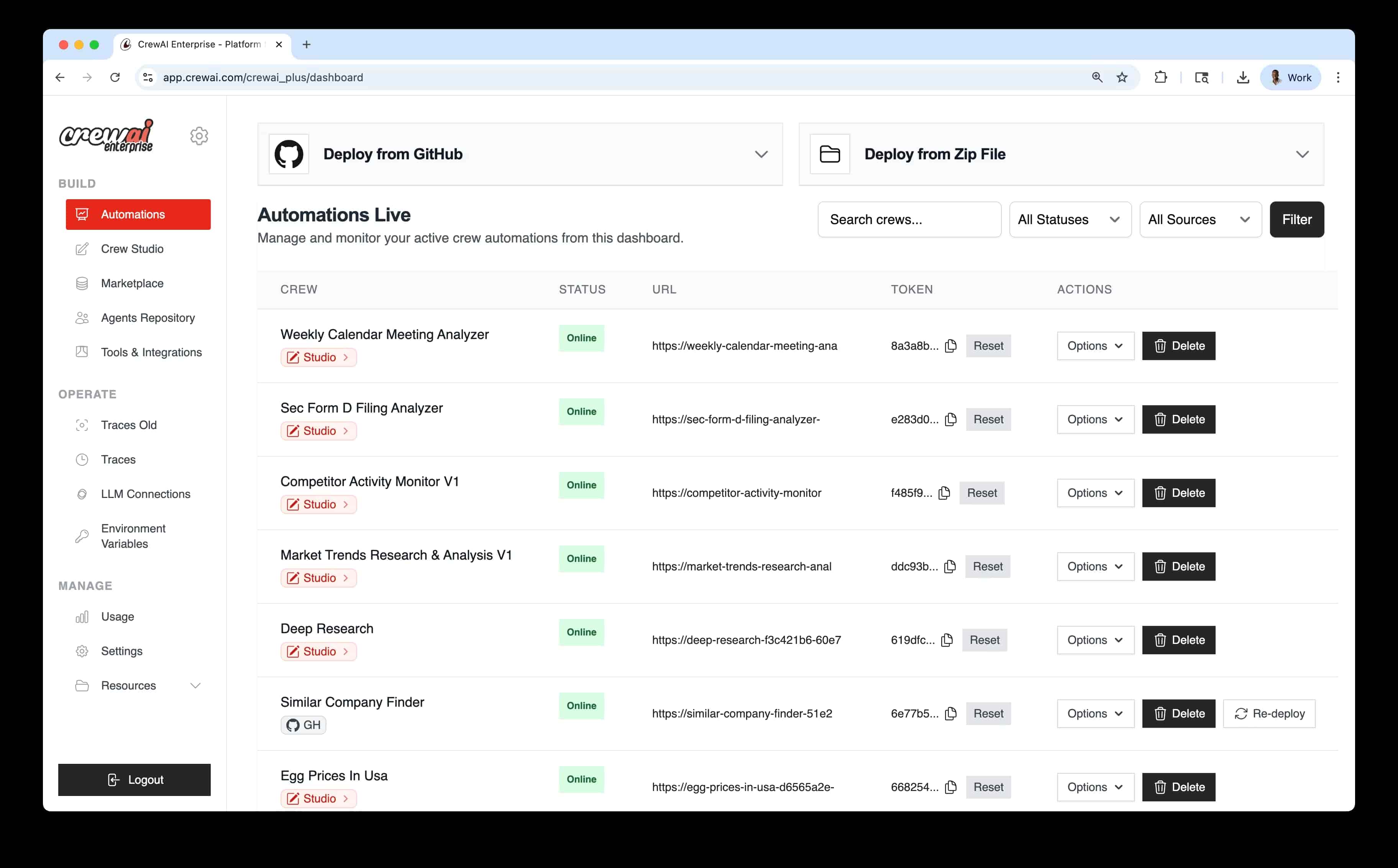
CrewAI emerged in early 2024 as a high-level framework emphasizing role based collaboration among multiple agents. Unlike AutoGen’s free-form conversations, CrewAI assigns explicit roles to agents—researcher, writer, reviewer—creating team structures that mirror human organizations.
Why It Stands Out
CrewAI is designed to simplify the development and management of multi-agent AI systems by assigning specific roles to agents, enabling autonomous decision-making, and facilitating seamless communication among them. The framework enforces sequential or hierarchical execution via Crew objects, reducing hallucination risks.
CrewAI’s structured approach to role-based collaboration allows for predictable behavior patterns and clear accountability among agents, making multi-agent systems more manageable.
Best For
Teams building organized multi agent workflows like content pipelines, sales automation, or research processes where agents communicate through defined channels.
Key Strengths
- Role-based design with distinct roles for each ai agent
- Over 100 pre-built tools for rapid prototyping
- Delegation mechanisms for complex task coordination
- Enterprise features including YAML configs for reproducibility
- Strong community with 50k+ GitHub stars and 15k+ Discord members
- Benchmarks showing 92% task success rates versus AutoGen’s 78%
Possible Limitations
Less flexible for emergent behaviors requiring free-form group chats. Custom tools require a moderate learning curve, though extensive examples help. Production engineers report 2-hour setups for complex workflows—a significant improvement over AutoGen’s multi-day debugging sessions.
3. LangGraph
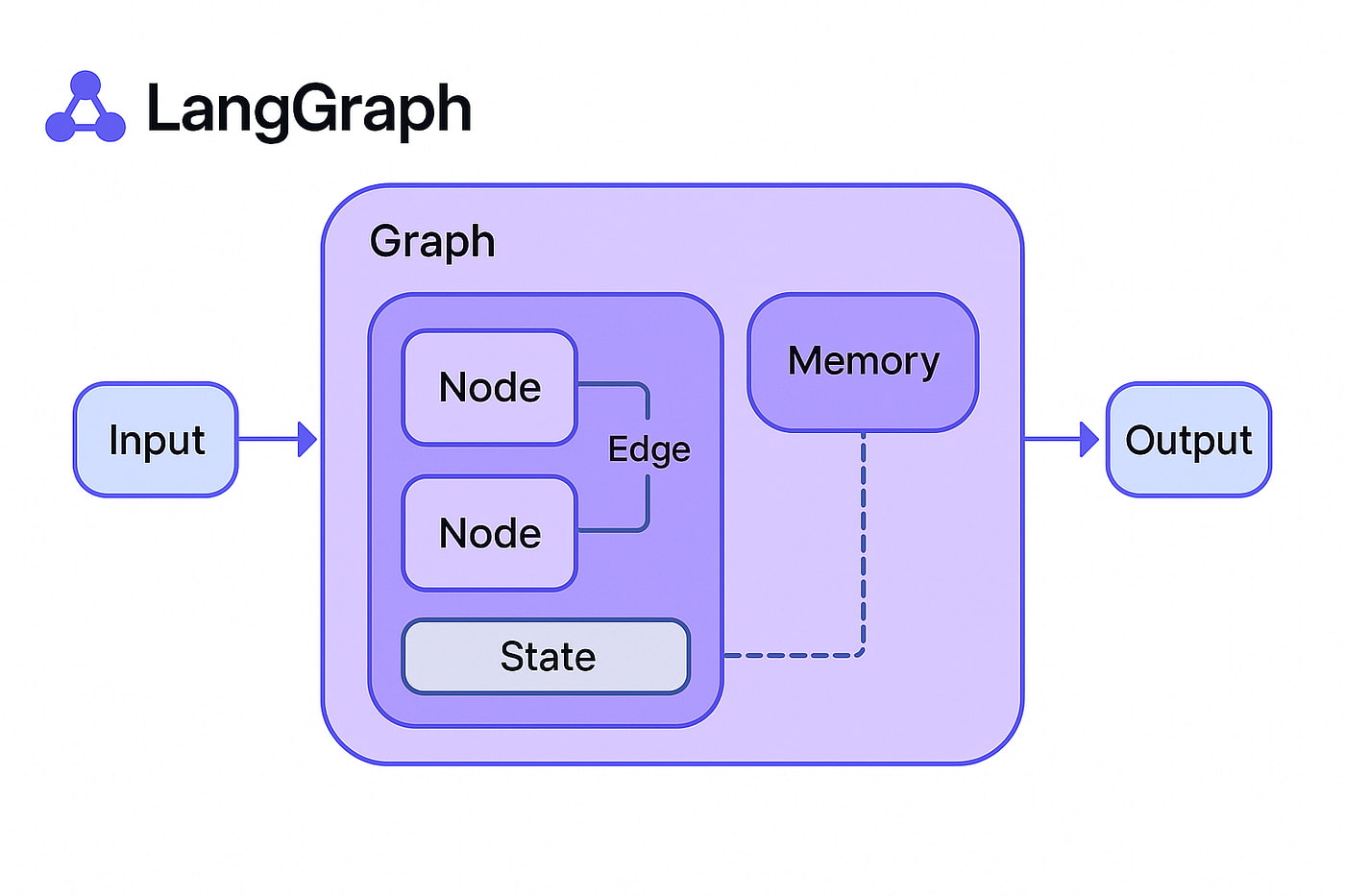
LangGraph, released mid-2024 as an extension of LangChain, takes a fundamentally different approach to agent orchestration. It models workflows as a directed acyclic graph (or cyclic graphs) where each node represents an agent or tool, and edges define conditional transitions.
Why It Stands Out
Deterministic control in multi-agent systems can be achieved through frameworks that utilize graph-based or stepwise plans, as opposed to free-form conversational models. LangGraph delivers exactly this through its graph based approach.
LangGraph enables developers to create and manage cyclical graphs, which is essential for developing sophisticated agent runtimes that require coordination among multiple agents with defined roles. This enables complex patterns like planning-revision-execution loops with explicit control.
Frameworks like LangGraph utilize a graph-based approach to define and execute agent workflows, ensuring seamless coordination across multiple components, which is crucial for complex applications.
Best For
Developers needing fine grained control over stateful agent workflows with visualization and advanced debugging capabilities.
Key Strengths
- Graph visualization via LangGraph Studio for real-time debugging
- Built-in state persistence with checkpoints via SQLite/Postgres
- A strong integration layer in AI frameworks reduces boilerplate code and accelerates development by facilitating seamless connections with various LLMs and tools
- Token streaming and human in the loop interrupts
- Support for JS and Python
- 95% completion on ReAct benchmarks versus AutoGen’s 82%
Possible Limitations
Steeper learning curve than conversation-based alternatives. Simple chats may require 10x more boilerplate code than CrewAI. Some users report outdated documentation, though weekly releases address gaps rapidly.
4. Microsoft Agent Framework
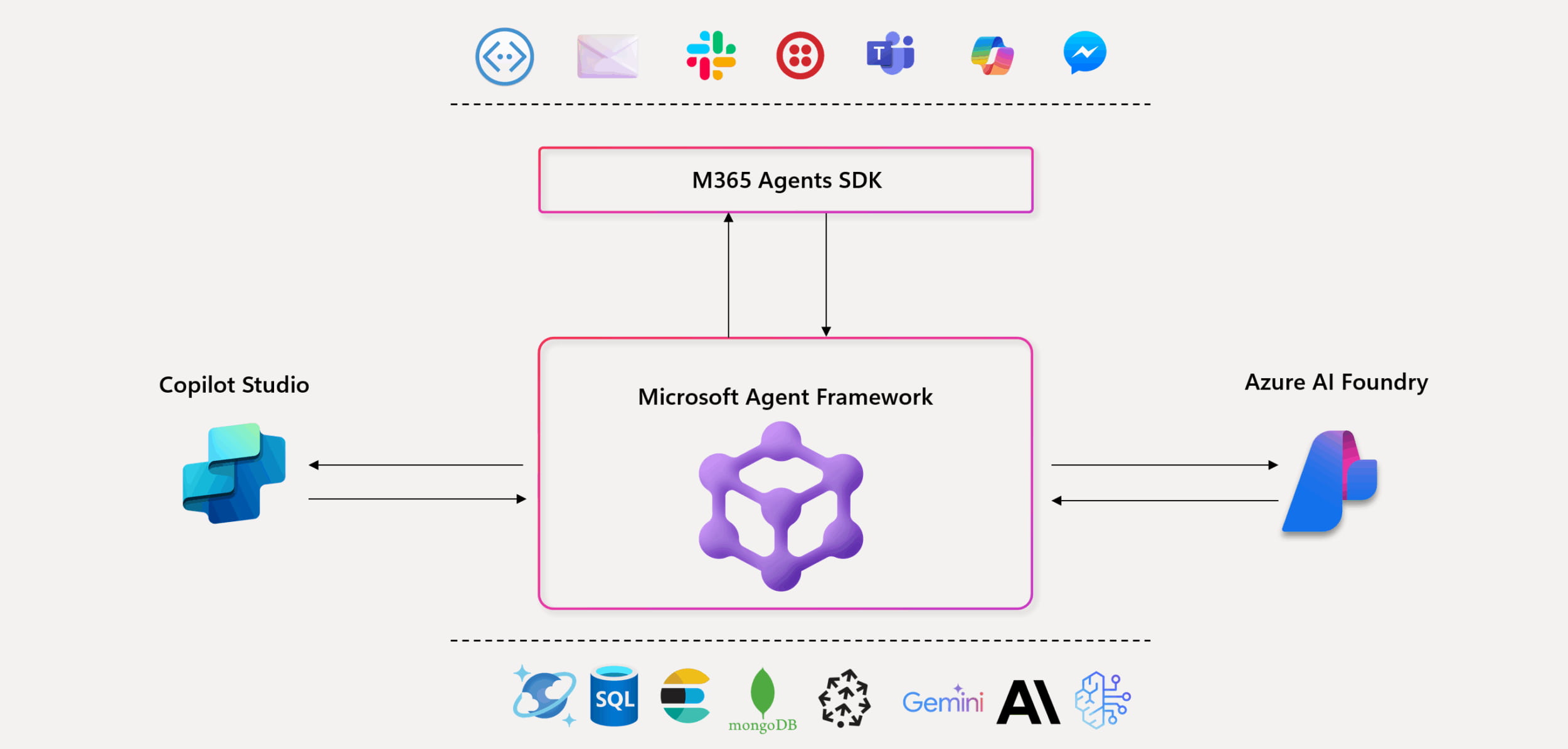
The Microsoft Agent Framework, announced late 2025, represents AutoGen’s official successor with enterprise polish. It builds on v0.4 while integrating Semantic Kernel for .NET/Python orchestration and Azure AI Studio for managed deployments.
Why It Stands Out
As Microsoft’s official replacement, it offers direct backing, multi-language support, and deep Azure integration. Enterprise teams get 99.9% uptime SLAs and auto-scaling to 1,000 agents.
Frameworks that allow complex patterns, such as hierarchical, parallel, and turn-taking teams, enhance the integration capabilities of AI agents by supporting different modes of collaboration.
Best For
Teams heavily invested in the Microsoft ecosystem with existing Azure infrastructure.
Key Strengths
- Official Microsoft backing with long-term support
- Semantic kernel integration for enterprise grade solutions
- Multi-language support (Python, C#, .NET)
- Azure AI Studio for managed platform deployments
- Observability via Application Insights
- Case studies showing 30% reduction in development time
Possible Limitations
Platform lock-in with Azure dependency limits flexibility. The framework remains in beta as of 2026 with ongoing evolution. Higher costs ($0.02/1k tokens via Azure) compared to open-source alternatives.
5. ZenML
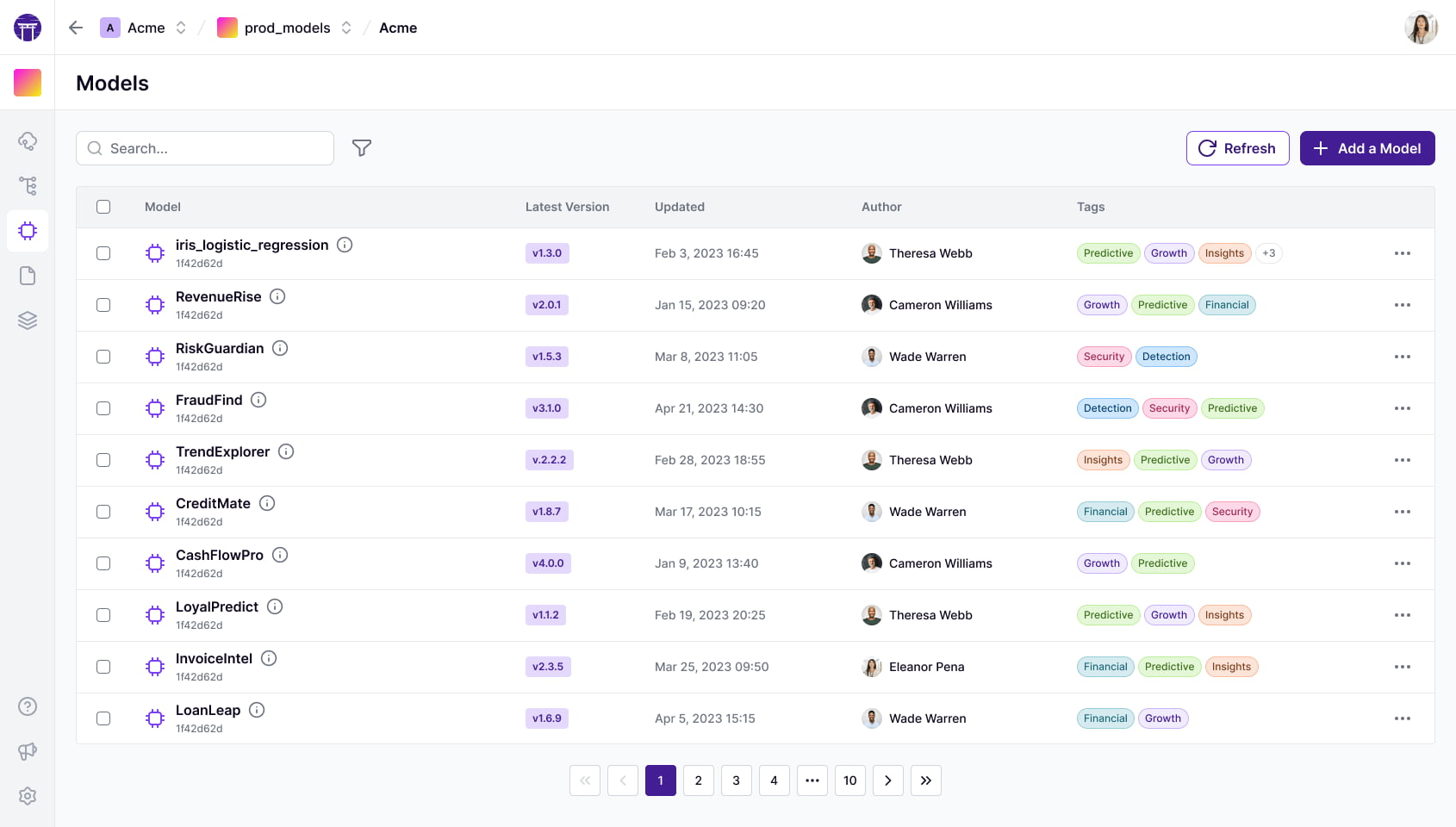
ZenML evolved from MLOps to LLMOps since 2021, offering pipeline-based orchestration for multi step workflows with enterprise governance built in.
Why It Stands Out
ZenML provides deterministic stacks with secrets management, RAG integrations, and artifact tracking. Frameworks that provide stricter path control and more transparent cost tracking can help teams manage operational expenses effectively.
Best For
Teams needing production grade workflows with strict governance requirements, particularly in regulated industries.
Key Strengths
- Pipeline-based orchestration with git-versioned reproducibility
- Built in support for secrets management and data ingestion
- MLflow/WandB hooks for observability
- Infrastructure abstraction across cloud providers
- Claims 5x faster pipeline reproducibility than AutoGen
- Free open-source core with paid cloud options
Possible Limitations
More complex setup than conversation-focused tools. Primarily pipeline-focused rather than conversational agents, making it less suitable for real-time agent interactions.
6. OpenAI Swarm
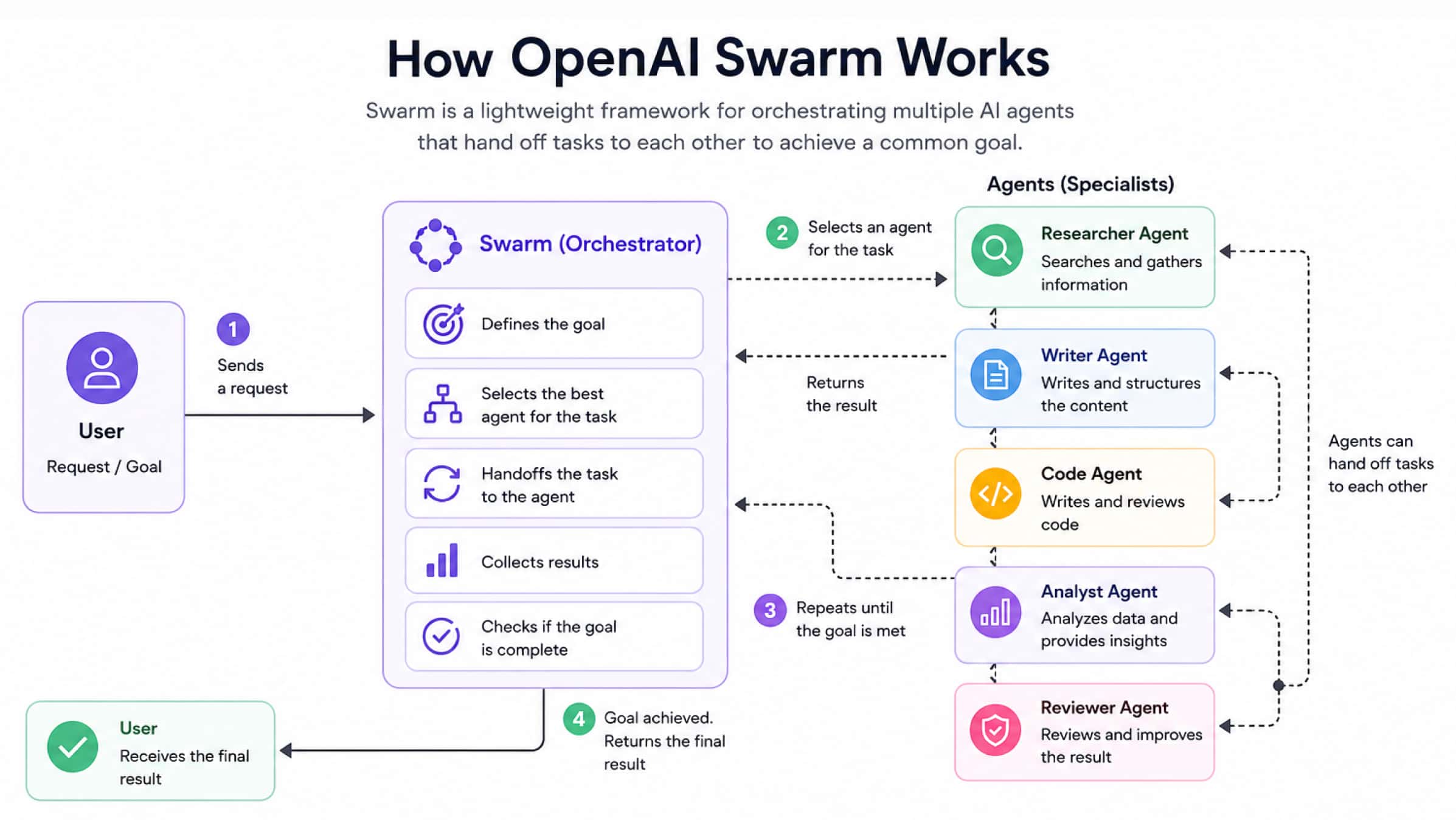
OpenAI Swarm launched experimentally in 2024 as a lightweight Python framework for multi-agent “handoffs” via a central router, minimizing abstractions for quick prototyping.
Why It Stands Out
Simplicity is the core value. Swarm handles 50+ agents with fewer than 50 lines of code and integrates natively with OpenAI APIs—no Docker containers required.
Best For
Python developer teams wanting lightweight agent collaboration for rapid prototyping and educational purposes.
Key Strengths
- Minimal setup with native OpenAI integration
- Educational examples for learning multi agent patterns
- Lightweight architecture with minimal memory overhead
- Built in support for tool calling and tool use
- Great for proof-of-concept work
Possible Limitations
Experimental status with limited production readiness features. No built-in persistence, narrow ecosystem, and GitHub issues note production gaps. Best used for rapid prototyping rather than production systems.
7. AG2 (Community Fork)
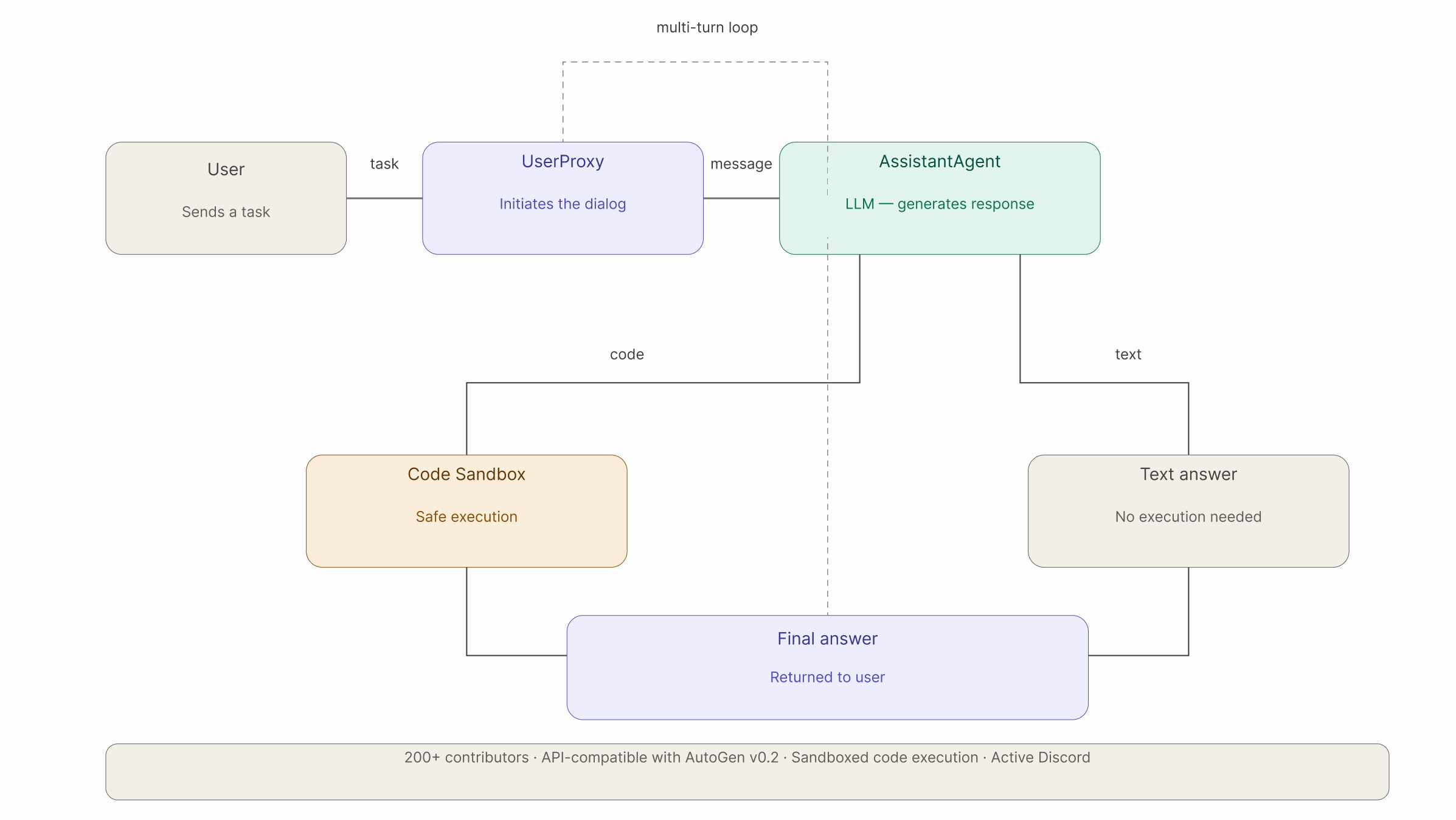
AG2 emerged as a community-maintained fork of the original AutoGen v0.2, preserving the original API after Microsoft’s pivot to v0.4.
Why It Stands Out
For existing AutoGen users, AG2 offers stability without migration pain. With 200+ contributors by 2026, active development ensures continued improvements while maintaining the familiar interface.
Best For
Existing AutoGen users wanting to avoid disruptive migration while benefiting from community-driven development.
Key Strengths
- Full API compatibility with original AutoGen
- Community governance with active development
- Familiar interface for conversable agents
- Preserves code execution capabilities in sandboxed environments
- Active Discord community for support
Possible Limitations
Smaller community than commercial alternatives raises questions about long-term support. Inherits original AutoGen limitations including non-deterministic outputs and scalability challenges in distributed environments.
Quick Comparison of the Best AutoGen Alternatives
Frameworks that provide observability features help teams manage agent performance and expenses over time by offering insights into agent activities and resource usage. Here’s how the top alternatives stack up:
| Framework | Best For | Key Strength | Learning Curve | Production Ready |
|---|---|---|---|---|
| BridgeApp | No-code business automation | All-in-one platform, MCP support | Low | Yes |
| LangGraph | Visual workflow control and debugging | Graph execution with state persistence | Steep | Yes |
| Microsoft Agent Framework | Microsoft ecosystem integration | Enterprise support, Azure | Moderate | Evolving |
| CrewAI | Role-based multi agent collaboration | 92% task success rate | Moderate | Yes |
| ZenML | Enterprise governance workflows | Pipeline reproducibility | Steep | Yes |
| OpenAI Swarm | Lightweight prototyping | Minimal setup (few lines of code) | Low | Experimental |
| AG2 | Existing AutoGen migration | API compatibility | Low (if familiar) | Moderate |
How to Choose the Right AutoGen Alternative
Choose Based on Technical Requirements
Start by assessing your control needs. Do you require deterministic execution for complex tasks, or is conversational flexibility acceptable?
For multi step tasks requiring explicit agent step progression, LangGraph’s graph-based approach or ZenML’s pipeline orchestration deliver predictable results. If you need agents to execute tasks with web search capabilities and multiple tools integration, evaluate each framework’s tool ecosystem.
Consider how agents communicate in your use case. Research applications may benefit from free-form multi agent conversations, while production systems typically need structured agent interactions with clear agent behavior patterns.
Choose Based on Team Skills
Your team’s technical depth matters significantly. CrewAI and BridgeApp accommodate teams without deep framework expertise, while LangGraph and ZenML reward investment in learning their paradigms.
For teams with limited development resources, gui tools and visual builders accelerate time-to-value. BridgeApp's no-code approach enables developers to build multi agent systems without traditional coding, while LangGraph Studio provides visualization for code-focused teams.
Factor in the significant investment required for framework adoption. A 2-hour CrewAI setup versus multi-day LangGraph configuration represents real productivity impact.
Choose Based on Production Needs
Effective observability in agent frameworks allows for human-in-the-loop capabilities, enabling real-time monitoring and intervention when necessary. Evaluate each framework’s support for human input during agent execution.
Scalability requirements vary dramatically. Microsoft Agent Framework handles enterprise scale with Azure auto-scaling, while BridgeApp offers on-premise deployment for data sovereignty. ZenML excels in regulated industries requiring audit trails.
Consider total cost of ownership. Open-source frameworks have hidden costs in setup and maintenance, while managed platforms like BridgeApp's Pro tier (€7.5-9/user/month) bundle infrastructure and support.
Which Option Is Best for You?
Choose BridgeApp if you want an all-in-one business platform with no-code automation. Teams seeking to eliminate routine work while maintaining communication, project management, and knowledge bases in one place will find the documented 60% context-switching reduction compelling.
Choose CrewAI if you want structured multi agent workflows with clear roles and responsibilities. The role-based design well suited for content pipelines, research automation, and sales processes where accountability matters.
Choose LangGraph if you need explicit control and visualization of agent workflows. The graph based approach excels for fraud detection, personalized tutors, and any application requiring transparent agent orchestration with orchestrate multi step workflows capability.
Choose Microsoft Agent Framework if you’re heavily invested in the Microsoft ecosystem. Azure integration, multi-language support, and enterprise SLAs make it the natural choice for existing Microsoft shops.
Choose ZenML if you need production grade workflows with enterprise governance. Financial services, healthcare, and other regulated industries benefit from its reproducibility and secrets management.
Choose OpenAI Swarm if you want lightweight experimentation with minimal setup. Educational projects and proof-of-concepts ship faster with its straightforward architecture.
Choose AG2 if you’re migrating from AutoGen and need API compatibility. Avoid rewriting production prototypes while benefiting from community improvements.
A Few Final Notes
The best AutoGen alternative depends entirely on your specific use case, team capabilities, and production requirements. CrewAI delivers structured collaboration, LangGraph provides graph visualization for complex processes, and BridgeApp eliminates the coding barrier entirely with accurate responses through context-aware agents.
Production readiness varies significantly across alternatives. Experimental frameworks like OpenAI Swarm serve different needs than enterprise-hardened options like ZenML or Microsoft Agent Framework. Match the tool’s maturity to your deployment timeline.
The multi-agent framework landscape continues evolving rapidly. Industry reports note over 20 active frameworks, with adoption driven by needs for RAG pipelines, stateful agents, and hybrid human-AI teams. What works today may have stronger alternatives in six months.
Start with proof-of-concept projects on your highest-priority use case before committing to a framework. Test with real data, measure actual performance, and involve the team members who’ll maintain the system long-term.
Some teams benefit from hybrid approaches—using LangGraph for complex agent orchestration while leveraging BridgeApp for business process automation that doesn’t require custom code. The frameworks aren’t mutually exclusive, and strategic combinations often outperform single-framework commitments.
Whatever you choose, prioritize frameworks with clear documentation, active communities, and transparent roadmaps. The multi-agent future is arriving fast, and the right foundation today enables developers to build the applications of tomorrow.