BlogIndustry Insights
Working With Remote Teams: Best Practices

BridgeApp Team
7 min read
Key Takeaways
- Set clear, outcome-based expectations from day one using frameworks like OKRs or SMART goals—focus on results, not hours online.
- Design remote-first communication that balances synchronous meetings with asynchronous workflows across multiple time zones.
- Build trust and psychological safety through regular check ins, consistent rituals, and constructive responses to mistakes.
- Standardize tools and documentation to reduce friction; platforms like BridgeApp centralize onboarding, learning paths, and performance tracking.
- Proactively support work life balance and detect stressors early through pulse surveys and 1:1 conversations.
- These practices apply to fully remote teams and hybrid setups alike, spanning cultures from New York to Bangalore.
Introduction: Why Remote Team Best Practices Matter in 2026
Remote and hybrid work have evolved from emergency measures into strategic norms since 2020. Today, distributed teams across cities like New York, London, Bangalore, and São Paulo routinely collaborate on shared projects, operating across multiple time zones as a single unit.
Here’s the reality: remote work succeeds when expectations, tools, and company culture are deliberately designed—not left to chance. Teams that treat remote as an afterthought see 2.5x higher turnover rates.
This article covers concrete practices for managing remote employees, from setting clear expectations to feedback loops and well-being support. Tools like BridgeApp can help systematize these practices through structured onboarding, async check ins, and learning modules.
Set Clear Expectations From Day One
Clarity becomes critical when your team members lack the informal cues of in office work. Without hallway conversations and visible desk time, miscommunication causes 27% of remote project failures.
Define specific outcomes using proven frameworks:
- Use OKRs or SMART goals with concrete deadlines (e.g., “ship feature X by July 15, 2026”)
- Measure results through KPIs like resolved tickets, completed campaigns, or code quality metrics
- Contrast this with “desk time” tracking, which reduces engagement by 15-20%
Establish availability and response norms:
- Set overlapping working hours (e.g., 10am-4pm across team time zones)
- Define response times for async channels (24 business hours for non-urgent Slack or email)
- Create protocols for urgent issues (phone calls for crises)
Create a remote team charter documenting norms—meeting cadence, tools, decision-making processes—and share it with new hires. Teams using charters report 30% faster alignment.
Design Communication for Remote-First Collaboration
Remote teams must be remote-first, not treating remote workers as afterthoughts to an office-centric culture. This means prioritizing digital communication as the default, not the exception.
Understand sync vs. async:
- Synchronous: video calls, live meetings—use for complex decisions, sensitive discussions, real-time brainstorming
- Asynchronous: docs, threaded messages, recorded videos—use for updates, status posts, and respecting schedules
Standardize your channels:
- Slack or MS Teams for quick chat
- Zoom or Google Meet for video calls
- Email for external communication
- BridgeApp for structured processes and unified team workflows
Guide what goes where: decisions in shared docs, quick questions in chat, project updates in dedicated channels. End every meeting with a recap of decisions, owners, and deadlines in writing.
Support Asynchronous Communication Across Time Zones
Async is essential for teams spread from California to Berlin to Singapore—spanning 12+ hours. Without it, someone always loses sleep.
Set clear SLAs:
- 24 business hours for non-urgent messages
- Label urgency in subject lines or channel tags (e.g., “URGENT” prefix)
- Use structured daily or weekly written standups: “What I did, blockers, next steps”
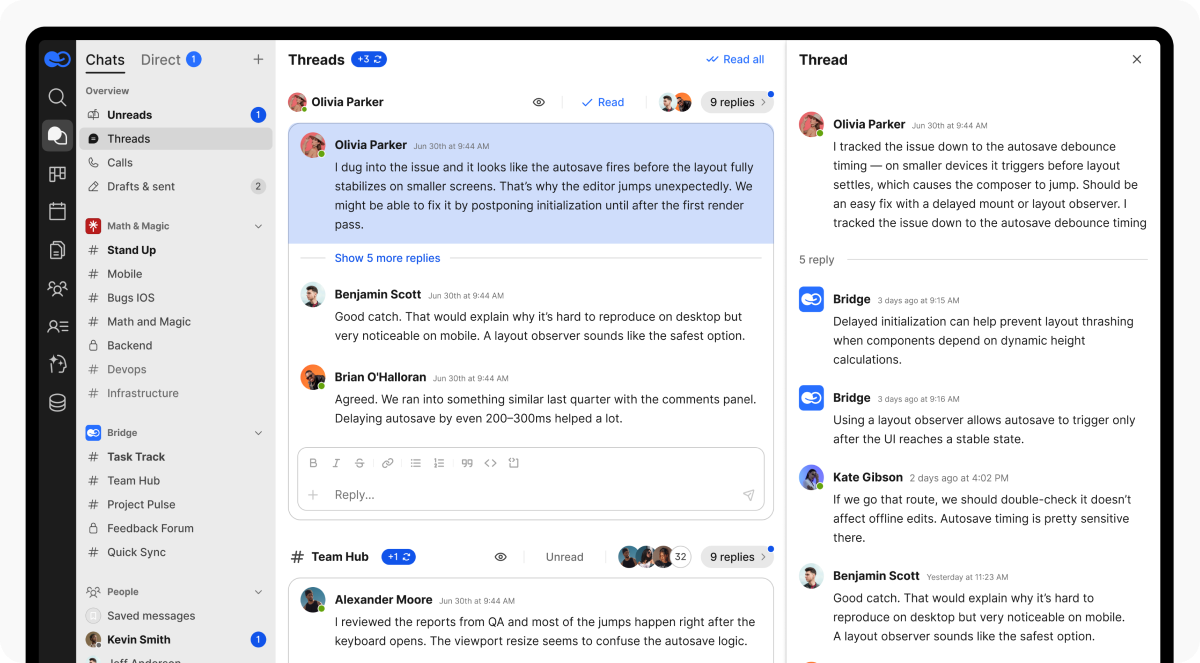
BridgeApp can host repeatable async workflows—onboarding sequences, knowledge checks, feedback surveys—so team members complete them on their own time. Threading conversations and summarizing long discussions prevents “inbox bankruptcy” for those waking up to hundreds of messages.
Make Meetings Intentional and Inclusive
Meetings should be rare, purposeful, and inclusive—not recurring calendar clutter. Research shows the average professional spends 23 hours per week in meetings, much of it unproductive.
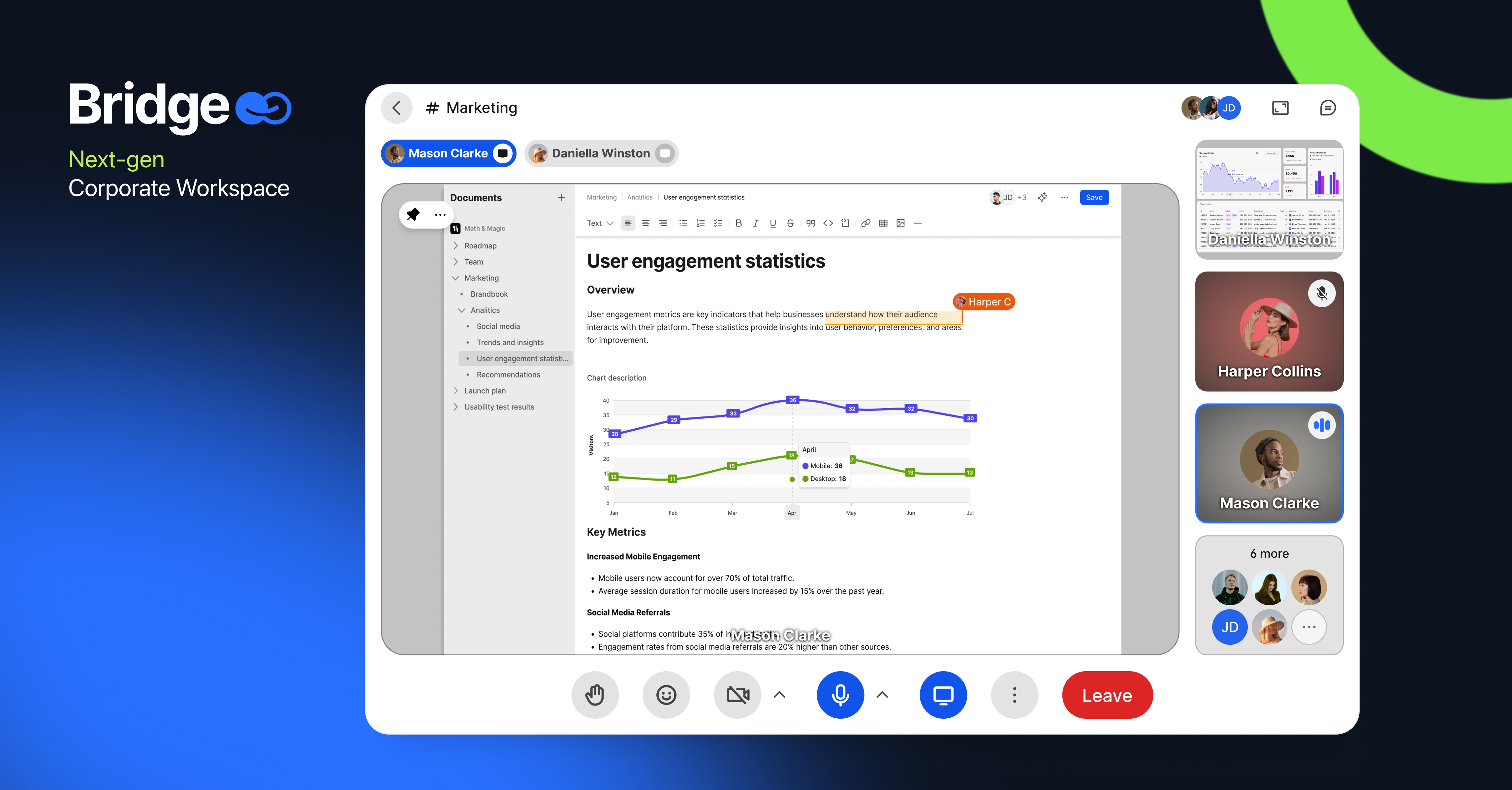
Meeting-worthy topics include:
- Complex decisions requiring real-time collaboration
- Sensitive issues needing nuance
- Brainstorming that truly benefits from live discussion
Meeting hygiene practices:
- Share agendas 24+ hours in advance with clear objectives
- Cameras on when bandwidth allows
- Use hand-raise or chat to prevent talking over each other
- Rotate facilitation across direct reports
Ensure inclusion: use round-robins, directly invite quieter members to share, and protect scheduling for less dominant time zones. End with a recap: decisions, action items, owners, deadlines, and where notes are stored.
Build Trust and Psychological Safety at a Distance
Lack of hallway chats and body language makes trust-building slower remotely—but it’s achievable. Google’s Project Aristotle identified psychological safety as the top predictor of team success.
Default to trust and autonomy:
- Focus on results, not screen monitoring or constant pings (monitoring spikes stress 40%)
- Hold regular check ins covering progress, blockers, and personal well-being—not just task lists
- Schedule weekly or bi-weekly 1:1s
Use consistent rituals:
- Weekly team check-ins
- Monthly retrospectives
- Informal virtual coffees to build rapport
When mistakes happen, focus on “what process failed?” rather than blame. This reinforces psychological safety and encourages risk-taking. BridgeApp supports trust through transparent learning paths, documented expectations, and shared visibility into progress.
Recognize Contributions and Celebrate Wins
Remote employees feel invisible 2x more than office peers without deliberate recognition. This silence erodes engagement fast.
Concrete recognition practices:
- Shout-outs in team meetings and written recognition in channels
- Small rewards: learning stipends, extra time off
- Peer recognition programs where colleagues nominate each other for specific behaviors
- Celebrate project launches and OKR hits with virtual events or team gifts
Track recognition data alongside performance in tools like BridgeApp to inform reviews and promotions fairly.
Standardize Tools, Documentation, and Processes
Fragmented tools waste 9.3 hours per week per employee. Undocumented processes create confusion that slows remote teams and frustrates new hires.
Pick an integrated stack:
- Communication: Slack or Teams
- Project management: Asana, Linear, or similar
- Documentation: Notion or Confluence
- Communication and workflows: BridgeApp
Enforce a “docs-first” culture: decisions, procedures, and FAQs captured in shared spaces, not private chats. Create simple templates for routine processes like project kickoffs, onboarding checklists, and quarterly planning.
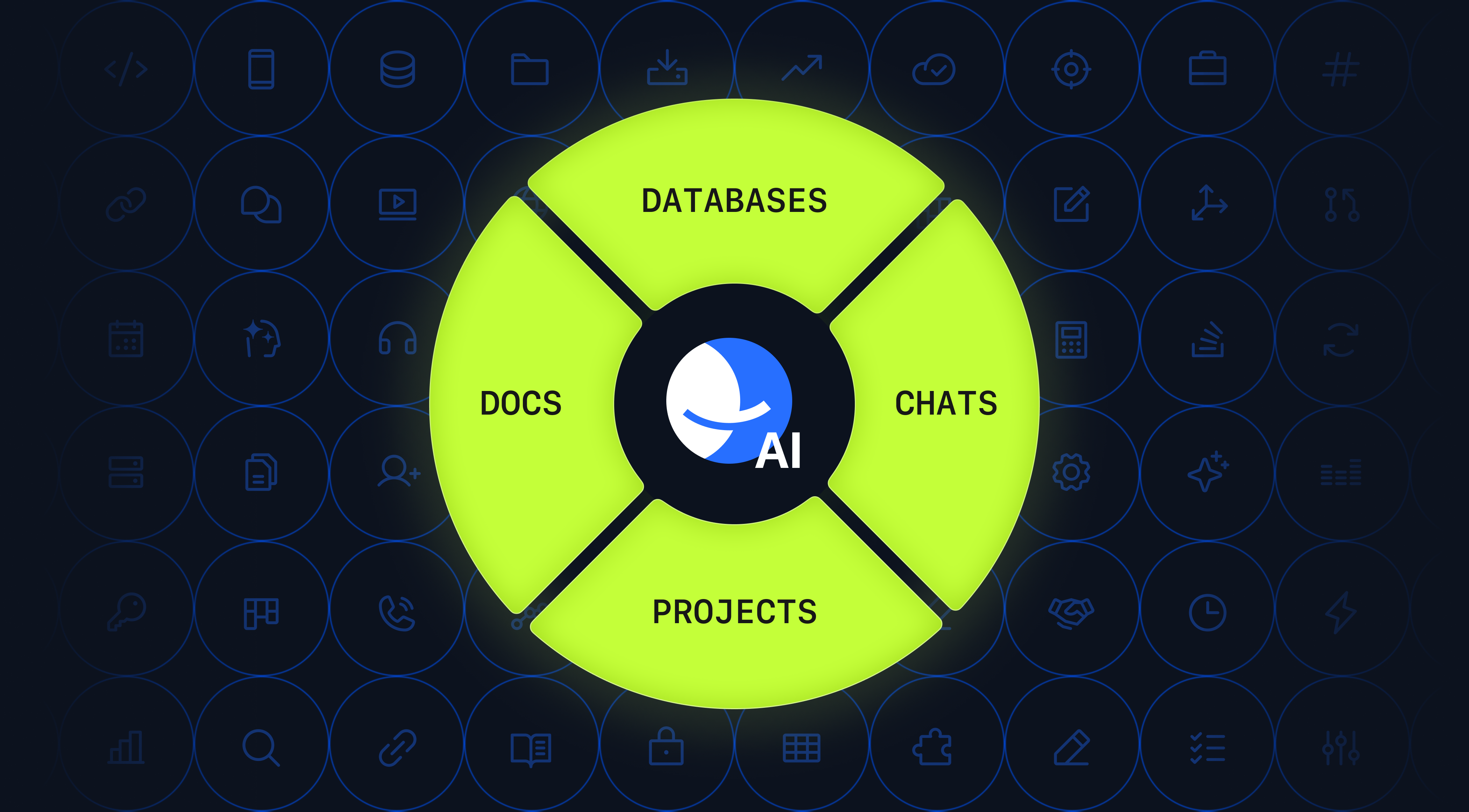
BridgeApp centralizes team workflows—from onboarding checklists to recurring processes—giving everyone a single workspace for tasks, documentation, and communication, and reducing the tool-switching that slows new hires down.
Document Roles, Workflows, and “How We Work”
In remote environments, undocumented knowledge effectively doesn’t exist for new team members.
Essential documentation:
- Concise role descriptions with clear ownership
- RACI matrices (Responsible, Accountable, Consulted, Informed)
- Process diagrams for core workflows
Store these in an easily searchable knowledge base, linked from onboarding materials. Keep documentation lightweight but living—review quarterly as tools and structures evolve.
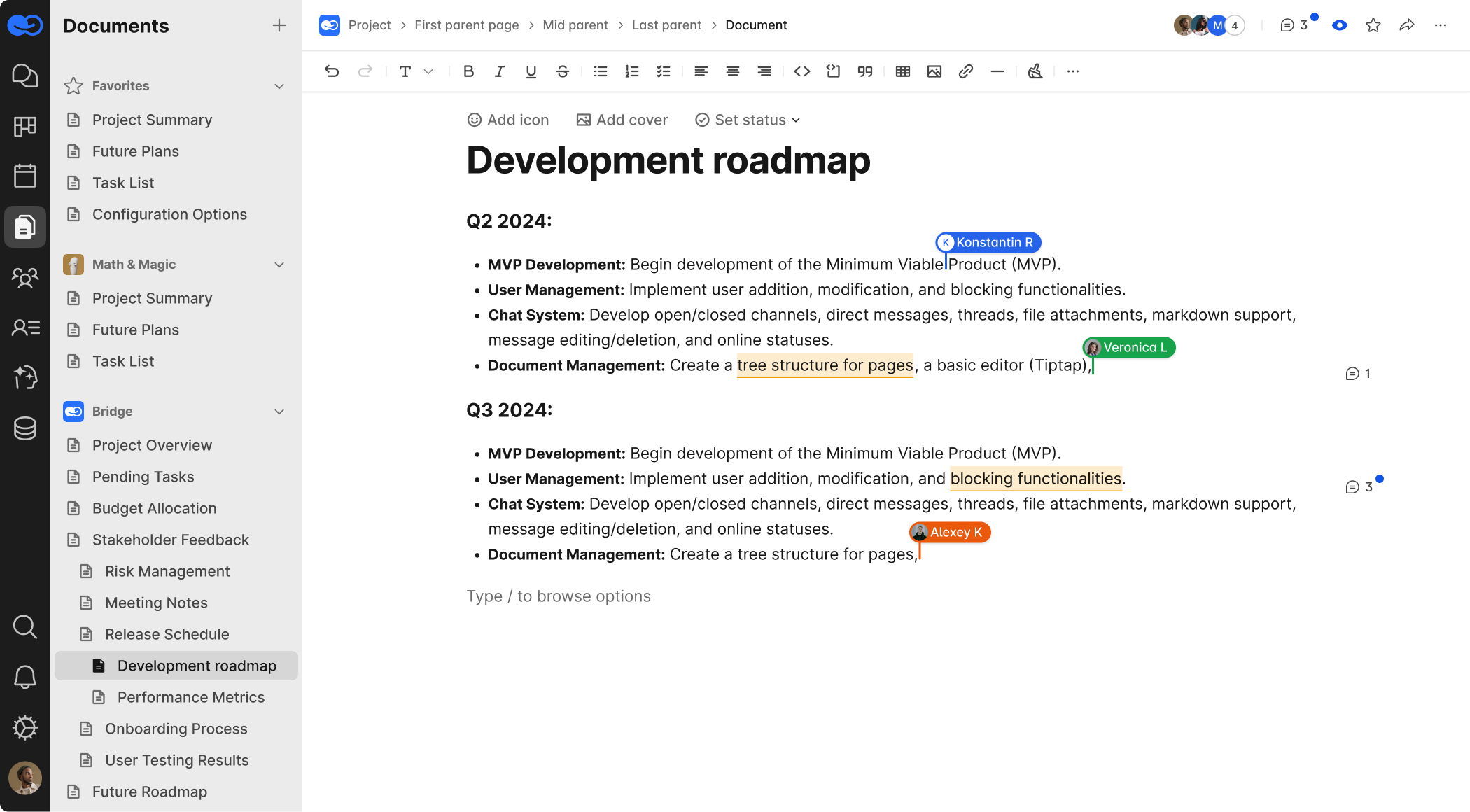
This documentation lives inside BridgeApp alongside tasks and conversations, giving new hires a single place to reference how the team operates.
Balance Autonomy, Accountability, and Well-Being
Remote work improves flexibility but blurs boundaries. Without guardrails, burnout rises 41% higher than in office work settings.
Set clear boundaries:
- Explicit working hours expectations
- Norms about after-hours messages
- Status indicators like “deep work” or “school run”
Focus on outcome-based check ins at milestones rather than hourly supervision. Seek feedback regularly on workload and stress levels.
Model healthy behavior: managers taking vacations, avoiding late-night non-urgent pings, and encouraging breaks. Offer access to well-being resources: mental health days, counseling services, ergonomic guidance. BridgeApp can centralize well-being resources, guidelines, and team norms in shared documents and channels—keeping them accessible without hunting across tools.
Detect and Address Remote Work Stressors Early
Stress and disengagement hide without physical cues. A successful manager watches for warning signs.
Concrete indicators:
- Missed deadlines or quality drops
- Abrupt communication style changes
- Camera avoidance or reduced participation
Use periodic, confidential pulse surveys to gauge engagement and psychological safety. In 1:1s, open conversations gently when you notice changes—focus on support, not warnings. BridgeApp gives leaders visibility across team activity—conversations, tasks, and project progress—helping surface patterns before they become bigger issues.
Create Continuous Feedback and Development Loops
Remote teams thrive when feedback flows frequently and multi-directionally. Annual reviews alone fail distributed teams.
Establish a regular cadence:
- Weekly or bi-weekly 1:1s
- Quarterly performance and development conversations
- Team retrospectives after major projects using “Start / Stop / Continue”
Ground feedback in observable work artifacts—documents, code, customer responses—rather than vague impressions. BridgeApp structures feedback cycles through dedicated channels, threaded discussions, and task-linked conversations—keeping development conversations grounded in real work.
Support Career Growth in a Remote Environment
Remote employees often worry they’ll be overlooked for promotions. Address this proactively.
Career development practices:
- Document career paths, competency matrices, and promotion criteria visibly
- Offer virtual mentoring and job shadowing via screen share
- Create cross-functional project rotations
- Hold annual career conversations separate from performance reviews
Career paths and development plans can be tracked inside BridgeApp through dedicated databases and documents, connecting growth conversations to concrete tasks and milestones.
FAQ
How do I onboard a new remote employee so they feel connected quickly?
A structured 30-60-90 day plan works well: set week-by-week goals for learning, relationships, and deliverables. Pair new hires with a buddy, schedule intentional intros with key collaborators, and provide a curated “start here” hub of docs and recordings. Using BridgeApp for onboarding sequences standardizes the experience and ensures nothing falls through the cracks.
What’s the ideal cadence for remote team meetings and 1:1s?
A common pattern: weekly meetings for standups (30-45 minutes), weekly or bi-weekly 1:1s (30-60 minutes), and monthly or quarterly strategy sessions. Adjust based on team size and project intensity. Periodically review your calendar—convert low-value weekly meetings into async updates.
How can I handle performance issues when I rarely see people in person?
Ground discussions in specific examples: missed deadlines, quality issues, or patterns visible in work artifacts. Clarify expectations, listen for root causes, co-create an improvement plan with timelines, and document agreements. Use digital tools to track goals transparently so conversations feel fair and data-driven.
What if my team is split between fully remote and in-office employees?
Adopt a remote-first mindset: everyone joins virtual meetings from their own device to level the playing field. Keep decisions and updates in shared digital spaces, not hallway conversations. Rotate in-office perks with virtual equivalents—send remote employees lunch vouchers on team celebration days.
How do I maintain team culture when we rarely meet physically?
Design intentional rituals: virtual social hours, interest-based channels, remote-friendly celebrations, and yearly in-person offsites if budget allows. Make company values visible in everyday behaviors and recognition. Ongoing communication, shared narratives, and cross-team initiatives managed via BridgeApp reinforce culture continuously.