BlogProduct Updates
How to Reduce SaaS Costs by Up to 40% in 2026: The On-Premise AI Workspace Approach

Maria ZhuHead of content
7 min read

As we see, B2B teams are drowning in fragmented applications. Conversations happen in one messenger, tasks are tracked in another tool, documentation is buried in a separate wiki, and calls require opening yet another app. This tool sprawl leads to severe context switching, broken workflows, manual overhead, and critical data leakage — leaving companies heavily dependent on Western cloud monopolies.
To fix this, enterprises are rapidly adopting Artificial Intelligence. However, traditional AI copilots are merely bolted onto isolated legacy systems. Because the AI is restricted to a single app, it only sees a fraction of your business data.
The next generation of B2B productivity is being reshaped by AI-native digital workspaces where humans and autonomous AI agents operate inside the exact same environment.
The good news: SaaS cost optimization is one of the few budget levers you can pull without hurting productivity — if you approach it systematically. This guide walks through how to reduce SaaS costs in practical, repeatable steps, from auditing your saas portfolio to consolidating overlapping tools and renegotiating saas contracts.
Traditional SaaS optimization focuses on trimming licenses, cancelling unused seats, and renegotiating contracts. Those steps still matter. But in 2026, the bigger opportunity is structural: reducing the number of tools your team needs in the first place by consolidating communication, work management, knowledge, and AI automation into a single secure workspace.
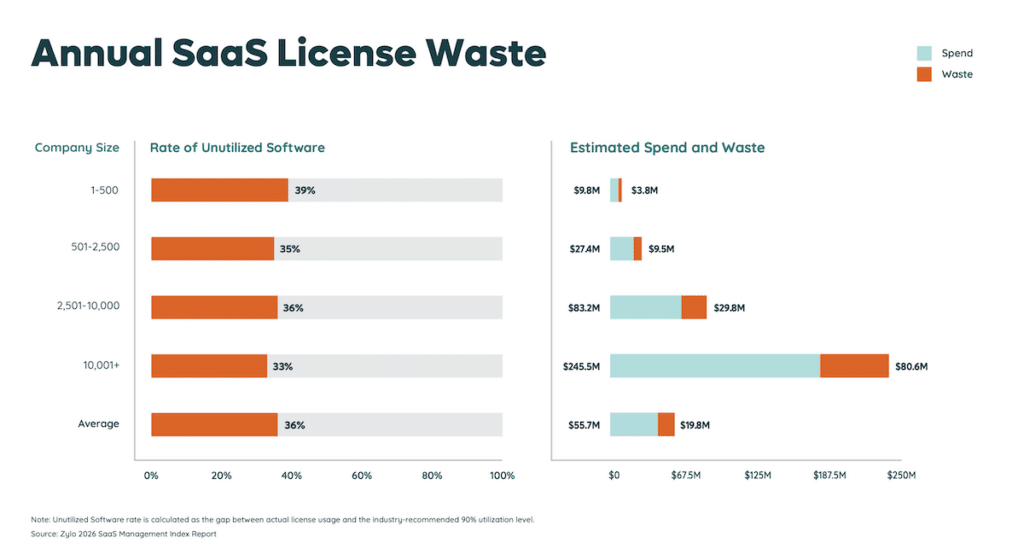
The scale of the problem: Global SaaS spend is projected to hit US $1.13 trillion by 2032, yet roughly one-third of that spending is wasted on unused seats, duplicate tools, and auto-renewals.
Where does the “up to 40%” come from? For many organizations, SaaS savings are not driven by a single cut. They come from several layers of waste: unused licenses, duplicate tools, overlapping subscriptions, integration maintenance, administrative overhead, and separate AI add-ons layered on top of existing software. For teams running fragmented stacks across chat, docs, project management, databases, and AI tools, consolidation can significantly reduce the total SaaS footprint — in some cases, by up to 40%.
Why SaaS Spend Quietly Spirals Out of Control?
Before fixing it, it helps to understand why software costs creep up. Three structural forces are usually at work.
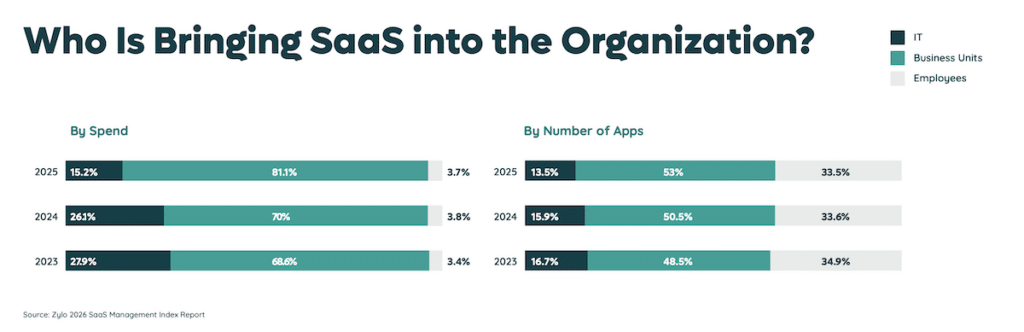
1. No single owner of the saas portfolio. Different teams buy their own saas tools independently, and weak SaaS management creates unnecessary costs across teams. Marketing gets one of several collaboration tools, engineering another, ops a third—often with overlapping functionality nobody compares.
2. Usage-based pricing that punishes inattention. Usage-based and AI pricing has made bills unpredictable.
In 2026, 78% of IT leaders reported unexpected SaaS charges driven by consumption-based or AI pricing models—underscoring why proactive renewal and usage management now matters more than ever.
Finance teams need visibility into rising saas expenses to maintain control.
3. Auto-renewals running on autopilot. Many saas contracts renew automatically, often at higher rates. Without tracking renewal dates, organizations get locked into another year of spend they never actively approved—a quiet but reliable source of budget overruns.
The throughline: you can’t reduce saas costs you can’t see. Visibility comes first.
Data by https://zylo.com/blog/saas-consolidation
Step 1: Build a Centralized SaaS Inventory
You cannot optimize a saas stack you haven’t mapped. The first move in any serious saas spend management and saas spend optimization effort is to centralize inventory—list every subscription across every department, including the ones finance doesn’t know about.
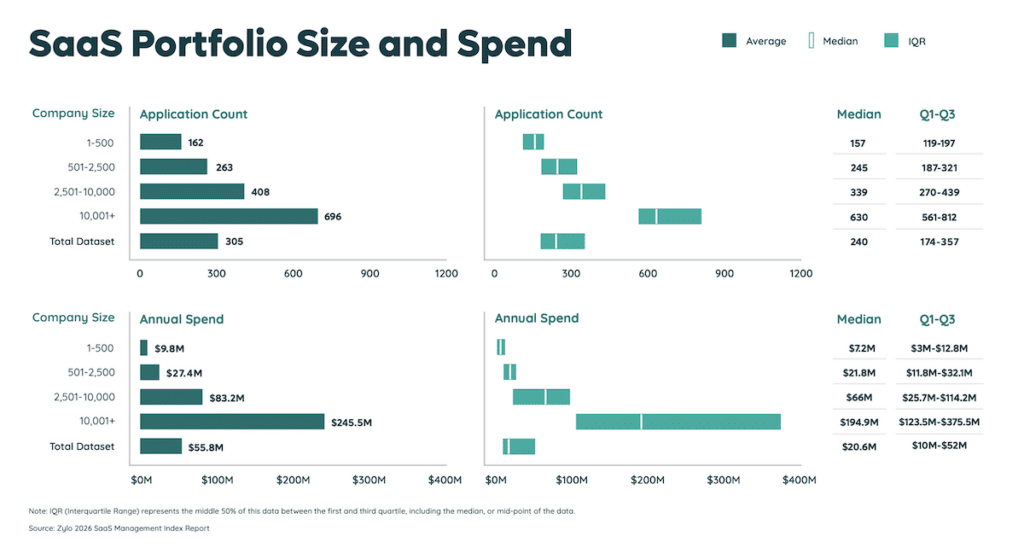
The average organization has 138 expensed applications in its portfolio, many of which qualify as shadow IT. Without visibility into that long tail, teams keep paying for tools no one is accountable for.
A complete inventory should capture, for each app: owner, number of seats, actual usage data, license data, renewal date, contract terms, and monthly cost. This becomes your system of record—and the foundation for visibility across your saas ecosystem and software stack for every step that follows. A saas management platform can act as that centralized record for saas apps and saas subscriptions.
Why this matters for forecasting: Establishing a centralized renewal calendar and system of record brings clarity to spending, helps you avoid budget surprises, streamlines negotiation by tracking key dates and terms for SaaS contracts and renewals, helps avoid unexpected charges, and makes renewals far easier to manage proactively rather than reactively.
Step 2: Hunt Down Shadow IT
Shadow IT—software bought outside official procurement—is one of the largest hidden costs in any saas environment. It’s not just a budget problem; unmanaged accounts can also expose customer data and create real data security risks.
Shadow IT accounts for an estimated 30–40% of IT spending, creating significant budget leaks and inefficiencies that rarely appear on a single line item.
Proactive management of rogue SaaS solutions helps reduce waste and streamline operations.
Regularly review your application inventory to surface unsanctioned tools, then decide for each one: sanction and consolidate it into your managed stack, or cut it. The act of reviewing alone usually surfaces a surprising number of underutilized or abandoned accounts.
Step 3: Eliminate Unused and Underutilized Licenses
This is where the fastest, most immediate cost savings live. Most organizations can find quick wins by reviewing SaaS usage, and underutilized SaaS licenses are often the first place to cut without disrupting work.
On average, 46% of licenses go unused each month, representing $19.8 million in wasted spend per organization annually. Looking across a full year, studies suggest 53% of an organization’s licenses sit unused or underused, going a full year without a single login.
Two actions, both backed by how you analyze usage data before taking action:
- Reclaim and cancel inactive licenses. Audit your current inventory and remove seats that have gone without a login. Redundant and dormant licenses often belong to unused tools sitting in the stack and are the single most common source of wasted spend.
- Right-size the rest. Downgrade users who only need basic features from premium tiers to lower-tier, cheaper plans. Not everyone on a tool needs the top plan—match the tier to actual usage for better cost efficiency.
Rule of thumb: Businesses often waste up to 30% of their software budget on unused or overlapping licenses. License right-sizing alone frequently funds the rest of an optimization initiative.
Step 4: Consolidate Overlapping and Duplicate Tools
Once you can see the whole saas landscape, the redundant tools become obvious: multiple tools doing nearly the same job, bought by teams who didn’t know the other existed.
According to Zylo’s SaaS Management Index, redundant SaaS tools are especially common in online training, project management, and team collaboration, with organizations using an average of 14.2 online training apps, 9.9 project management apps, and 9.5 team collaboration apps. This makes consolidation a clear opportunity to reduce overlapping subscriptions, duplicated workflows, and unnecessary software spend.
Vendor consolidation does more than kill duplicate subscriptions. Consolidating overlapping apps under fewer vendors simplifies administration, reduces friction between teams, and unlocks bulk-discount leverage you don’t have when spend is scattered across dozens of small contracts. Done well, consolidating SaaS vendors can deliver significant savings and improve operational efficiency.
This is also one of the clearest ways to reduce waste across software investments and keep overall software spending under control. This is a step where the architecture of your stack starts to matter—not just the line items, which brings us to the most structural lever available. At some point, SaaS optimization reaches a ceiling. You can cancel unused seats, remove duplicate apps, and renegotiate contracts — but if the team still needs five separate tools to complete one workflow, the underlying cost structure remains fragmented. This is where the architecture of the stack starts to matter, not just the line items.
Where an AI-Native Workspace Fits In
Most consolidation tackles redundancy one category at a time: pick one project management tool, one chat app, one docs tool. But a large share of saas waste comes from the seams between those tools—the integrations, the duplicate data, the per-seat costs stacked across five separate subscriptions that all serve the same team.
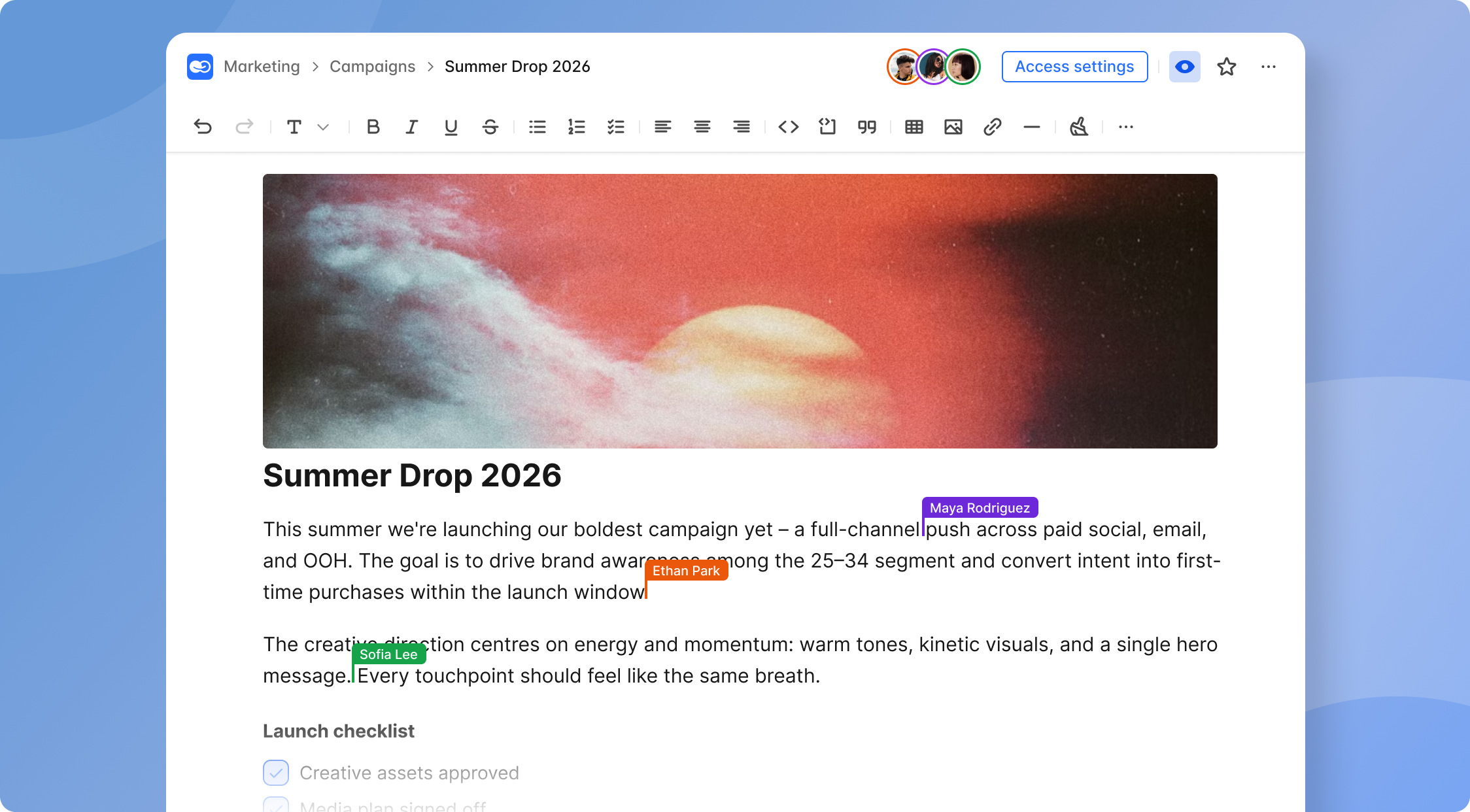
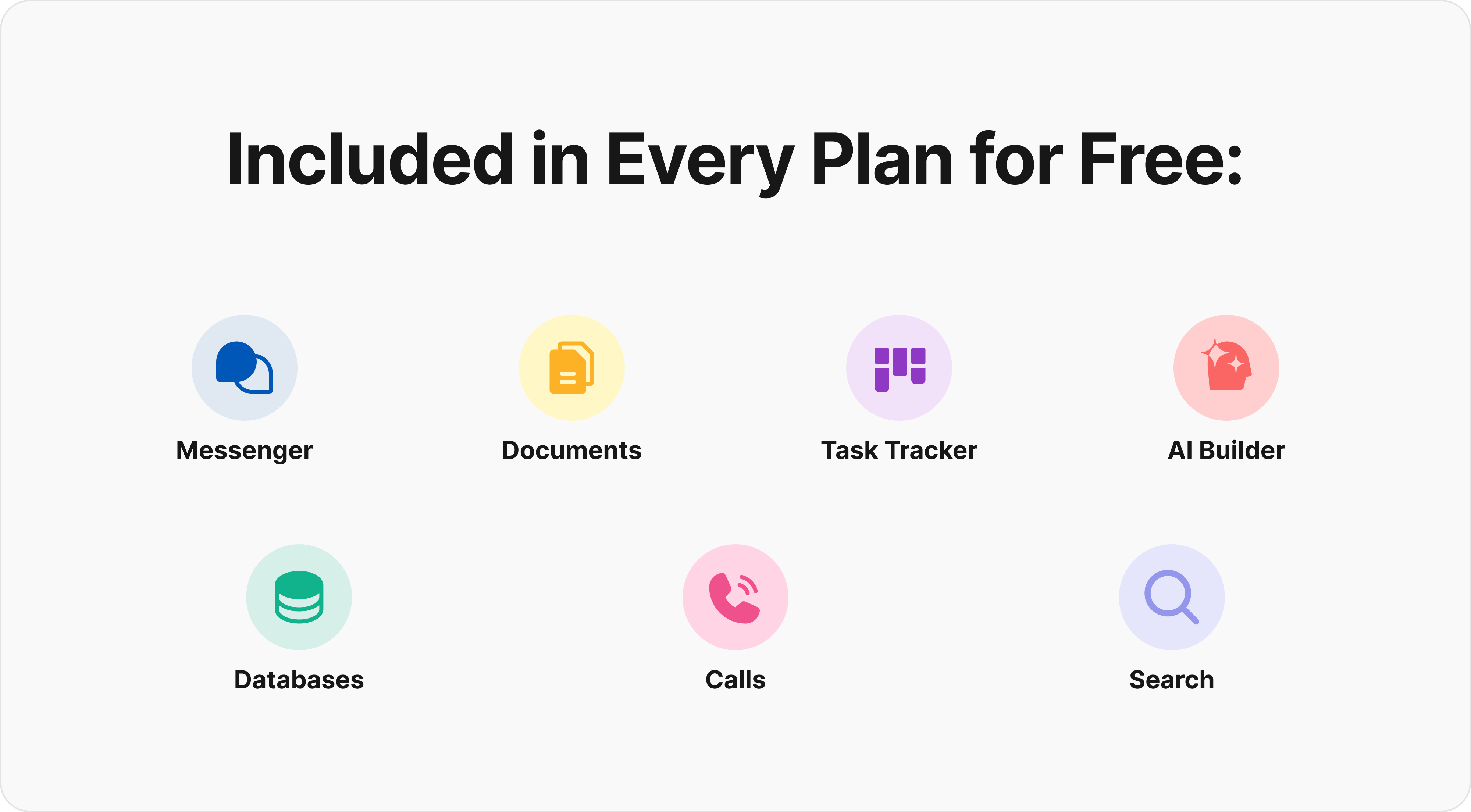
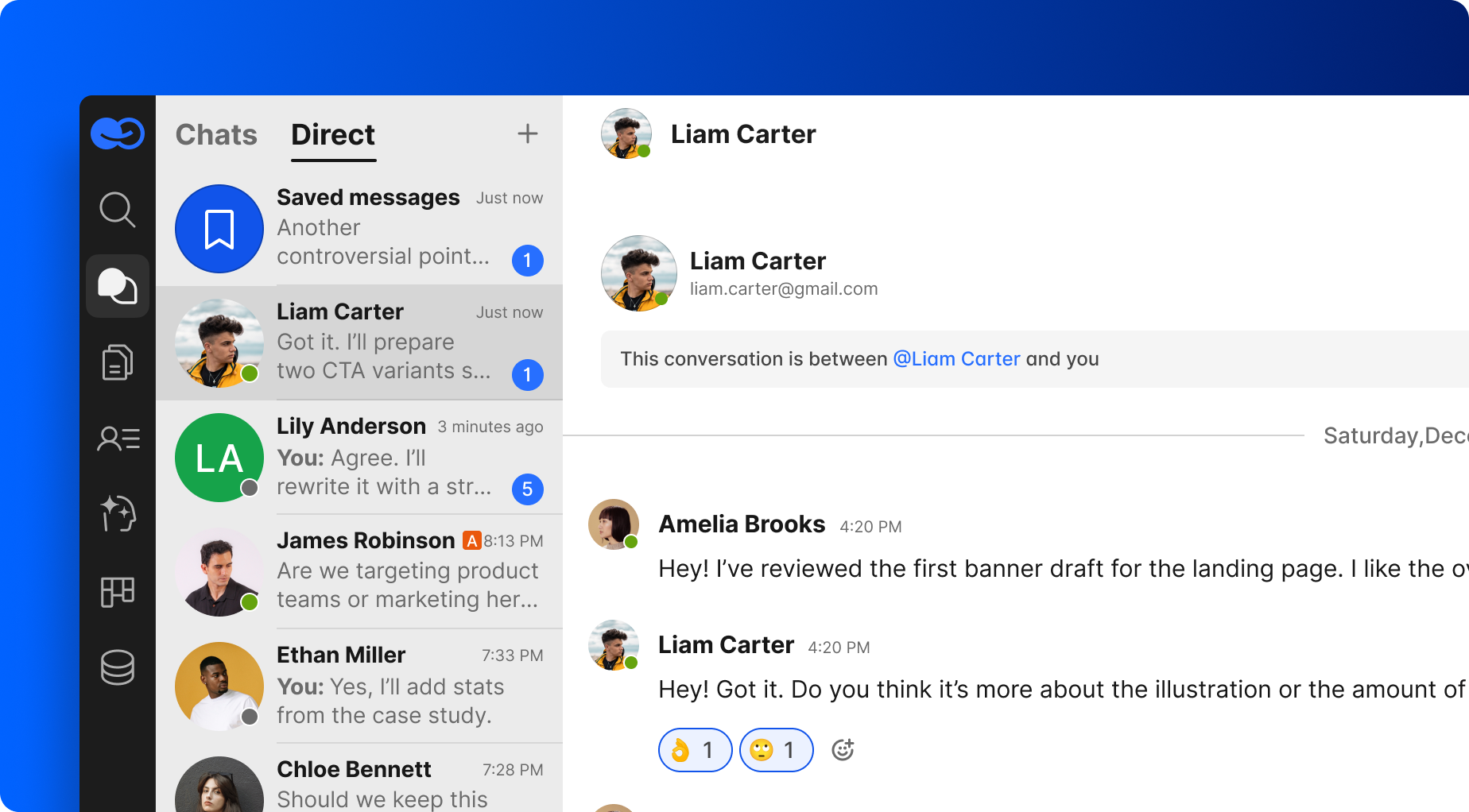
This is the gap BridgeApp is built to close. Instead of stitching together separate subscriptions for messaging, project management, documents, databases, and AI, BridgeApp unifies them into a single AI-native workspace:
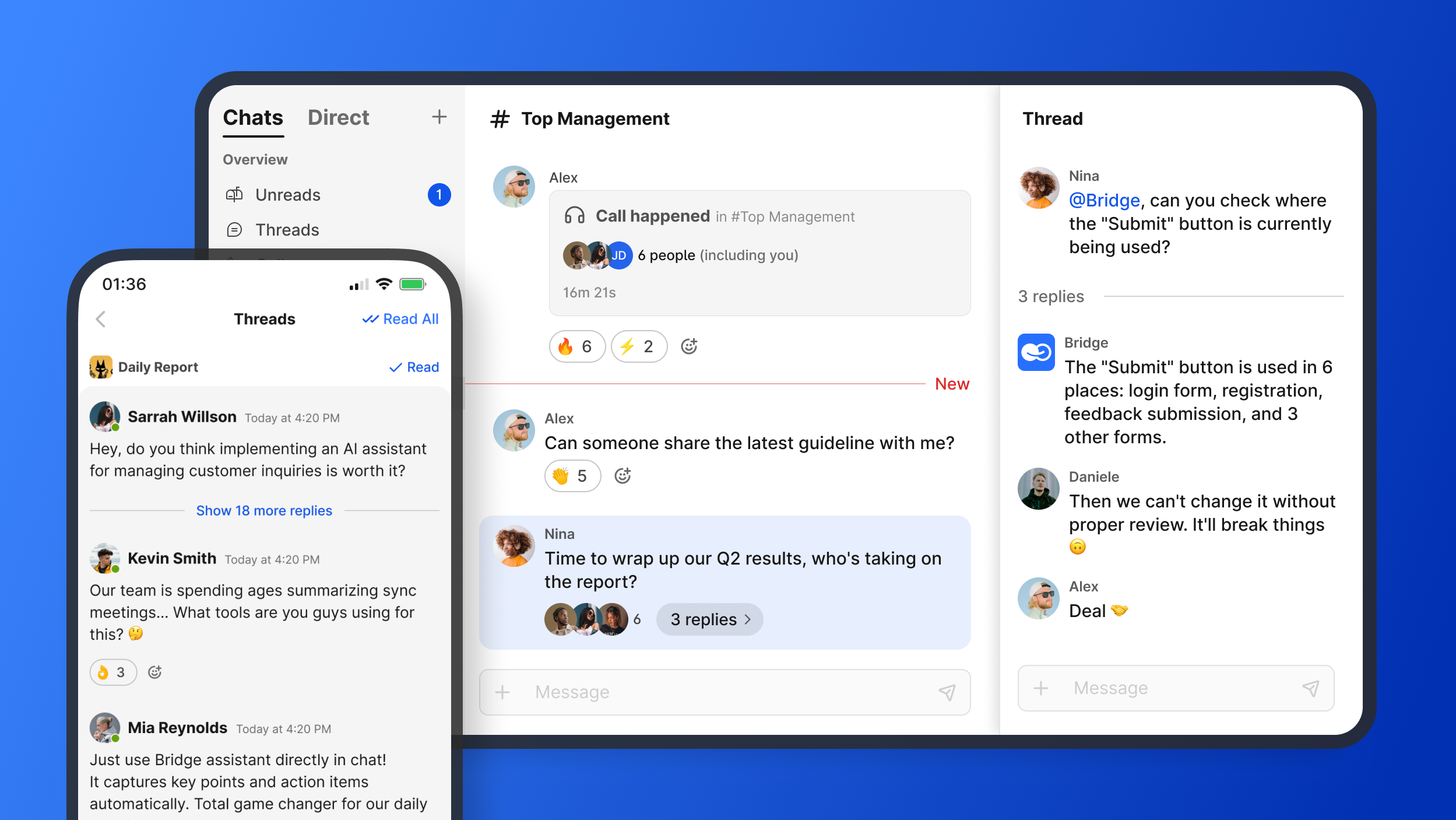
- Team chat, threads, and audio calls for real-time and asynchronous communication
- Project and task management with board, backlog, and list views built into the same environment
- Collaborative document editing and flexible, no-code databases as your team's shared knowledge layer
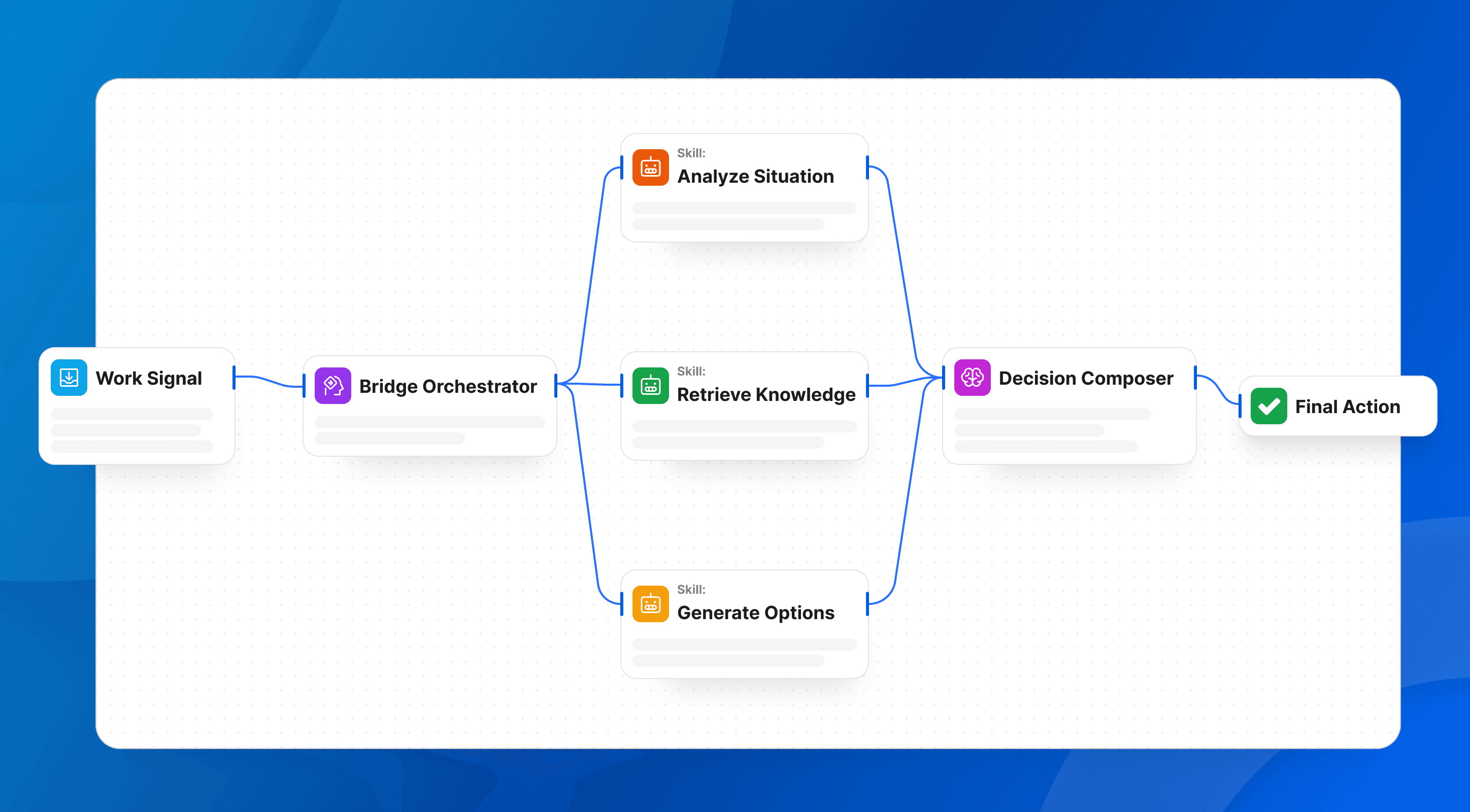
- Custom AI agents, built with a visual no-code builder, that can turn discussions into tasks, generate reports from your data, and run workflows specific to your processes—with access to all major AI models under one subscription

The cost angle is straightforward: one platform replacing six or seven fragmented saas tools means one subscription instead of many, far less administrative overhead. For teams whose highest hidden cost is the time spent syncing tools and copying data between them, collapsing the stack itself is often the highest-leverage way to reduce saas spend.
On-premise deployment is not automatically cheaper for every team. But for larger, regulated, or security-sensitive organizations, it can make software costs more predictable. Instead of spreading spend across multiple cloud vendors, usage-based AI add-ons, and integration layers, teams can consolidate core workflows in one controlled environment — reducing vendor dependency while keeping data inside their own infrastructure.
It's also why consolidation and data sovereignty can go together rather than compete: because BridgeApp supports cloud, private cloud, and on-premise deployment, regulated teams can cut tool sprawl and keep data inside their own infrastructure—no trade-off between lean spend and control.
Because BridgeApp operates with a single context layer, its built-in AI Copilot understands your entire operational ecosystem. Instead of acting as an external, isolated chatbot, it actively participates in the workflow to:
- Summarize long threads into clear, actionable updates and key takeaways.
- Create and update tasks automatically from ongoing strategic discussions in your channels.
- Maintain company documentation and update internal guides autonomously as the work evolves.
- Reduce context switching between team chats, operational tasks, and shared documents.
- Keep knowledge consistent across cross-functional departments, ensuring everyone stays aligned.
- Everything your team needs to collaborate and manage daily operations is housed in one secure, unified environment.
Step 5: Renegotiate Contracts—Starting With Your Biggest Bills
Cancelling and consolidating reduces the number of tools you pay for. Renegotiation, as part of broader saas renewals planning, reduces how much you pay for the ones you keep.
Sequencing matters: Prioritize negotiating contracts for your highest-cost applications first. The savings per hour of effort are largest there, and it forces alignment between what you’re paying and what you actually use.
Proactive renewal management helps reduce costs and avoid surprise software expenses.
Two tactics consistently move pricing:
Bring price benchmarks to the table. Knowing the going rate for comparable services gives you leverage and protects you from overpaying relative to industry standards.
- Time it against your renewal calendar. The system of record you built in Step 1 means you walk into every renewal early and informed—not scrambling the week a contract auto-renews. A centralized system also helps you maintain control over key dates and pricing terms during negotiations.
Step 6: Make It a Habit, Not a One-Time Cleanup
SaaS optimization isn’t a project you finish; it requires ongoing saas operations and saas management to keep spend in line with business goals. New tools get added, usage patterns shift, teams grow. A stack you cleaned six months ago has already started drifting.
Schedule a recurring usage audit—quarterly is a reasonable baseline—to catch new shadow IT, freshly idle licenses, and creeping duplicate tools before they compound, and review usage trends during each cycle. Recurring reviews also help identify redundant tools and keep saas investments aligned with business goals over time. Pair each audit with a forward look at the next quarter’s renewals. The organizations that keep saas costs under control are the ones that treat visibility and review as an ongoing operating discipline, not an annual fire drill. That cadence helps teams stay agile in a competitive market and improve long-term spend optimization.
The Bottom Line
Reducing SaaS costs comes down to a repeatable loop: see everything, cut what’s unused, consolidate what overlaps, renegotiate what remains, and review on a cadence. Effective SaaS spend optimization helps reduce your SaaS footprint by eliminating unnecessary costs without slowing teams down. Most teams find the first pass alone recovers a meaningful slice of a budget they assumed was fixed.
For startups, IT teams, fintechs, and enterprises, data privacy is a non-negotiable metric. Piping proprietary corporate data into public, consumer-grade AI clouds poses severe security and regulatory risks. BridgeApp is built specifically to offer a secure alternative to fragmented public SaaS, ensuring absolute trust and digital independence.
- Sovereign On-Premise Deployment: BridgeApp supports secure cloud, private cloud, and on-premise deployments. Your data remains strictly within your own infrastructure.
- GDPR Compliance: The entire architecture is built around strict European data protection standards, ensuring that your corporate data and the operational context used by AI agents never leave your secure perimeter.
And for the deepest structural savings, the question isn’t only which tools to cut—it’s whether your team needs that many separate tools at all. Unifying communication, work management, documents, and AI automation into a single workspace like BridgeApp attacks the root cause of saas sprawl rather than trimming its symptoms, helping reduce your saas overhead while keeping you in full control of where your data lives.
Want to see how much of your stack a unified workspace could replace? Explore how BridgeApp brings your team’s tools into one secure environment — cloud or on-premises.