BlogIndustry Insights
Best Wrike Alternatives for Project Management in 2026

BridgeApp Team
10 min read

Wrike has long been a go-to project management platform for enterprise teams handling complex workflows. With customizable dashboards, Gantt charts, resource management, and integrations with over 400 apps, including Salesforce and Google Workspace, it’s built for scale.
But scale comes with trade-offs.
Many teams are actively searching for Wrike alternatives due to three persistent pain points: a steep learning curve that can overwhelm new users (G2 usability scores dip below 4.0 for non-technical teams), pricing that escalates quickly from $9.80 per user monthly to custom enterprise quotes exceeding $25 per user, and limited no-code customization without premium add-ons.
The project management landscape in 2026 has evolved significantly. AI integration, visual no-code builders, and all-in-one workspaces now dominate a market projected to reach $15.1 billion by 2028. Modern teams have many alternatives that emphasize simplicity for small teams, client-agency focus, or AI-driven automation.
This guide breaks down the top wrike alternatives, covering what each does best and which teams they serve.
How We Chose the Best Wrike Alternatives
Finding the best alternative to Wrike requires evaluating platforms against criteria that matter most for real-world team productivity.
Here’s what we prioritized:
| Criteria | What We Measured |
|---|---|
| Ease of use | Average onboarding time under 2 hours, intuitive interface |
| Feature depth | Task hierarchies, dependencies, automations, analytics |
| Pricing transparency | Free tiers or per-user models under $15/month for core plans |
| Workflow flexibility | Custom fields, statuses, no-code builders |
| Integration ecosystem | 200+ integrations with CRMs, calendars, AI tools |
| Support quality | 24/7 chat availability, response times under 1 hour |
| Scalability | Handling 1,000+ users without requiring custom pricing |
7 Best Wrike Alternatives for Project Management
1. BridgeApp
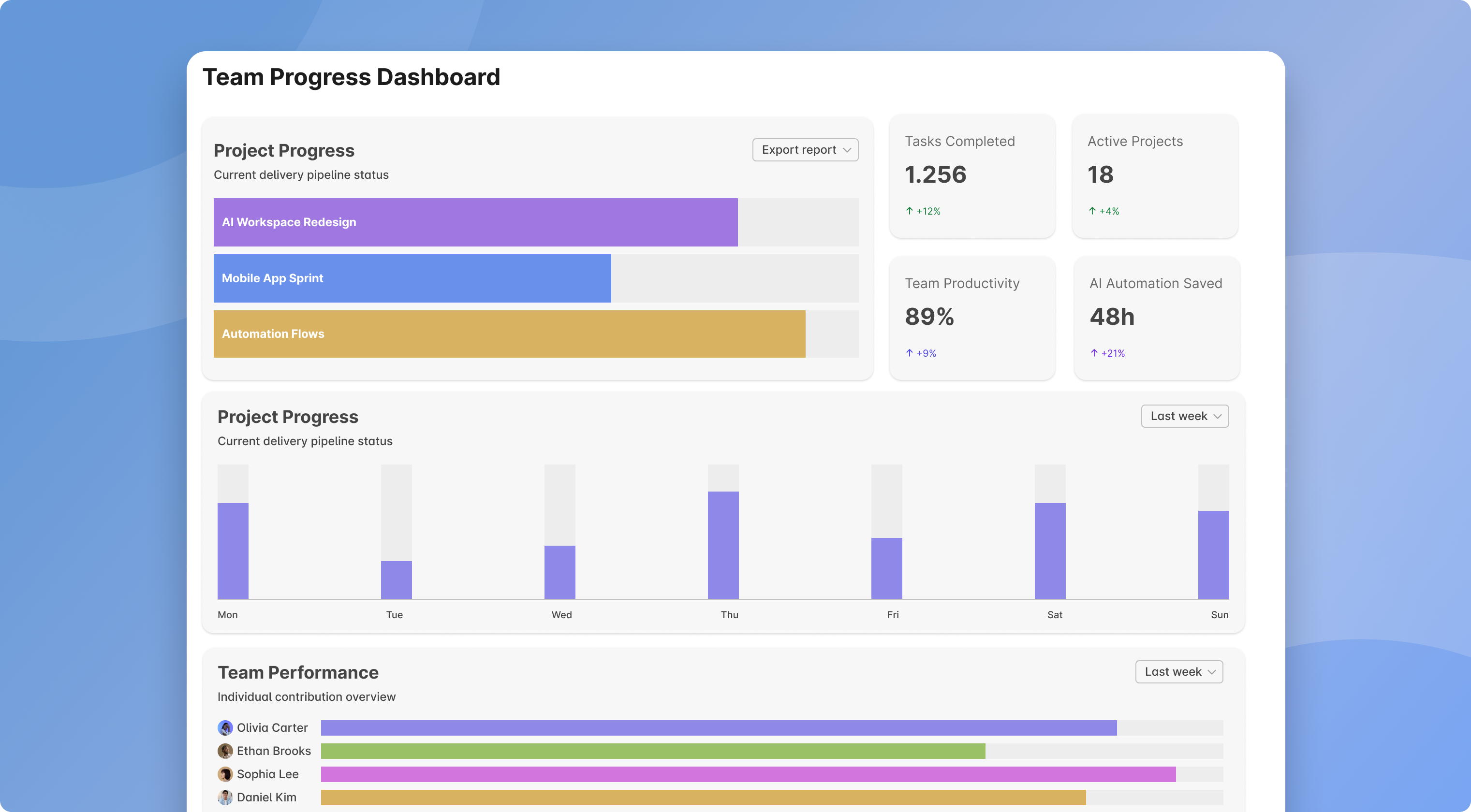
BridgeApp is an AI-native digital workspace that unifies team collaboration, project management, knowledge bases, databases, and AI automation into a single integrated platform. Think of it as a next-generation corporate operating system designed to replace 6-7 fragmented SaaS tools.
Why It Stands Out
Unlike Wrike or other platforms that bolt AI features onto existing architecture, BridgeApp embeds intelligence natively throughout its core modules. The visual no-code AI agent builder lets teams create custom automations without technical complexity.
The platform combines channels and threads for messaging, built-in audio and video calls (developed in-house, not third-party SDKs), a task tracker with Kanban and list views, collaborative document editing, custom databases, and AI agents that actually understand your company context.
Best For
- Teams seeking to eliminate tool fragmentation and automate routine processes
- Organizations prioritizing data sovereignty with cloud, on-premise, or hybrid deployment options
- Companies wanting AI automation without requiring developers
Key Strengths
Proven productivity metrics:
- 40% productivity increase through unified workspace and AI automation
- 60% context switching reduction by consolidating tools
- 4.6 hours saved per employee weekly via agent task automation
- $1.656 million annual savings for a 250-person team (at $30/hour average)
AI agents as digital employees: These aren’t simple chatbots. BridgeApp’s agents access all major AI models without vendor lock-in, leverage company context from chats, databases, and knowledge bases, and support MCP (Model Context Protocol) for connecting external servers.
Time savings examples include 20 minutes per meeting via auto-summaries, 10 minutes per task created from chat, and 15 minutes per database query answered instantly.
Flexible deployment: Cloud SaaS, on-premise, private cloud, or hybrid. GDPR-compliant with EU hosting options.
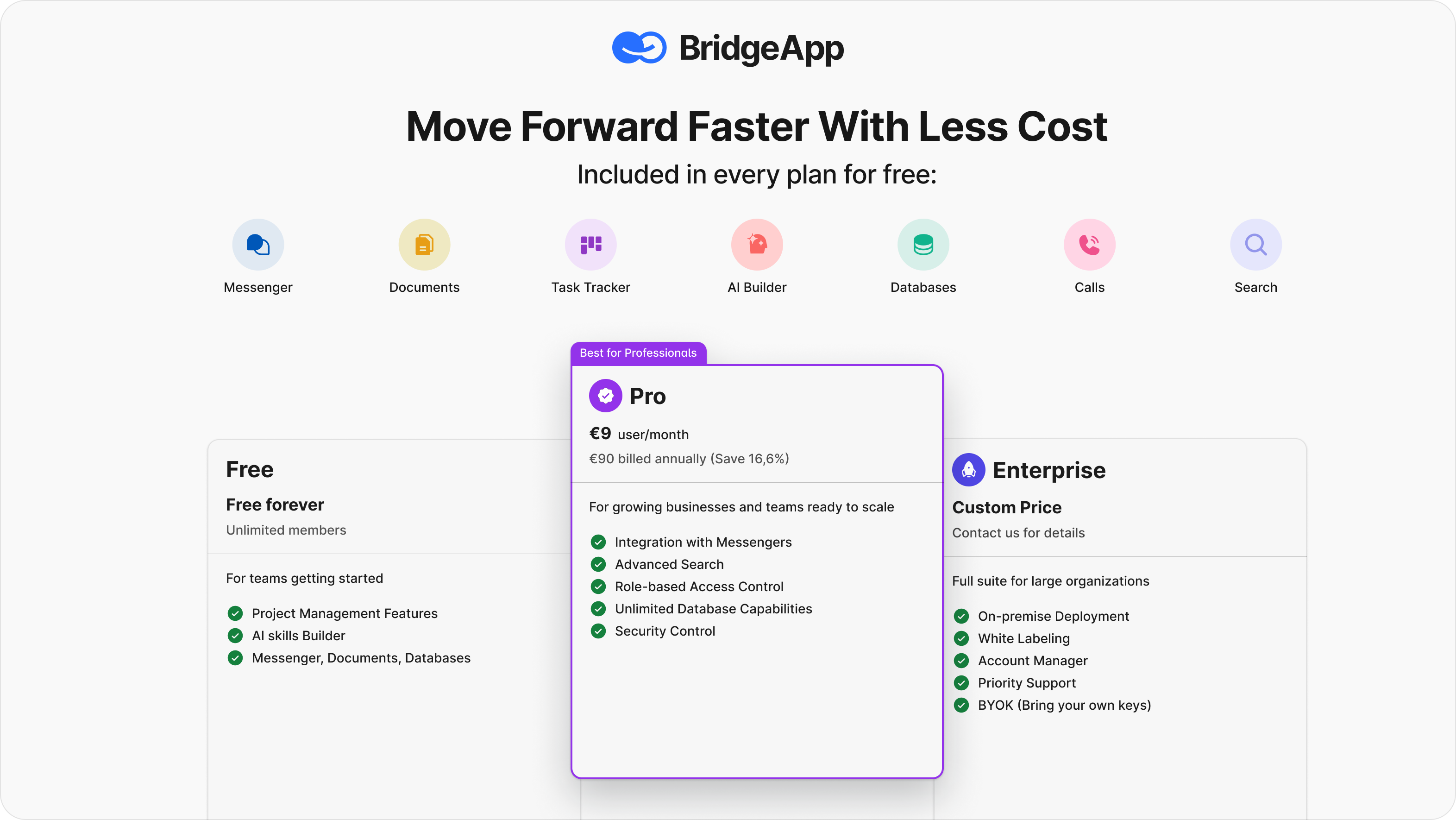
Transparent pricing:
- Free: Unlimited members, core project management features, agentic capabilities
- Pro: €9/user/month (€7.5 yearly) with messenger integrations, advanced search, unlimited databases
- Enterprise: Custom pricing with on-premise deployment, white labeling, BYOK
Possible Limitations
- Newer platform compared to established project management tools
- May require adjustment period for teams accustomed to traditional project management approaches
2. ClickUp
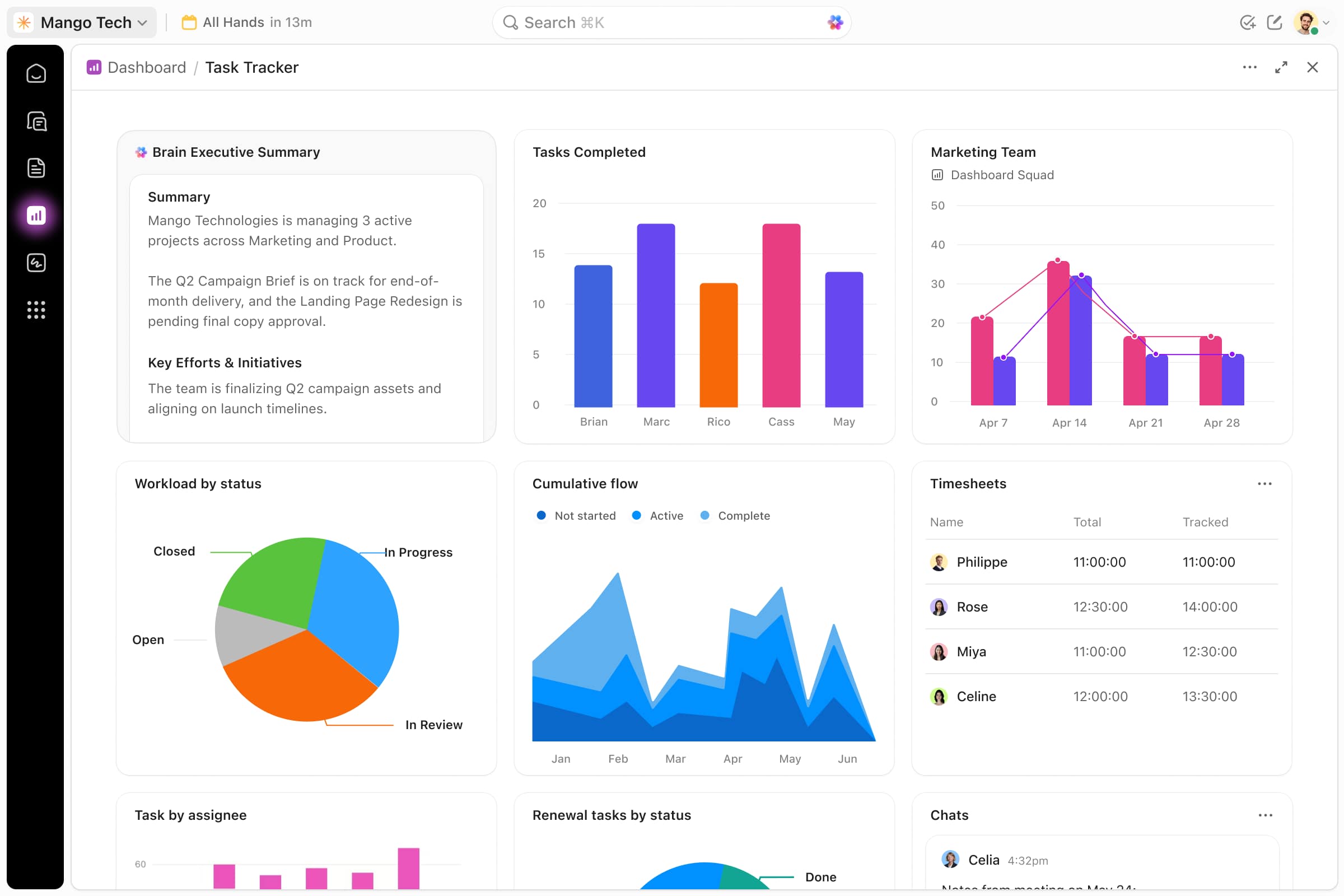
ClickUp is a highly customizable, all-in-one project management software that supports diverse team workflows with extensive flexibility.
Why It Stands Out
With over 10 million users and a 4.7/5 G2 score from 20,000+ reviews, ClickUp offers deep customization that few other platforms match. The platform provides 15+ views including gantt charts, kanban boards, calendar, and mind maps. No-code automations trigger on 1,000+ events, and AI-powered features reduce task creation time by 30-50% according to user reports.
Best For
- Teams requiring deep customization and flexible workflow management
- Organizations wanting comprehensive project management features in one workspace
- Fast-moving startups needing adaptable solutions
Key Strengths
- Unlimited tasks and projects on the free plan with hierarchical structures up to five levels
- Docs, goals, time tracking, and whiteboards built-in
- 1,000+ integrations, including Google Drive and Microsoft Teams
- Scalable pricing: Free (100MB storage), Unlimited $7/user/month, Business $12
Possible Limitations
- Feature volume creates a steep learning curve (average setup time 4-6 hours)
- 25% of reviewers cite feature bloat as a concern
3. Asana
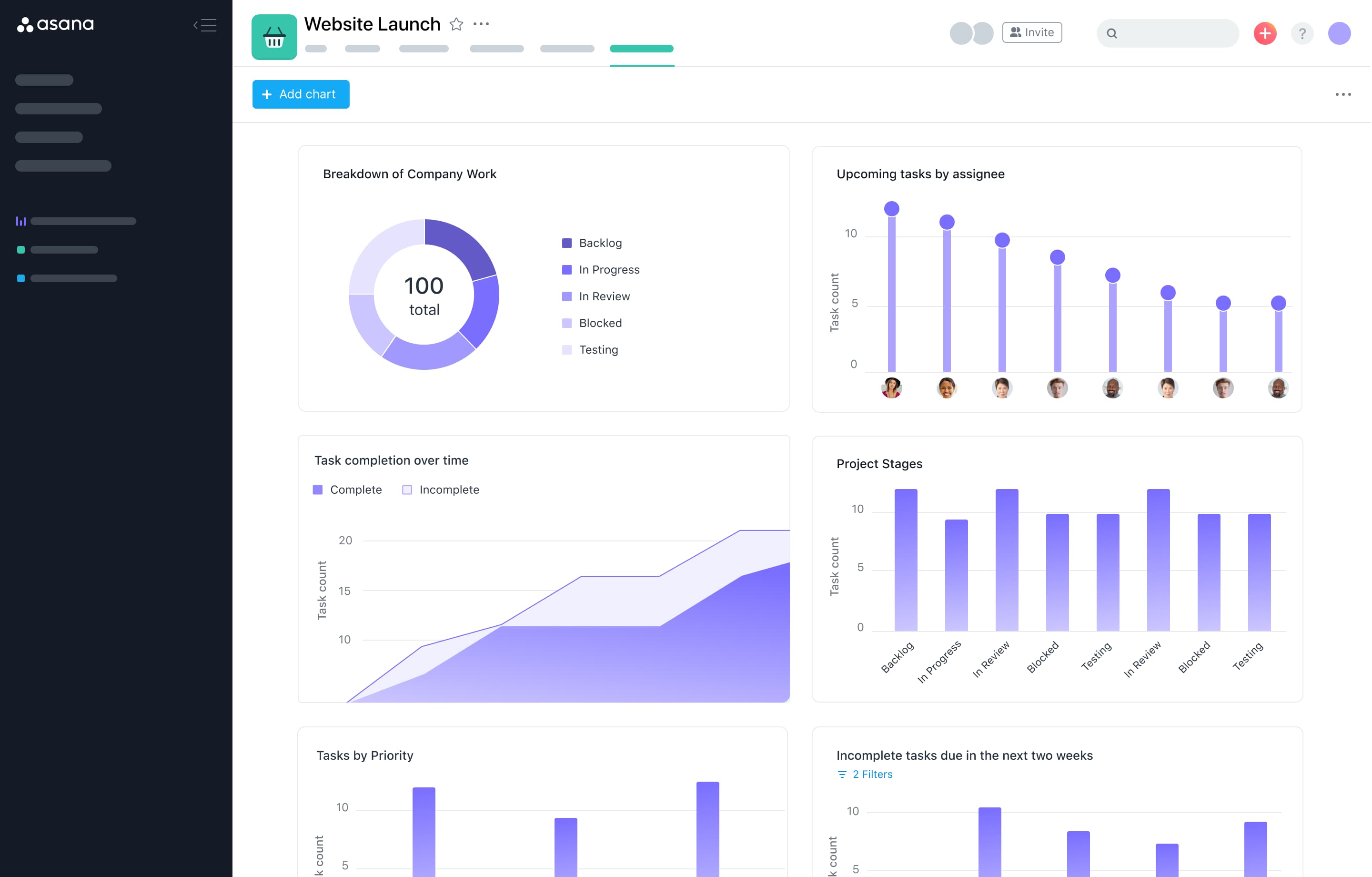
Asana is a user-friendly project management tool that prioritizes team collaboration and intuitive interface design over complex customization.
Why It Stands Out
Founded in 2008 and used by 80% of Fortune 500 companies, Asana scores 4.5/5 on ease-of-use across major review platforms. The clean interface focuses on quick adoption—most teams complete onboarding in under an hour.
Best For
- Teams prioritizing ease of use and quick adoption over complex customization
- Medium-sized teams needing reliable project tracking without complexity
- Organizations focused on transparent task completion and project progress
Key Strengths
- List, timeline, board, and calendar views for visual project management
- Rules, automations and portfolios for multi-project oversight
- Free plan supports unlimited tasks, projects, and 10 users
- Strong mobile app and 200+ integrations with Google Workspace and other tools
Pricing: Free, Premium $10.99/user/month (adds timelines and real time reporting), Business $24.99 for advanced features
Possible Limitations
- Limited customization with fixed workflows
- Advanced features like gantt charts require paid plans
- 15% of users note limited custom fields
4. Monday.com
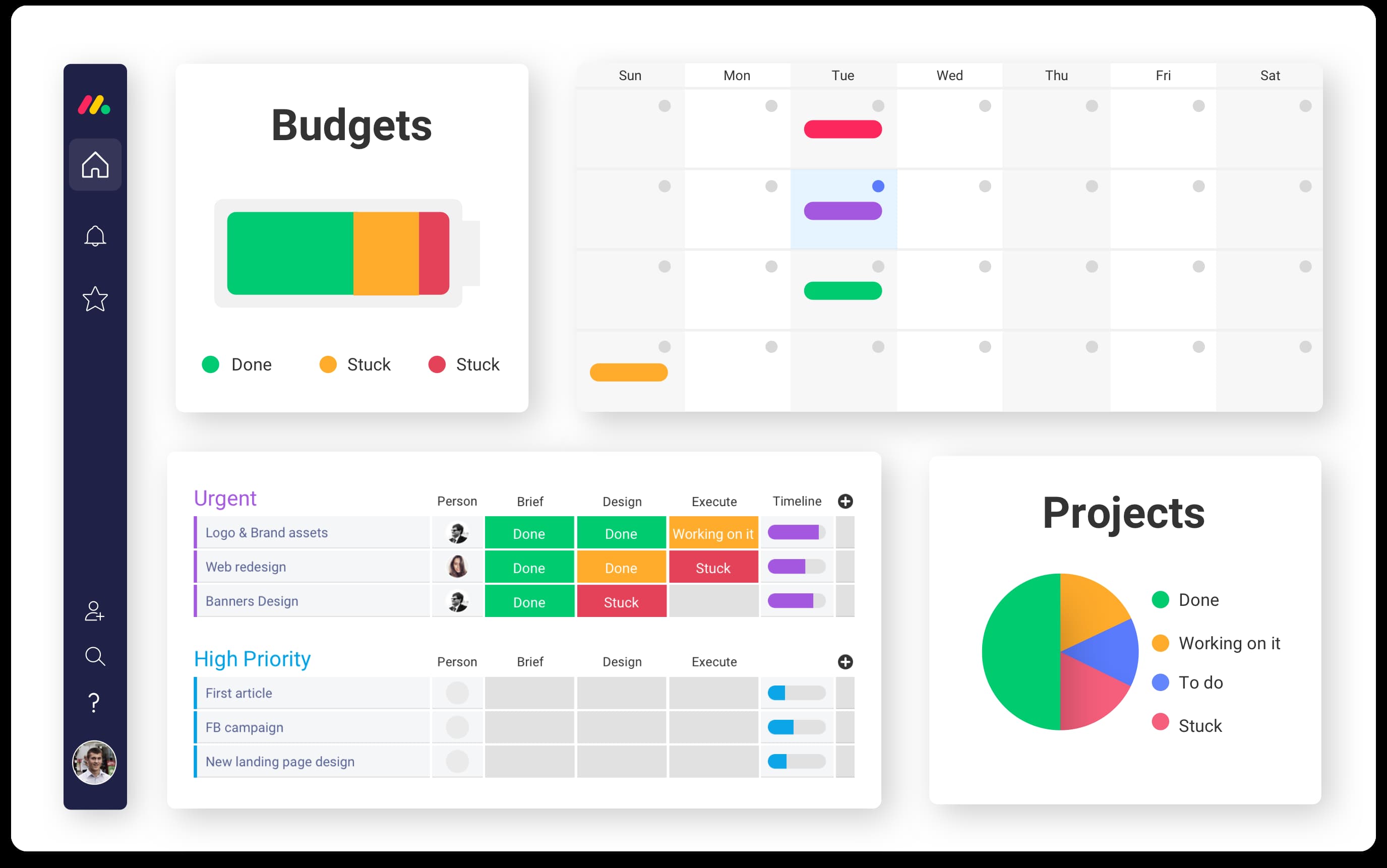
Monday.com is a visually-driven management platform with customizable boards and workflows that support multiple teams and business processes.
Why It Stands Out
Powering 180,000+ organizations with a 4.7/5 G2 rating from 15,000+ reviews, Monday.com’s visual boards make complex projects feel manageable. The colorful, intuitive interface appeals to teams who prefer seeing work rather than reading lists.
Best For
- Teams prefer visual boards over traditional project structures
- Organizations need flexible platforms that adapt to different business processes
- Companies balancing simplicity with advanced features
Key Strengths
- Customizable dashboards with powerful automation capabilities
- Time tracking and billing features built-in
- 200+ app integrations
- Strong for sales, marketing, and creative teams
Pricing: Free (2 seats), Basic $9/user/month, Standard $12, Pro $19, Enterprise custom
Possible Limitations
- Pricing scales steeply—a team of 10 hits $1,200/year on Pro
- Visual approach may not suit teams focused on task dependencies and complex project timelines
5. Teamwork.com
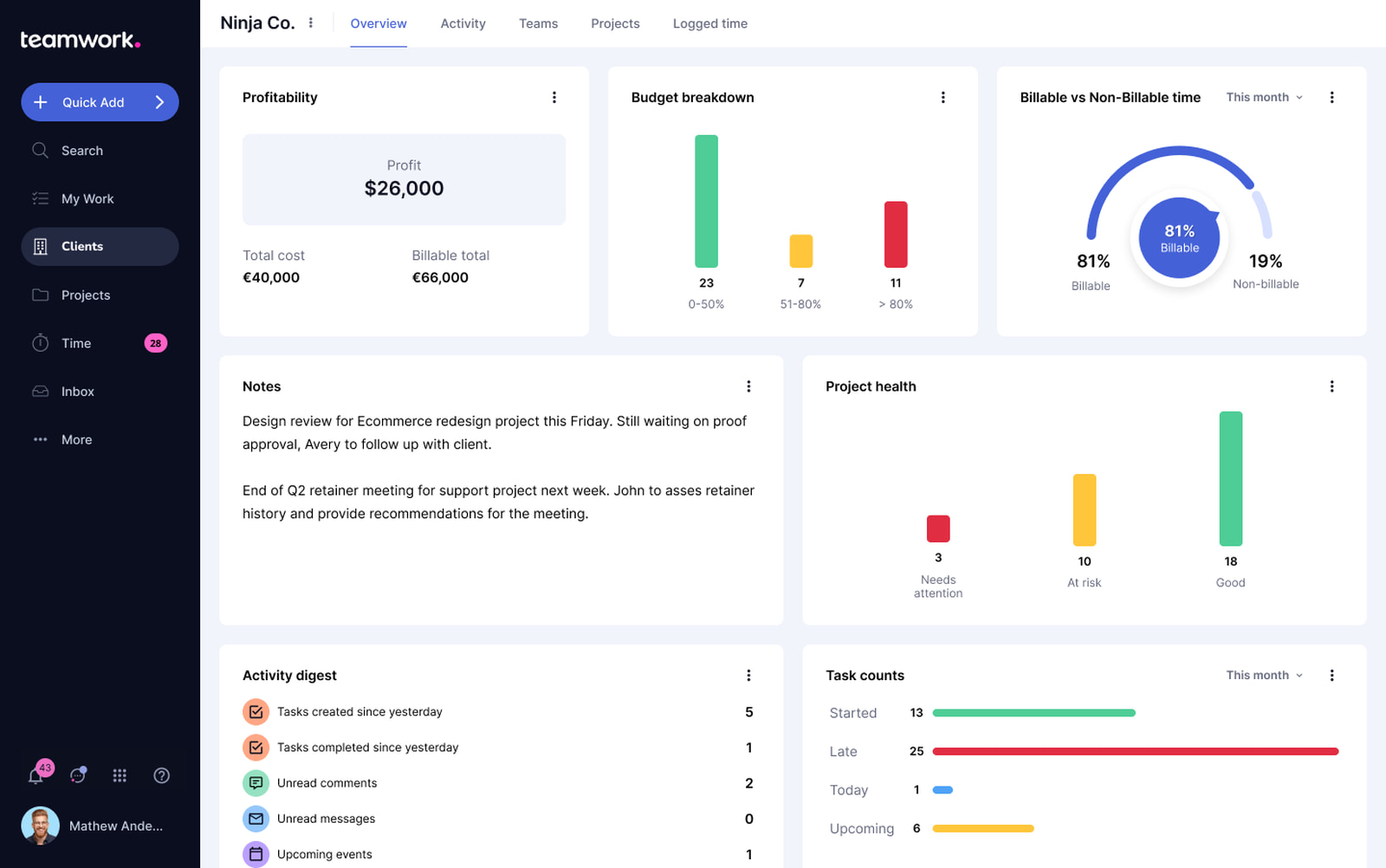
Teamwork.com is a project management platform specifically designed for agencies and teams managing client work with integrated billing and time tracking.
Why It Stands Out
Unlike Wrike and general-purpose tools, Teamwork.com builds client-facing features directly into the platform. Time tracking ties directly to profitability reports, and workload management features help prevent team burnout.
Best For
- Agencies and consultancies managing client projects requiring billable hours tracking
- Teams needing integrated time tracking tied to project delivery profitability
- Organizations prioritizing client portals and professional resource visibility
Key Strengths
- Comprehensive client work features including invoicing integration
- Workload forecasting prevents overcommitment
- Client portal functionality for transparent collaboration
- 20% cheaper than Wrike equivalents for client-focused teams
Pricing: Free (5 users), Deliver $10.99/user/month (unlimited projects), Grow $19.99, Scale custom
Possible Limitations
- May feel overly focused on client work for internal project needs
- Higher pricing tiers required for advanced features
6. Trello
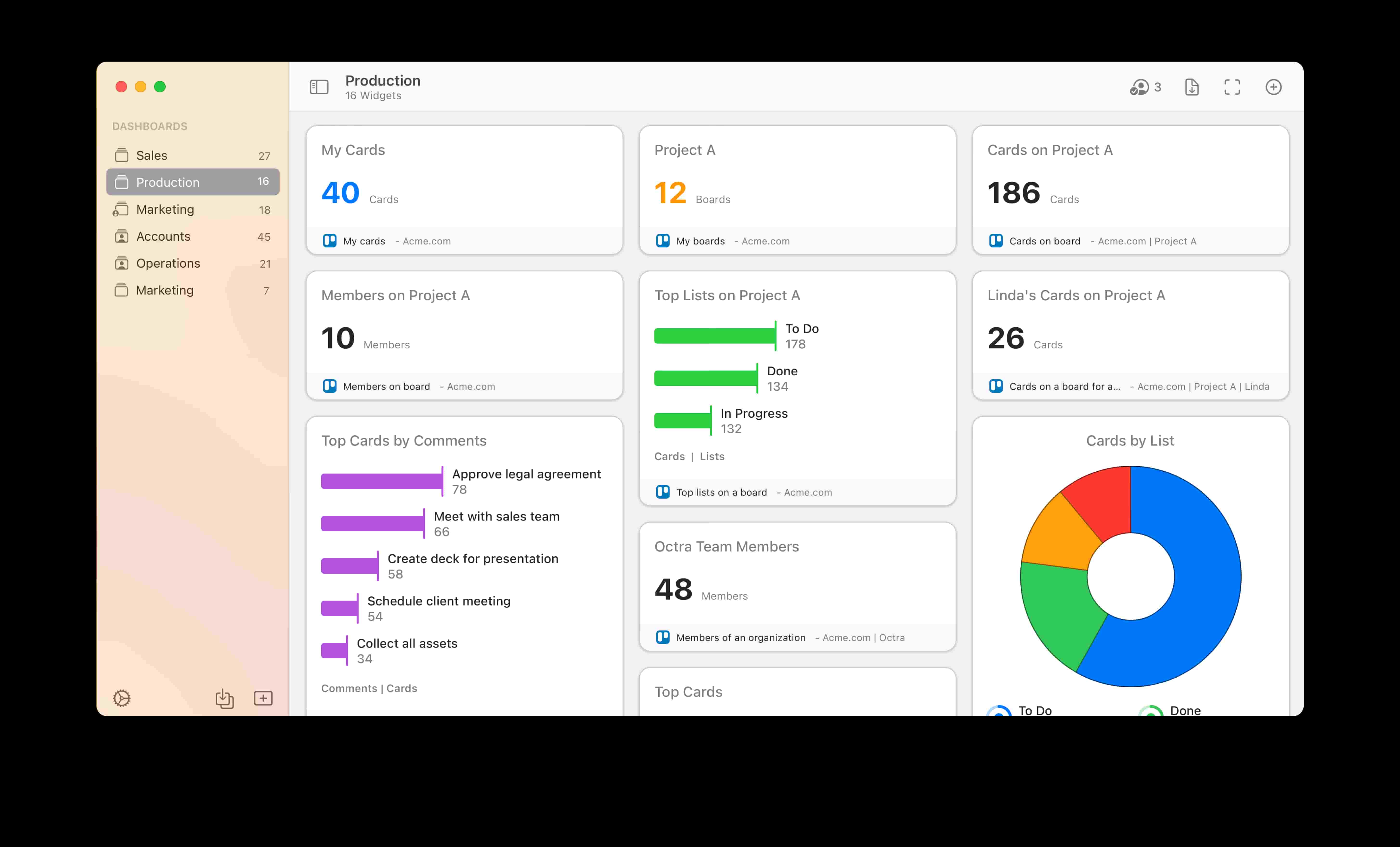
Trello is a simple Kanban-based task tracking tool ideal for small teams needing basic project organization without complexity.
Why It Stands Out
Acquired by Atlassian in 2017, Trello pioneered visual task management with its iconic drag-and-drop boards. With a 4.4/5 G2 rating and 80% of users reporting under 30-minute onboarding, it’s the fastest way to get started with easy task management.
Best For
- Small teams needing basic task organization
- Organizations preferring simplicity over basic features
- Teams new to project management software seeking an accessible entry point
Key Strengths
- Extremely user-friendly with minimal learning curve
- Effective kanban boards with cards and lists
- Power ups extend functionality with calendars and automation
- Free plan includes unlimited cards, 10 boards, 250 commands/month
Possible Limitations
- No native gantt charts or time tracking (requires add-ons)
- Scales poorly for complex projects with multiple projects and task dependencies
- Limited for larger teams needing workload management
7. Basecamp
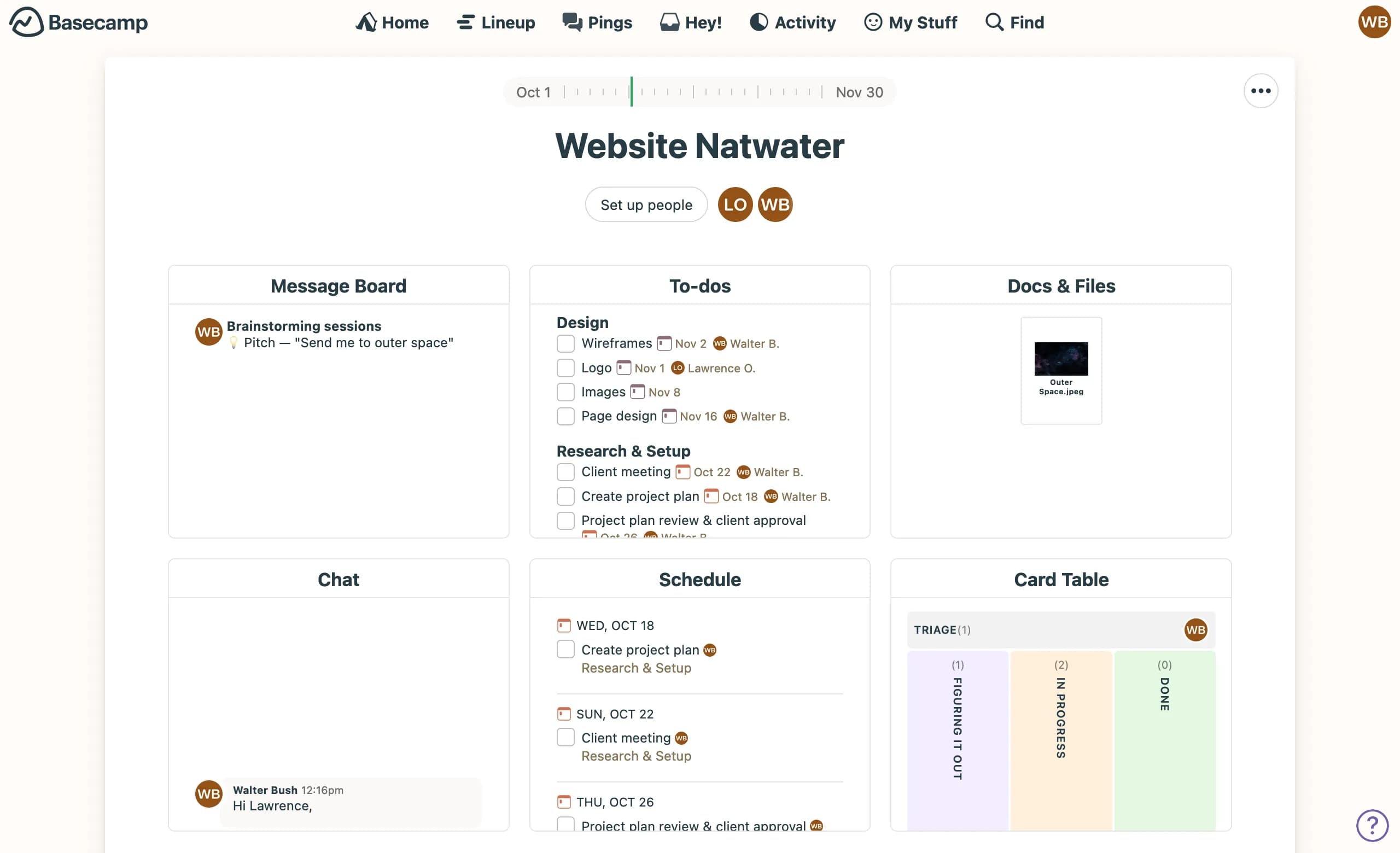
Basecamp is a minimalist project management tool focused on simplicity and coordinating tasks across teams without feature bloat.
Why It Stands Out
From the makers of Ruby on Rails, Basecamp deliberately avoids complexity. Its flat-rate $299/month pricing covers unlimited users—equivalent to 299 seats on many competitors. The 4.1/5 G2 rating reflects appreciation for its no-nonsense approach.
Best For
- Teams valuing simplicity over advanced features
- Organizations seeking straightforward coordination without customization complexity
- Small teams prioritizing communication and team works collaboration
Key Strengths
- Message boards, campsites, to-dos, schedules, docs, and basic automations
- No per-user fees—complete control over costs regardless of team size
- 100% uptime SLA
- Consistent user experience across all projects
Possible Limitations
- No gantt charts, limited custom fields
- Too basic for teams with complex projects requirements
- May frustrate users wanting team performance analytics
Quick Comparison of the Best Wrike Alternatives
| Platform | Best For | Starting Price | Key Differentiator |
|---|---|---|---|
| BridgeApp | AI-powered automation, unified workspace | Free (Pro €9/user/month) | AI agents that understand company context |
| ClickUp | Extensive customization, all-in-one flexibility | Free ($7/user/month Unlimited) | 15+ views, 1,000+ automations |
| Asana | Team collaboration, user-friendly tracking | Free ($10.99/user/month Premium) | Under 1-hour onboarding |
| Monday.com | Visual workflows, intuitive boards | Free ($9/user/month Basic) | Colorful, visual project management |
| Teamwork.com | Client-focused teams, billing integration | Free ($10.99/user/month Deliver) | Built-in profitability tracking |
| Trello | Simple Kanban, basic organization | Free ($5/user/month Standard) | 30-minute setup time |
| Basecamp | Minimalist coordination, team communication | $299/month flat | Unlimited users, no per-user pricing |
How to Choose the Right Wrike Alternative
Choose Based on Team Size and Complexity
Your team size and project complexity should drive your decision:
For small teams (under 20 people):
- Trello or Basecamp offer quick setup without overwhelming features
- Focus on platforms offer generous free plans to assign tasks and track progress
For medium teams (20-100 people):
- Asana provides balance between simplicity and power
- ClickUp works well if you need customizable workflows
For larger teams and enterprises:
- BridgeApp’s unified workspace eliminates tool fragmentation at scale
- Consider platforms with advanced resource management and real time collaboration
The goal isn’t finding all the features—it’s finding the right features for how your team works.
Choose Based on Workflow Automation Needs
Automation capabilities vary significantly across these top alternatives:
Basic automation (rules-based): Asana, Monday.com, Trello (via power ups)
Advanced automation (no-code builders): ClickUp, BridgeApp
AI-powered automation: BridgeApp (custom AI agents), ClickUp (AI writing/forms)
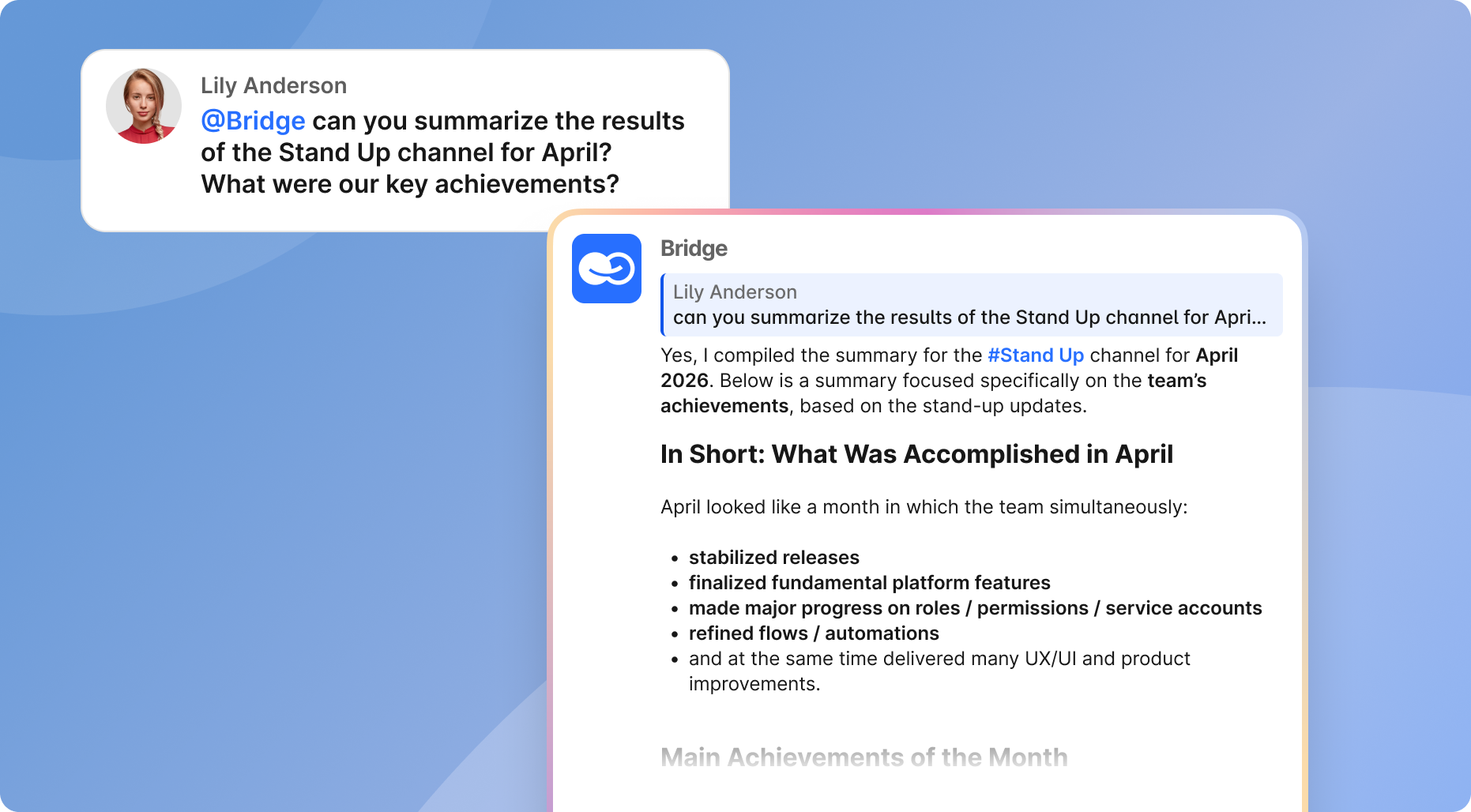
If your team spends significant working hours on repetitive tasks, platforms with deeper automation capabilities deliver faster ROI. BridgeApp’s AI agents can automate tasks like meeting summaries, task creation from conversations, and database queries—saving hours per employee weekly.
Choose Based on Budget and Pricing Structure
Wrike’s pricing often frustrates teams as they scale. Here’s how alternatives compare:
Best free version options:
- ClickUp: Unlimited tasks and projects
- Asana: Up to 10 users with core features
- BridgeApp: Unlimited members with project management and AI capabilities
Best value paid plans:
- Basecamp: $299/month regardless of team size
- ClickUp: $7/user/month for comprehensive features
- BridgeApp Pro: €9/user/month (€7.5 yearly) with AI agents and integrations
Avoid hidden costs: Some platforms require add-ons for features like advanced reporting, time tracking, or integrations. Calculate total cost including what you actually need.
Which Option Is Best for You?
Based on specific needs, here’s your decision framework:
Choose BridgeApp if:
- You want to eliminate tool fragmentation by replacing 6-7 SaaS tools with one unified platform
- You need AI agents that automate tasks based on actual company context
- Data sovereignty matters (on-premise, hybrid, or EU hosting options)
- You want productivity monitoring without juggling multiple dashboards
Choose ClickUp if:
- You need maximum customization flexibility with 15+ project views
- Your team can handle a steeper learning curve for greater long-term payoff
- You want comprehensive features including docs, goals, and whiteboards
Choose Asana if:
- You prioritize intuitive interface and quick team adoption
- Team collaboration and clear assign responsibilities features matter most
- You don’t need extensive customization or AI automation
Choose Monday.com if:
- You prefer visual boards and colorful workflow management
- Your team includes sales, marketing, or creative teams who think visually
- You need strong automation without deep technical complexity
Choose Teamwork.com if:
- You manage client work requiring billing and time tracking integration
- Tracking billable hours and project profitability is essential
- You need client portal functionality for transparent project delivery
Choose Trello if:
- You need simple task management without complex features
- Your team is small and just needs basic task tracking
- Fast setup and minimal training are priorities
Choose Basecamp if:
- You want minimalist coordination focused on team communication
- Flat-rate pricing appeals to your modern teams with variable headcount
- You actively avoid feature bloat and technical complexity
Final Thoughts
The best Wrike alternative depends on what’s actually slowing your team down.
If complexity and fragmented tools are the issue, consolidating into a unified workspace like BridgeApp eliminates the context switching that costs teams 60% of their productive time. If you need deep customization without the learning curve of enterprise tools, ClickUp offers remarkable flexibility. If your team just needs to track progress on straightforward projects, Asana or Trello get the job done without overhead.
Before committing to any platform:
- Start with free trials — Most platforms offer 14-day trials with 70% conversion rates, meaning most teams who try them find value
- Pilot with 2-3 options — Run the same project through multiple tools to see real differences
- Calculate true costs — Factor in integrations, add-ons, and time spent on training
For teams serious about eliminating routine work and boosting team productivity through AI automation, BridgeApp’s approach of embedding intelligence natively—rather than bolting it on—represents where project management is heading in 2026 and beyond.
The best project management platform is the one your team actually uses. Choose accordingly.