BlogIndustry Insights
Tool Sprawl: Why "More Tools" Are Hurting Your Business

BridgeApp Team
17 min read

Every team wants to move fast, solve problems, and ship results. The easiest way to do that? Buy a tool. But multiply that impulse across every department, every quarter, and every new hire, and you end up with something far less productive: tool sprawl.
Key Insights
- Tool sprawl is the unchecked accumulation of overlapping software and it tools that drives up costs, risk, and unnecessary complexity for it teams and the wider business.
- By 2026, many mid-sized firms routinely run 100–300 SaaS apps and 40–70 security and observability tools, with a large share underused or redundant.
- Tool consolidation paired with governance can cut direct license spend by 15–30%, reduce security risks, and give teams a single source of truth for decision-making.
- For the collaboration and workflow layer specifically - chat, tasks, docs, and the agents that connect them - platforms like BridgeApp fold what's usually 4-6 separate subscriptions into one, without touching your security or observability stack.
- Preventing tool sprawl is as much about people, process, and governance as it is about technology choices.
- This article gives concrete best practices and a step-by-step plan for how it teams can tackle tool sprawl and prevent it from returning.
What Is Tool Sprawl?
Tool sprawl is the uncontrolled growth of software tools across an organization, where multiple tools perform similar or overlapping functions without central coordination. It shows up most visibly in IT, security, and engineering, but it affects every corner of the it environment-from HR onboarding platforms to sales analytics dashboards.
In practice, sprawl creates fragmented workflows and data silos. Logs live in one platform, alerts fire from another, and metrics sit in a third. Different teams build their own dashboards, run their own agents, and enforce their own processes. Nobody has a complete picture.
The scale of the problem is substantial. Many organizations now manage portfolios of 125+ SaaS applications, with counts growing by at least 20% annually. In security domains, research from IBM and Palo Alto Networks found that the average organization runs 83 security tools from 29 vendors. Large enterprises tend to sit at the higher end of both ranges.
While the term "tool sprawl" is often used broadly, it manifests in domain-specific forms. Cybersecurity tool sprawl involves dozens of overlapping endpoint, identity, and cloud security products. Observability tool sprawl means separate platforms for logs, metrics, traces, and uptime checks. General SaaS sprawl covers everything from project management to file storage.
All share common root causes, but the fix looks different by domain: security and observability sprawl get addressed by platformizing within the category - a unified SIEM, a single observability suite.
General SaaS sprawl is different, because chat, tasks, docs, and databases are separate categories of tool doing separate jobs - consolidating them means replacing several categories with one connected workspace, not picking a bigger point solution. That's the specific gap platforms like BridgeApp target.

How Does Tool Sprawl Happen?
Most organizations don't plan for tool sprawl. It emerges gradually from well-intentioned decisions made by smart people solving real problems. The common problem is that nobody steps back to see the full picture until costs and complexity are already out of control.
Rapid cloud adoption since 2020, combined with remote and hybrid work, created new gaps in monitoring, security, and collaboration. Teams responded by adopting new tools-container security scanners, cloud configuration checkers, remote collaboration suites-without evaluating whether existing tools already covered those needs.
Team-level autonomy accelerates this. A DevOps engineer starts a free trial of an error-tracking service. A finance analyst subscribes to a reporting tool because the current tools are "too slow." A marketing team purchases its own analytics platform on a corporate credit card. These decisions are individually rational but collectively wasteful. Shadow IT, where new software enters the organization outside official procurement, is one of the most persistent drivers.
M&A activity compounds the issue. Acquiring a company means inheriting its entire tool stack-often a duplicate SIEM, a second endpoint protection agent, another log aggregator. Without deliberate rationalization, both stacks remain, doubling maintenance costs and creating redundant tools that nobody retires.
Vendor bundling and new technologies also play a role. A vendor offers a discount if you add three more modules. A new threat category appears and demands a specialized product. Before long, the organization is licensing capabilities in other tools that already exist elsewhere in the stack-features that go unused because nobody knew they were there.
Why Tool Sprawl Is a Problem for IT Teams
IT teams pay the heaviest day-to-day price for unchecked tool sprawl. The operational challenges compound quickly, creating significant challenges that affect everything from routine maintenance to emergency response.
More tools mean more operational complexity. Each product brings its own dashboard, API, agent, update cycle, and credential management. Senior engineers can end up spending 20–30% of their time maintaining integrations and keeping dashboards functional rather than building features or resolving incidents. The integration challenges alone-wiring tools together, writing custom connectors, maintaining them as APIs change-become a job in themselves.
Reduced visibility is equally damaging. When important signals are scattered across separate platforms, teams struggle to get a unified view during an incident. Engineers context-switch between four or five consoles, performing manual data translation to correlate events across systems. Each switch adds time spent that directly increases Mean Time to Resolution. The result is tool fatigue: frustrated engineers toggling between windows at 2 a.m. while an outage grows.
Skill gaps emerge as the stack grows overly complex. No one becomes deeply expert in every product. Configurations drift, patches get delayed, and advanced features go unused. Tools become shelfware-purchased but barely touched. When the stack is this wide, even onboarding a new team member becomes a multi-week education project.
Business Impact: Increased Costs, Security Risks, and Lost Productivity
For executives and decision makers, tool sprawl translates directly into measurable business damage across three dimensions: increased costs, security risks, and lost productivity.
Costs. Overlapping licenses are the most visible expense. A mid-sized engineering team (50–100 engineers) typically spends $100,000 to $400,000 per year on observability tools alone-APM, logs, error tracking, synthetic checks-before accounting for infrastructure, training costs, and maintenance costs for integrations. When too many tools store the same data redundantly, you're paying multiple ingestion and storage fees for identical telemetry.
Security risks. A larger tool footprint means a larger attack surface. Forgotten or idle tools retain permissions, credentials scatter across platforms, and inconsistent configurations create security vulnerabilities. Siloed data hides threats. Organizations with fragmented stacks took 72 days longer to detect threats and 84 days more to contain them compared to those with consolidated environments. That gap is where breaches grow.
Productivity. When employees jump between six or more apps to complete a single workflow, productivity drops. Data access is fragmented, decision making slows because metrics live in different systems, and onboarding takes longer.
Consider a 500-person company running separate collaboration suites in marketing and sales, overlapping endpoint protection across three departments, and multiple log platforms. They're likely burning thousands per month in avoidable spend while their engineers lose an hour per outage toggling between dashboards. Of those three problems, the collaboration piece is usually the fastest to fix - it doesn't require the security review or data-migration work that consolidating the other two categories does. The intangible costs-employee frustration, difficulty measuring KPIs-are harder to quantify but equally real.
Cybersecurity Tool Sprawl: When Protection Backfires
Security teams are especially prone to tool sprawl because every emerging threat category seems to demand its own product. Endpoint detection, email security, identity governance, cloud posture management, SIEM, SOAR-the list grows with every audit and every headline breach.
Cybersecurity tool sprawl is the deployment of dozens of disparate security tools, many purchased reactively, many lightly used. Surveys show that over 58% of organizations run more than 25 security tools, with larger firms often exceeding 50. Security teams face alert overload when different tools generate duplicate notifications, fragmented visibility that creates blind spots across identity, endpoint, and network layers, and difficulty correlating events that span multiple consoles. Data security suffers when policy enforcement varies by product.
This can weaken overall security posture rather than strengthen it. Misconfigurations go unnoticed, unpatched tools become breach vectors, and analysts rely on a few specialists who know particular consoles-creating single points of failure. Many organizations invest heavily in security tools but never enable the full capability set, leaving underutilized tools that cost money without delivering protection.
Over 75% of organizations now aim to reduce the number of security vendors they rely on. Consolidation around integrated platforms-like cloud-native application protection platforms that combine posture management, workload protection, and identity-can improve both data security and efficiency. This sets the stage for the best practices discussed later.
Observability Tool Sprawl and Its Effect on Reliability
Modern engineering environments built on Kubernetes, microservices, and multi-cloud architectures demand visibility across logs, metrics, traces, synthetic monitoring, and real user monitoring. Because no single vendor always satisfies every need perfectly, organizations often end up with different tools for each pillar-Datadog for APM, Sentry for errors, ELK for logs, PagerDuty for on-call, Pingdom for uptime, Grafana for dashboards.
Many teams now run 4–8 observability tools concurrently. During an outage, engineers hop between monitoring tools, manually correlating data from a log system, a trace system, and a metrics platform. Each context switch slows time to detection and resolution. Worse, multiple platforms often collect and store the same data-the same metrics ingested, indexed, and retained in parallel, paid for twice or more.
The financial case for consolidation is clear. Organizations that unified their observability stack reported savings of 25–30% on vendor costs plus reductions in integration maintenance. A centralized management system for monitoring creates a single source of truth, enabling faster debugging, more accurate SLO tracking, and fewer dashboards to maintain during incidents.
How to Identify Tool Sprawl in Your Organization
You can't reduce tool sprawl until you can clearly see it and measure it. The first step is a cross-functional inventory: catalog all various tools in use across IT, security, engineering, HR, finance, and line-of-business teams. Include free tools, departmental subscriptions, and anything running on shadow-IT credit cards.
Practical sources for this inventory include SSO and identity providers (which show every application users authenticate into), procurement records, corporate credit card statements, expense reports, and browser extension audits. For each tool, capture its purpose, owner, active user count, annual cost, and contract terms.
Look for warning signs: multiple platforms doing the same job, underutilized tools with low login frequency, teams exporting CSVs to aggregate data between systems, and overlapping feature sets across products. Tag each tool by category-observability, collaboration, CRM, cybersecurity-and map the number of tools per category.
Present findings to leadership using simple category heatmaps or overlap matrices. Making the invisible visible is the single most effective way to build urgency for action.
Strategies and Best Practices to Reduce Tool Sprawl
If you already know you have a problem, this is where to focus. Start by defining clear principles for tool consolidation: prioritize integrated platforms over point solutions, favor depth over breadth, and require strong APIs for any remaining specialized products. Every new purchase should align with business objectives and user needs, not just feature lists.
Run a structured rationalization process. Score current tools on usage, business value, overlap with redundant functionalities, security posture, and total cost of ownership. Rank candidates for retirement-typically those with the highest overlap, lowest usage, and highest cost. A financial services firm cut cybersecurity tool spend by 21% in its first year simply by scoring and retiring overlapping products.
Stakeholder engagement is critical. Involve IT, security, finance, and end-user representatives so consolidation decisions don't break workflows. Gather feedback from the people who use tools daily before retiring anything. Phase migrations carefully: run parallel systems briefly, communicate timelines, and start with one domain to build momentum.
The most successful efforts combine tool consolidation with process simplification-standard runbooks, unified monitoring practices, shared incident channels. This holistic approach helps reduce complexity and improve efficiency far beyond what technology swaps alone can achieve. Focus available resources on the areas that deliver real value and operational efficiency rather than spreading effort thin.
Preventing Tool Sprawl: Governance, Policies, and Ongoing Management
Preventing tool sprawl is an ongoing discipline, not a one-time cleanup. Without governance structures, sprawl returns within months.
Establish a lightweight but binding approval process for new tools. Before any purchase, require evaluation against existing tools, documented integration requirements, security review, and ROI justification. Assign clear ownership: a tool management lead for each domain (security, observability, collaboration) responsible for reviewing and rationalizing their category. Tie requests to strategic goals and measurable outcomes across organizational levels so "shiny object" purchases become harder to justify.
Adopt IAM and SSO to centralize access, track usage, and simplify deprovisioning. This reduces both risk and unused licenses while making shadow IT far more visible. Schedule quarterly or semi-annual tool audits to reassess utilization, security posture, and overlap as business needs change. Strategic alignment between tool investments and business strategy should be revisited regularly.
The cultural side matters just as much. Provide comprehensive training so teams understand not just how to use their tools but why consolidation matters. Educate leadership on the hidden costs of adding more tools. Celebrate successful retirements as wins for overall effectiveness. When teams see the financial and operational results of control tool sprawl efforts, buy-in follows naturally.
Where BridgeApp Fits in Tool Consolidation
Most of the advice above applies regardless of which category of sprawl you're tackling - inventory, rationalize, govern, prevent recurrence. But general SaaS sprawl is the one where a single connected workspace can replace several point tools outright, rather than adding yet another platform to the pile.
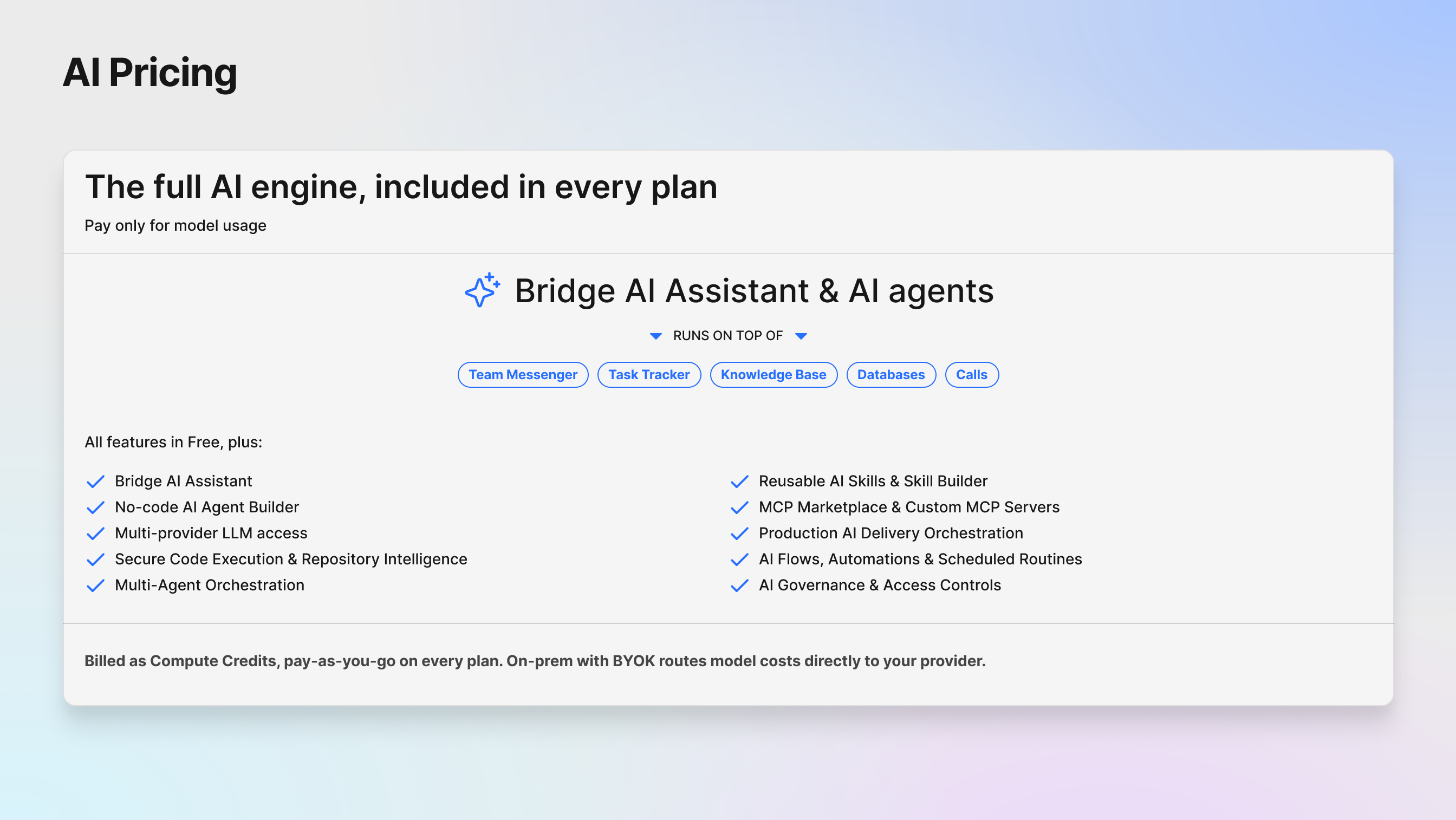
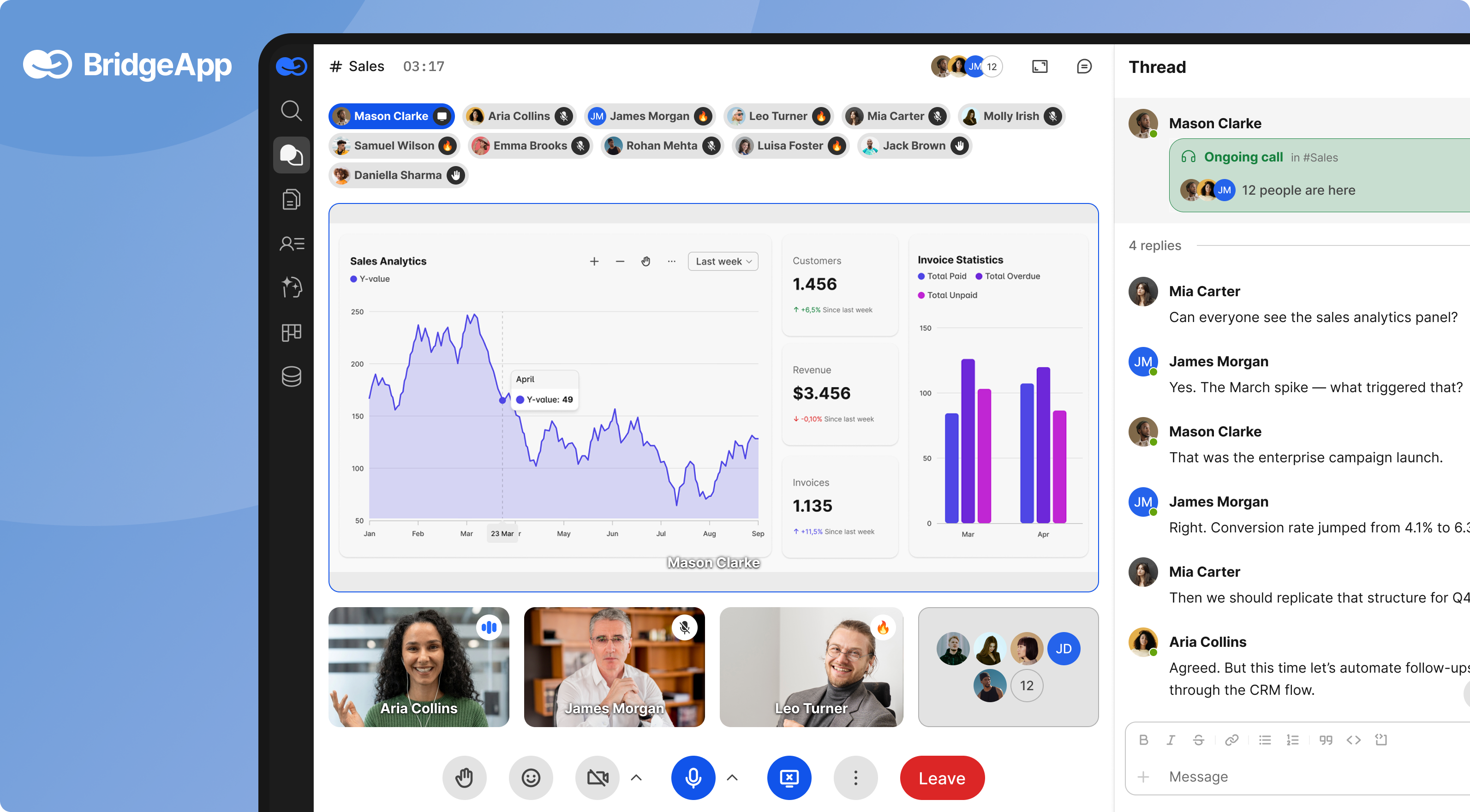
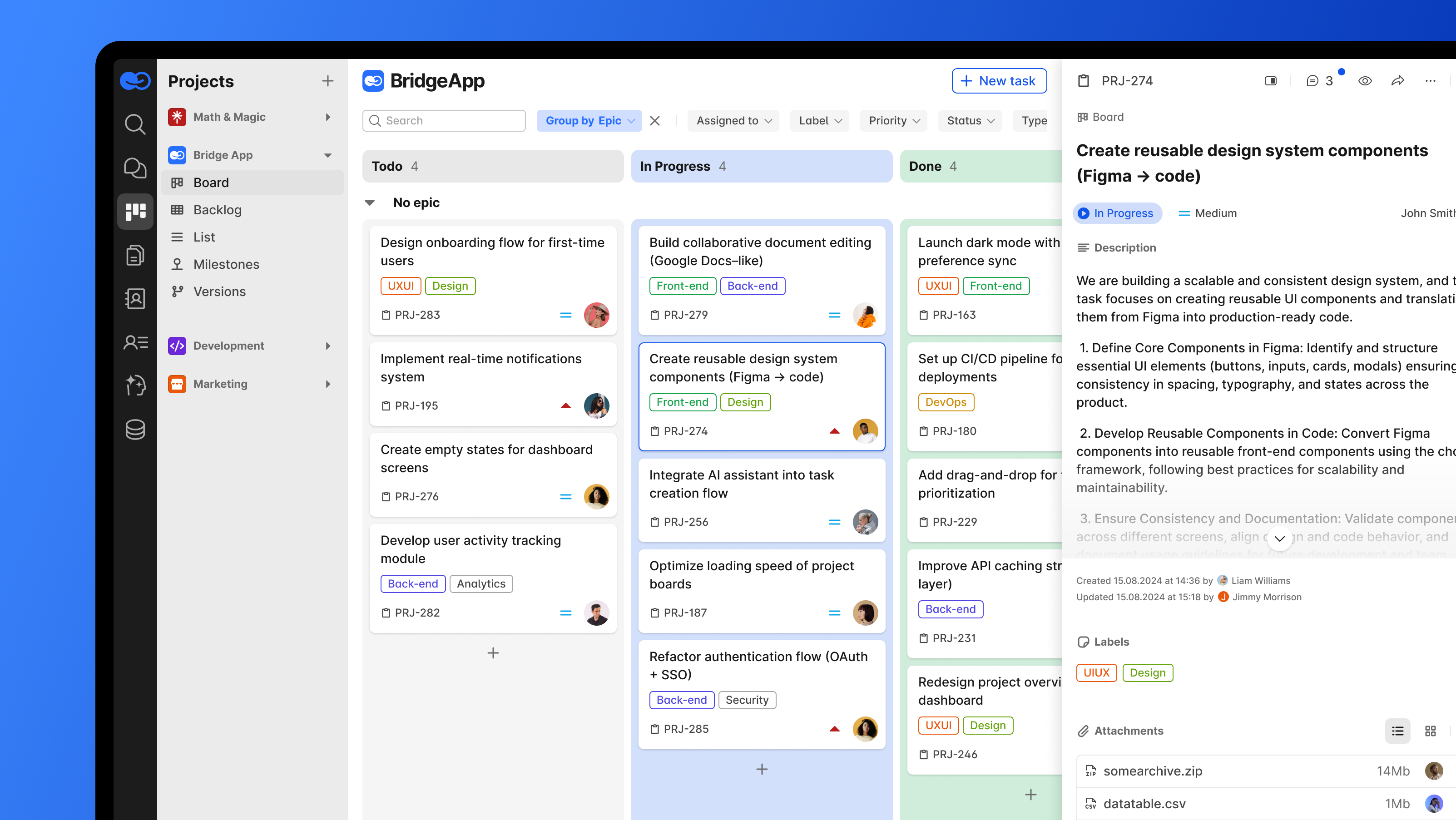
BridgeApp combines team chat, task tracking, documents, databases, and a no-code AI agent builder in one workspace - the specific slice this article's "general SaaS sprawl" category describes: a chat tool, a project tracker, a doc editor, and a handful of one-off automations that don't talk to each other. Consolidated onto one workspace, a task, the document it references, and the conversation about it live in the same place by default, instead of needing an integration to keep them in sync.
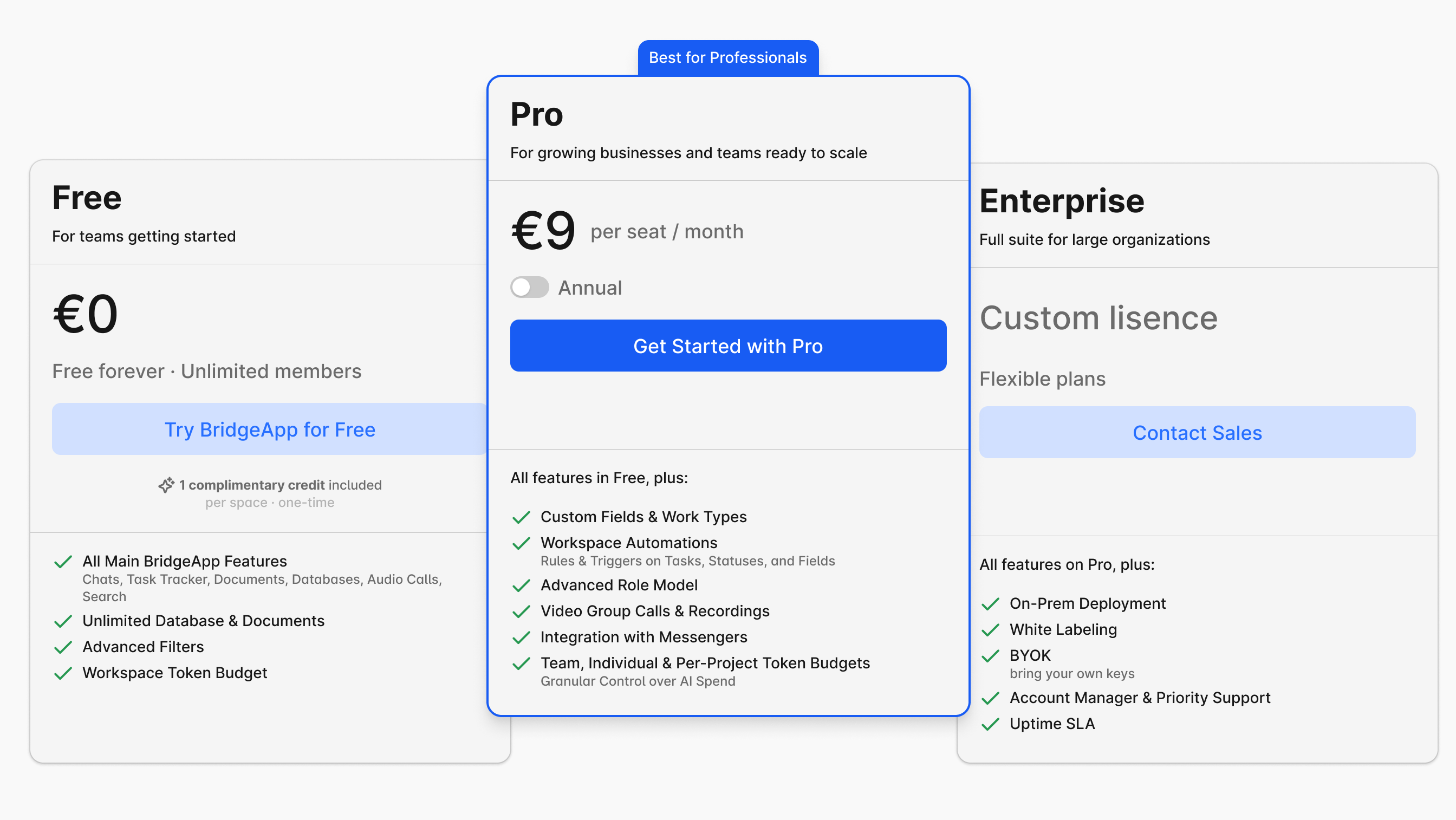
This doesn't extend to security or observability tooling - those categories have their own consolidation paths, as described above. For regulated teams weighing consolidation, deployment model is also part of the decision: BridgeApp runs on cloud, private cloud, on-premise, or hybrid.

FAQ: Tool Sprawl, Consolidation, and Next Steps
How many tools are "too many" for a mid-sized organization?
There is no fixed "right" number. What matters is redundancy, integration quality, and whether tools clearly support business outcomes. Many 500–1,000 person companies can consolidate core IT, security, and observability stacks by 20–40% without losing capability. Focus on overlap and underuse rather than chasing an arbitrary target count.
Is adding one more specialized tool ever better than consolidating?
Yes-when a new tool fills a genuine gap, integrates cleanly with existing systems, and delivers measurable value that outweighs added complexity. Before buying something separate, evaluate whether enabling an existing module in a current platform could solve the problem. Document the decision and set a review timeline to confirm the new tool is earning its place.
How long does a typical tool consolidation project take?
A focused consolidation for one domain (like observability or endpoint security) can typically be planned and executed over 3–6 months. Broader, organization-wide efforts often run 12–18 months, especially when they involve renegotiating contracts and major workflow changes. Start small with one or two high-impact areas to build momentum and demonstrate quick wins.
What metrics should we track to know if we've reduced tool sprawl successfully?
Track total number of tools by category, license utilization rates, and annual spend per category. Monitor operational KPIs like MTTR, number of dashboards used during incidents, and average onboarding time. Include business metrics such as reduction in software spend, fewer security exceptions, and improved satisfaction scores from IT and business stakeholders.
Does consolidating tools increase vendor lock-in risk?
Consolidating onto fewer platforms can increase dependence on certain vendors. Manage this risk by prioritizing vendors with open standards, strong APIs, and data export capabilities. Avoid proprietary lock-ins where possible. For collaboration and workflow platforms specifically, deployment flexibility is part of that calculation too - a platform that can run on-premise or in a private cloud gives you an exit path a pure SaaS vendor doesn't. The operational and security benefits of reducing unmanaged sprawl usually outweigh the lock-in risk when consolidation is done thoughtfully.