BlogIndustry Insights
The Best Self Hosted Team Chat Solutions for Enhanced Collaboration

BridgeApp Team
7 min read
Complete Guide for Secure Communication in 2026
A self-hosted team chat is a communication platform you run on your own server, private cloud, or hybrid infrastructure instead of relying fully on SaaS. Organizations choose it for data sovereignty, security, customization, compliance, and complete control over messages, files, users, and customer data. Unlike cloud services, self-hosting allows total ownership and control over messaging infrastructure, while reducing dependency on third-party providers for data management. Organizations often evaluate self-hosted tools as alternatives to cloud services because data residency facilitates compliance with regulatory frameworks like GDPR and HIPAA.
How We Chose the Best Self-Hosted Team Chat Solutions
We compared self hosted chat apps by practical criteria: deployment flexibility, security, communication features, scalability, and cost. Self-hosted team chat solutions ensure data privacy and security, and robust security is a characteristic of self-hosted chat platforms. End-to-end encryption is standard for self-hosted communication platforms, though implementation differs by product; some support end to end encryption, two-factor authentication, audit logs, and access controls.
We also looked at whether each chat app supports voice calls, video calls, group chats, read receipts, push notifications, file sharing, mobile apps, desktop clients for windows and mac, web access, android and ios support, and integrations with other apps. Self-hosted solutions facilitate deeper system-level customization and integration, and self-hosted platforms can be tailored for various team needs. Self-hosted platforms avoid per-seat subscription fees as teams scale, but you still need money, resources, developers, and time to install, manage, and support the setup.
Top 7 Self Hosted Team Chat Solutions for 2026
1. BridgeApp
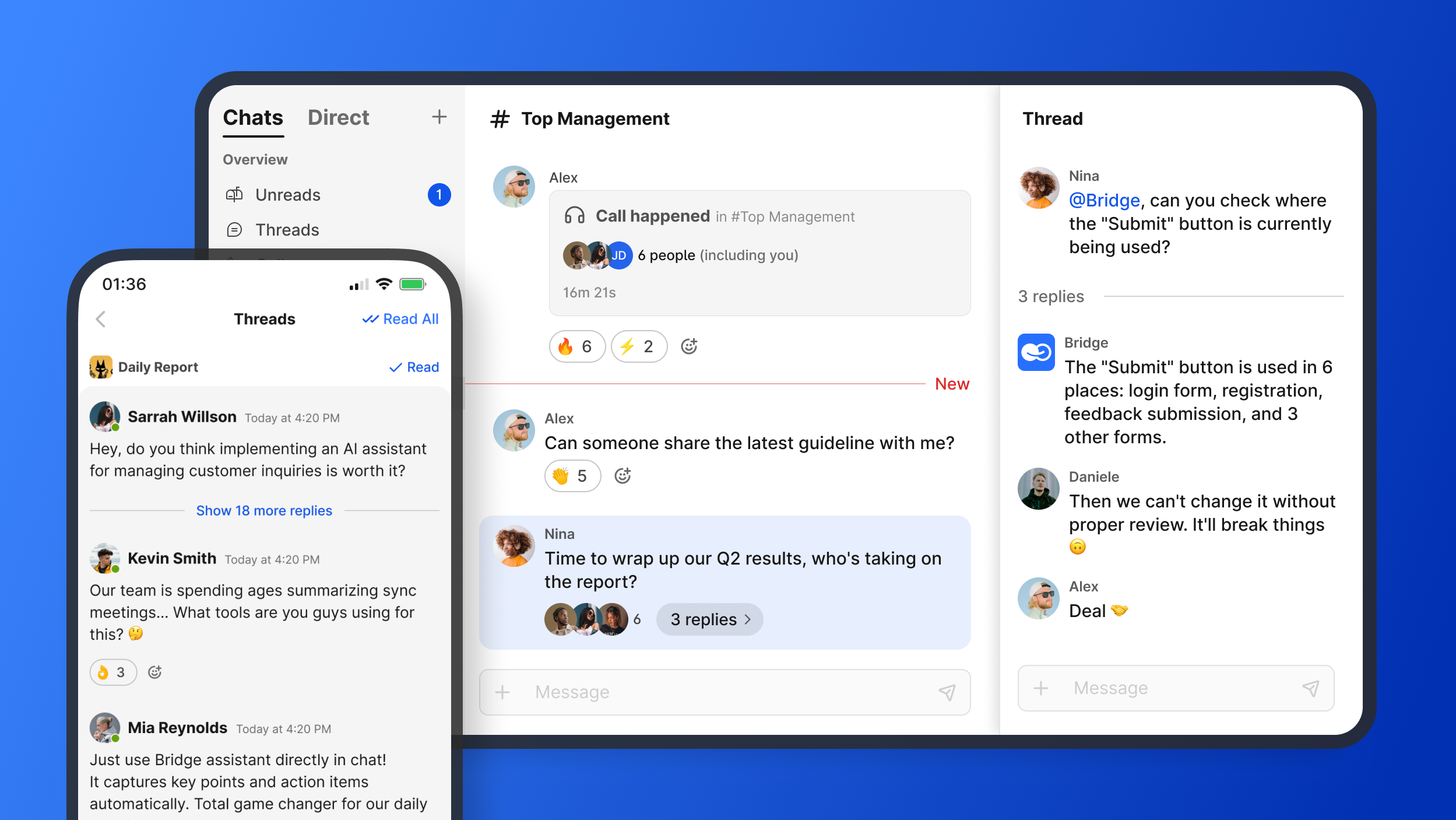
BridgeApp is an AI-native digital workspace that combines self hosted chat, project management, knowledge bases, custom databases, documents, calls, and automation in one platform. It includes channels and threads, audio and video calls built in-house, Kanban/Backlog/List task views, a collaborative document editor, no-code databases, and a visual no-code AI agent builder.
Why It Stands Out
BridgeApp is AI-first rather than AI bolted onto chat. Its agents work with a company's internal context from chats, knowledge bases, and databases. You can create custom AI-powered workflows for any business process, connect MCP servers to agents for unlimited automation scenarios, and access to all AI models on the market.
Best For
BridgeApp is best for businesses that want to replace 6-7 fragmented tools while keeping data sovereignty through cloud, on-premise, private cloud, or hybrid deployment.
Key Strengths
BridgeApp can save 4.6 hours per employee per week by automating routine tasks. It claims a 40% productivity increase, 60% context switching reduction, $1.656M annual savings for a 250-person team at $30/hour, and a 3-month ROI timeline. Plans include a free tier, Pro at €9/user/month or €7.5 annually, and Enterprise with on-premise installation, BYOK, white labeling, priority support, account manager, and uptime SLA.
2. Rocket.Chat
Rocket.Chat is an open source enterprise chat platform for secure real time communication. Rocket.Chat is used by tens of millions in 150 countries, making it one of the most established solutions.
Why It Stands Out
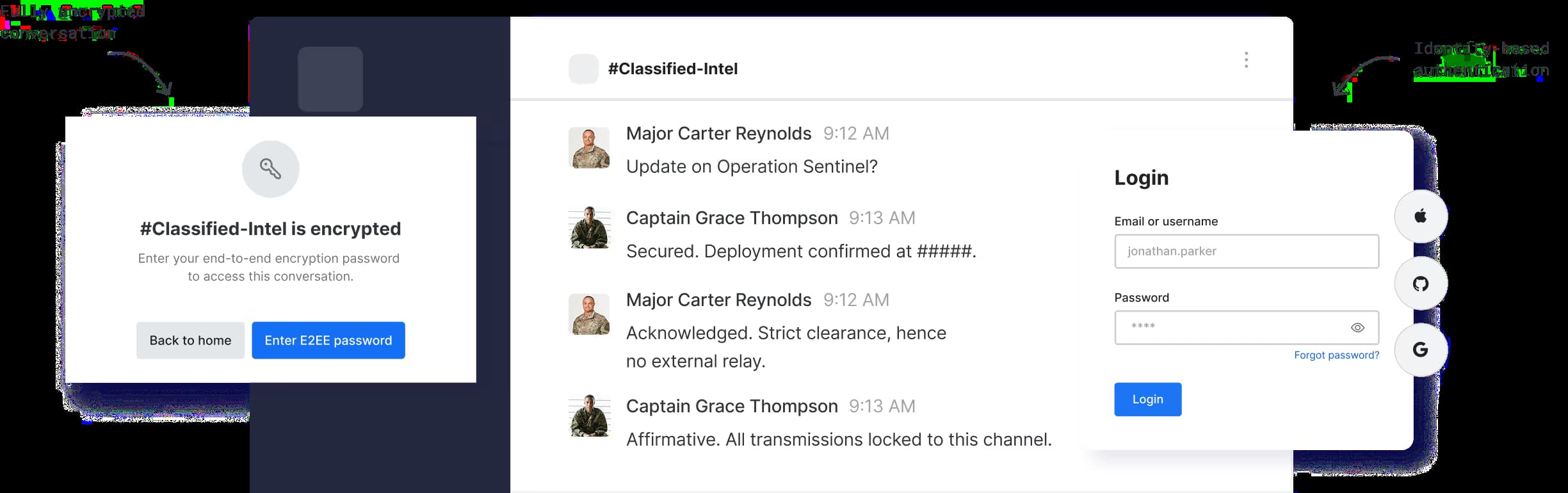
Rocket.Chat offers end-to-end encryption for secure messaging. Rocket.Chat supports two-factor authentication for enhanced security. Rocket.Chat supports Docker, Podman, and Kubernetes deployments. Rocket.Chat supports deployment via Docker, Kubernetes, and Podman. Air-gapped deployment is available for high-security environments.
Best For
Choose rocket if you need highly customizable chat platforms suitable for omnichannel customer engagement, external communication, and regulated workflows.
Key Strengths
Rocket.Chat offers APIs, marketplace apps, federation options, customer support channels, and strong administrative controls. It is a good answer for enterprises that need to customize, integrate, and manage many contacts, customers, and internal users.
Possible Limitations
Rocket.Chat can require significant technical expertise. It may be resource-intensive for smaller teams that just want a simple and personal communication tool.
3. Mattermost
Mattermost is an open-source platform under the MIT license. It is built for technical teams that need secure team communication, incident channels, and developer workflows.

Why It Stands Out
Mattermost is built on a modular architecture for customization. It works well with GitLab, GitHub, CI/CD pipelines, bots, and operational alerts.
Best For
Mattermost is best for developers, DevOps teams, and organizations with strong technical requirements.
Key Strengths
It offers strong control over infrastructure, private deployments, full message history, and a familiar Slack-style interface. Its community is active, and the open source project is mature enough for production use.
Possible Limitations
Mattermost can feel developer-focused for non-technical users. Built-in project management and calling features may not be as complete as all-in-one platforms.
4. Matrix (Element)
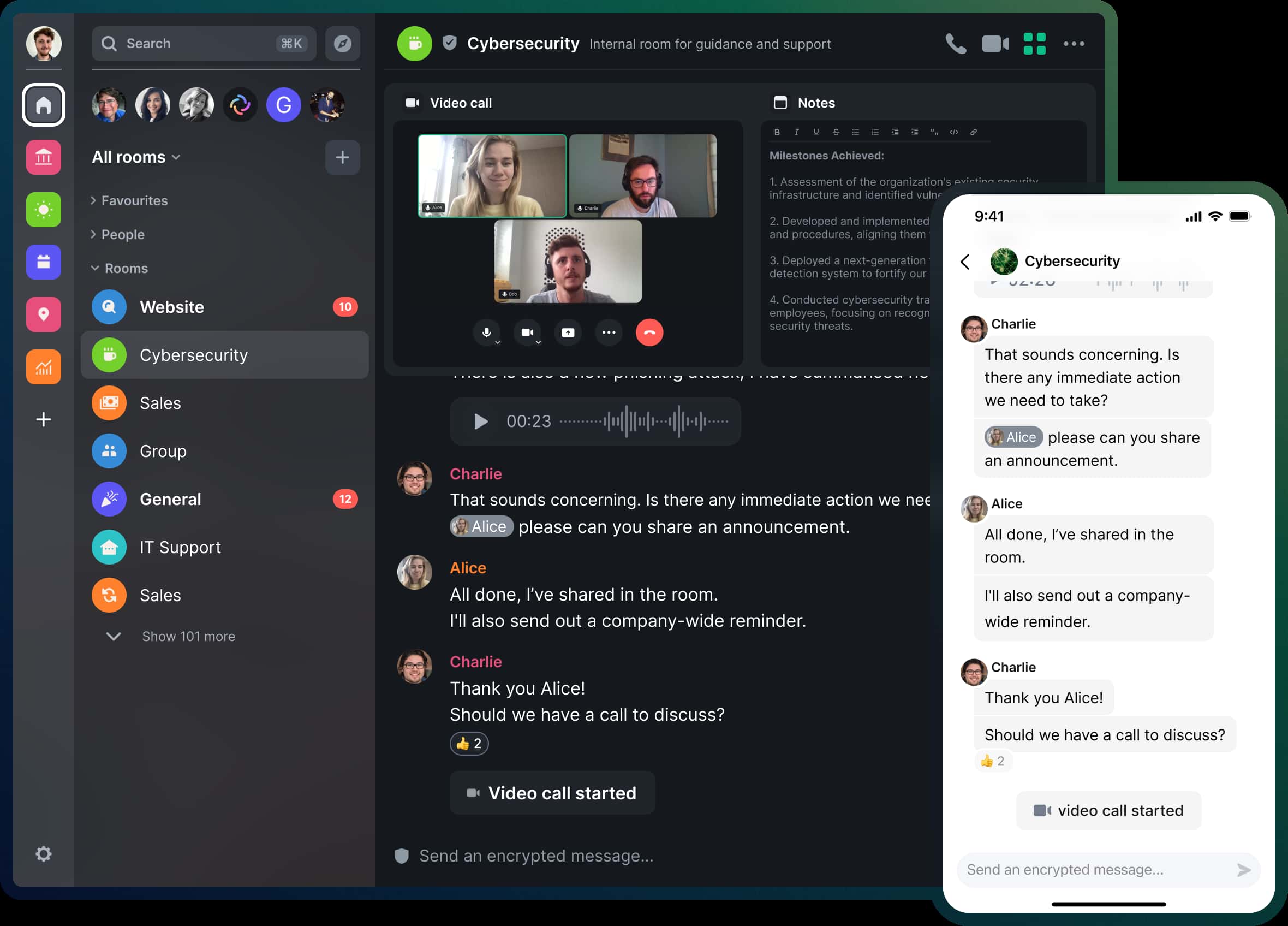
Matrix is a decentralized protocol, while Element is a popular client. It allows users on different servers to communicate while each organization keeps control of its own server.
Why It Stands Out
Matrix.org uses Olm and Megolm cryptographic ratchets for security. Matrix.org uses Olm and Megolm for user conversation protection.
Best For
Matrix is best for privacy-focused organizations that need federation, interoperability, and maximum control over conversations.
Key Strengths
Matrix supports strong encryption, federation, bridges, mobile and desktop access, and cross-network communication. It is useful when separate teams need to connect across the internet without surrendering data ownership.
Possible Limitations
Matrix can be complex to set up and maintain. Federation, identity, backups, and push notifications require careful configuration.
5. Zulip
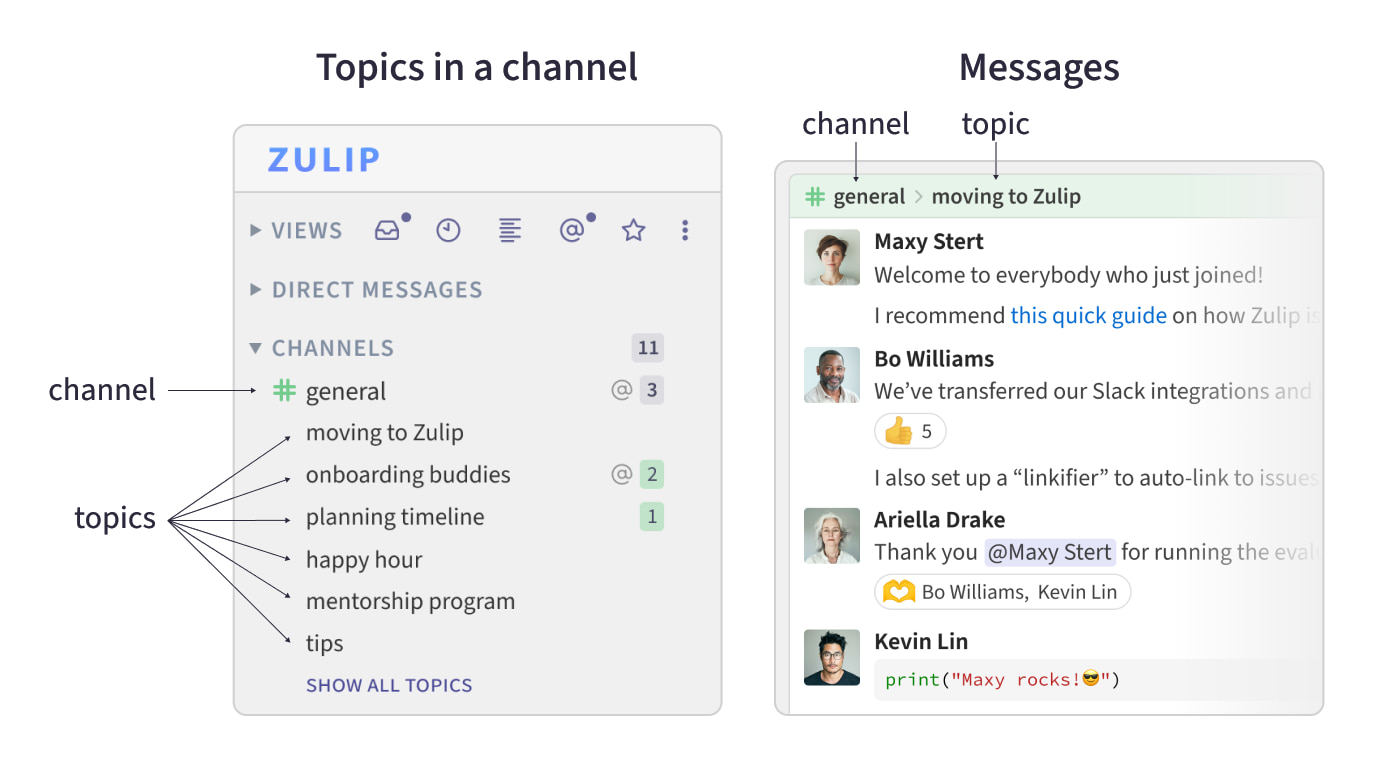
Zulip is a threaded team communication tool that organizes conversations into streams and topics.
Why It Stands Out
Thread-based messaging models are effective for managing high-volume communication. Zulip can be deployed on your own network for full control.
Best For
Zulip is best for busy teams that need to talk across many subjects without losing context.
Key Strengths
Zulip supports over 90 native integrations for enhanced functionality. Zulip offers over 90 native integrations for enhanced functionality. It also has good mobile apps, desktop apps, search, files, and notification controls.
Possible Limitations
The topic model may feel unfamiliar at first. Voice and video features are limited compared with video-first tools.
6. NextCloud Talk
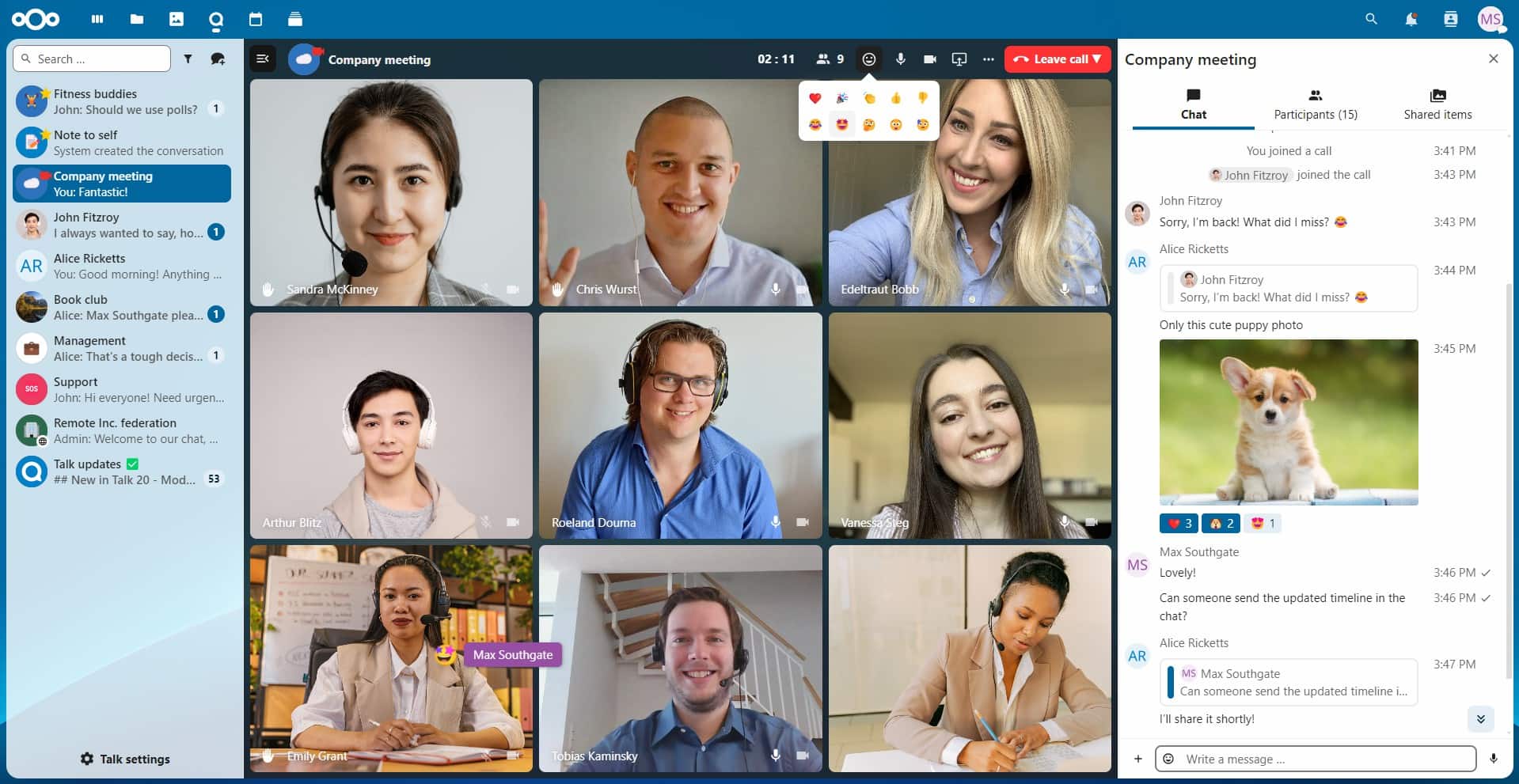
Nextcloud Talk adds chat, voice, and video communication to the broader Nextcloud collaboration suite.
Why It Stands Out
Nextcloud enables on-prem hosting for quick deployment. Nextcloud enables quick deployment with modular architecture.
Best For
Nextcloud Talk is best for organizations already using Nextcloud for file sharing, documents, calendars, and collaboration.
Key Strengths
It keeps files, chat, and calls close together, which helps teams collaborate without moving between too many services.
Possible Limitations
Chat is not the main focus. If you only need a dedicated chat app, Nextcloud may feel heavier than necessary.
7. Jitsi Meet
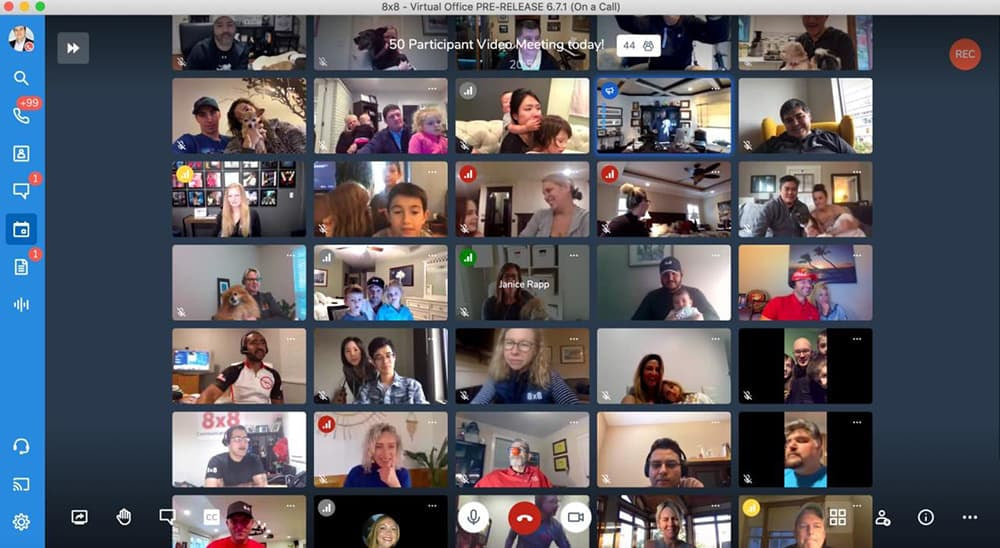
Jitsi Meet is an open source video conferencing platform with supporting chat features.
Why It Stands Out
Jitsi is simple to host, quick to access from a browser, and useful for meetings where participants should join without account creation.
Best For
Jitsi is best for teams where video calls and voice calls matter more than persistent channels.
Key Strengths
It offers strong meeting quality, fast setup, and broad web compatibility.
Possible Limitations
Persistent messages, organized group chats, and long-term conversation history are basic compared with dedicated self hosted team chat software.
Quick Comparison of the Best Self Hosted Team Chat Solutions
| Solution | Best for |
|---|---|
| BridgeApp | AI-powered all-in-one workspace |
| Rocket.Chat | Enterprise customization and omnichannel engagement |
| Mattermost | Development and DevOps workflows |
| Matrix (Element) | Privacy, federation, and decentralized communication |
| Zulip | Organized high-volume discussions |
| NextCloud Talk | Existing Nextcloud users |
| Jitsi Meet | Video-first communication |
Other tools may also fit niche needs. Wire was founded in 2012 and is based in Switzerland, and Wire adheres to Swiss data protection laws for user privacy. Apphitect provides end-to-end encrypted SDKs for secure messaging. MirrorFly offers Kubernetes and Docker Swarm orchestration options, and MirrorFly provides 100% customization for in-app chat features.
How to Choose the Right Self Hosted Team Chat Solution
Choose Based on Integration Needs
Start with the tools your team already uses. If you need one platform for chat, tasks, databases, docs, and AI, BridgeApp is strong. If you need developer integrations, Mattermost is easier to figure out. If you need customer channels and omnichannel communication, Rocket.Chat is more suitable.
Choose Based on Technical Resources
Self host only if you can maintain the server, backups, security patches, monitoring, and upgrades. Some tools need simple steps; others need Kubernetes, storage planning, and dedicated infrastructure. If your team lacks technical support, choose a product with strong documentation, paid services, or managed deployment options.
Choose Based on Security and Compliance Requirements
Security is not only encryption. Check retention, access controls, audit logs, BYOK, data residency, mobile policy, and whether the platform can run inside your network. Regulated organizations should test how each option handles customer data, files, messages, comments, and external collaborators.
Which Self Hosted Team Chat Solution Is Best for You?
Choose BridgeApp if you want to replace multiple tools with an AI-powered workspace. Choose Rocket.Chat if you need enterprise-grade features and extensive customization. Choose Mattermost if your team is heavily focused on development workflows. Choose Matrix if decentralization and maximum privacy are priorities. Choose Zulip if you need superior conversation organization for busy teams. Choose NextCloud Talk if you already use NextCloud for file collaboration. Choose Jitsi Meet if video conferencing is your primary communication method.
To Sum Up
The best self hosted team chat depends on your team size, security needs, integrations, and technical resources. Self-hosting gives organizations more control, better data ownership, and the ability to build a secure communication future around their own infrastructure.
If you are interested in reducing tool sprawl, improving productivity, and keeping communication under your control, shortlist two or three platforms, run a pilot, and measure adoption before rolling it out company-wide.