BlogIndustry Insights
What Is Agentic Coding? A Practical Guide for 2026

BridgeApp Team
10 min read

Quick Navigation
- Agentic coding means using autonomous coding agents-not just autocomplete or code completion-to plan, write code, run tests, and refactor across an existing codebase with minimal human intervention.
- It combines three pillars: autonomy (agents act), context (agents understand the project structure), and control (humans maintain oversight), resulting in faster delivery, improved code quality, and reduced developer workload.
- Between 2024 and 2026, agentic coding tools like GitHub Copilot Agent, Claude Code, Gemini CLI, and Magic Coder by BridgeApp moved from experimental to production-ready.
- Unlike vibe coding, which prioritizes speed and exploration over structure, agentic coding introduces discipline and structure to coding tasks through explicit plans, validation loops, and human in the loop review.
- BridgeApp's Magic Coder is an architecture-aware terminal coding agent built for agentic workflows in real production environments, connecting shared workspace context with repo-level code changes.
Introduction: From Autocomplete to Agentic Coding
Between 2020 and 2023, AI coding meant autocomplete. Tools like early GitHub Copilot and TabNine suggested lines or functions in your editor, and that was the ceiling. Developers interact with these tools the same way they use spellcheck: helpful, passive, limited.
That changed fast. By late 2024, generative AI models could handle multi-file edits, scaffold tests, and call external tools. By mid-2025, full coding agents arrived: systems that read your existing code, plan a sequence of actions, execute shell commands, and self correct when tests fail. AI agents can autonomously write, test, and modify code-not just suggest snippets.
This article is a practical explainer for engineering leaders and senior developers deciding how to adopt agentic coding. We will cover what it is, how it compares to other approaches, where it works, where it fails, and how to get started. BridgeApp focuses on structured, agentic workflows with human oversight rather than hype about "no-developer" teams.
What Is Agentic Coding?
Agentic coding is using autonomous or semi-autonomous AI coding agents to plan, implement, test, and modify software with deliberate human guidance at key checkpoints. The developer specifies high-level outcomes-"add rate limiting to this service," "migrate to PostgreSQL 16"-and the agent enters a reason-and-act loop until done.
This is fundamentally different from traditional AI coding assistants that respond to single prompts without persistent goals. Agentic coding allows AI agents to autonomously write and test code across multiple files, navigate the file system, execute shell commands, run version control operations, and interact with CI tools. Agentic systems manage complex multi-step workflows across entire codebases, not just isolated functions.
BridgeApp's Magic Coder and similar agents follow this pattern: plan → edit via diffs → run tests → self correct → await human review.
What Is a Coding Agent, Exactly?
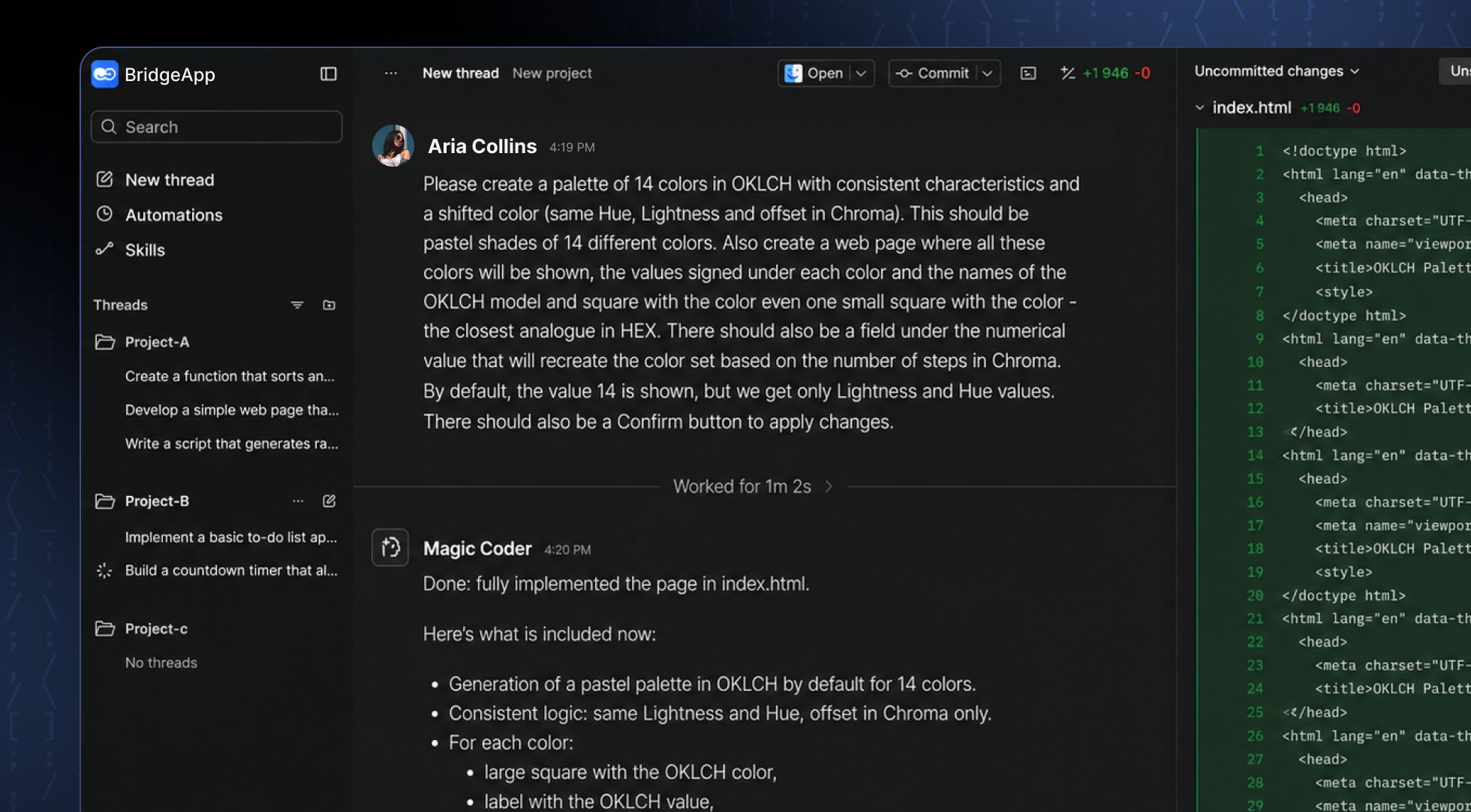
A coding agent is an AI system that can understand a codebase, break down tasks, call tools (file I/O, git, terminal), and iteratively change code to reach a goal. AI agents can run continuous observe, plan, act, and evaluate loops for problem-solving.
Here is a concrete example: you point one agent at a failing Jest test in a Node.js repo. The agent reads the error logs, opens the relevant source file, identifies the broken function, applies a fix, re-runs the test suite, confirms it passes, and reports back. No new prompts required at each step.
Coding agents operate differently from generic chatbots because they maintain state about the repository, tasks, and prior actions across a session. They can navigate large repos, update multiple files consistently, write or update tests, and even update documentation. BridgeApp's Magic Coder connects this agent behavior with shared workspace context-tasks, docs, team rules-so agents follow the same standards across repos.
Agentic Coding vs. Vibe Coding
Vibe coding means throwing prompts at an LLM in a chat window and copy-pasting what comes back. Vibe coding prioritizes speed and exploration over structure. It works for quick prototypes but vibe coding can lead to bloated code and fragile architecture when applied to anything production-grade.
Concrete problems with vibe coding include:
- Bloated abstractions that nobody asked for
- Fragile code with missing tests
- Confusion around ownership of design decisions
- One shot interactions that lack continuity
Agentic coding introduces discipline: implementation plans, scoped prompts, clear success criteria, and mandatory validation. Consider adding a new billing feature. In vibe coding, you prompt an LLM, paste the output, and hope. In an agentic workflow, you write a spec first, attach it to the agent, let it generate code changes across the billing module, run end to end tests, and get human sign-off before merging. Agentic coding allows for automated testing and iteration of code at every step.
Core Pillars of Agentic Coding: Autonomy, Context, and Control
Productive agentic coding in 2026 rests on three pillars: autonomy, context, and control. Getting the trade-off right between these determines whether agents help or hurt.
Autonomy: Letting Coding Agents Do the Work
Autonomy is the ability of a coding agent to choose steps: which files to open, what commands to run, when to retry. Autonomous AI agents can manage complex workflows without human input when scoped properly. For example, an agent tasked with "upgrade our FastAPI backend to Python 3.12" edits dependencies, updates syntax, runs tests, and iterates-all without new human prompts.
The benefits include reduced developer workload on mechanical tasks and faster feature delivery. Agents can automate complex workflows without human input. But unbounded autonomy risks architecture drift and noisy pull requests. Magic Coder by BridgeApp addresses this with plan mode-engineers approve the path before code changes land.
Context: Beyond Single-Prompt AI Coding
Context is the combination of codebase artifacts, docs, design specs, and live signals the agent uses to reason. Without the right context, agents hallucinate APIs, duplicate logic, or miss invariants. Modern agents use model context providers, repo indexers, and workspace knowledge bases to stay grounded.
Good context curation separates toy AI coding from production-ready agentic coding. In BridgeApp, documents assigned as Knowledge give agents the required context-architecture rules, API contracts, domain overviews-so they can AI write code that fits the existing codebase rather than inventing new classes that conflict with what already exists.
Control: Governance, Guardrails, and Human Oversight
Control means rules, permissions, and review steps that limit what agents can do, especially in production environments. Maintain human oversight for critical tasks in agentic workflows. Typical controls include read-only access in production, write access only on feature branches, mandatory tests, and protected main branches.
Organizations increasingly track agent activity-commands executed, files modified-to support debugging and compliance. BridgeApp's ecosystem enforces this: agents operate within trusted workspace roots and route changes through human-owned workflows.
Types of Coding Agents in Agentic Workflows
Real-world teams mix several agent types rather than betting on a single tool. Here is a practical breakdown:
General-Purpose Agents with Coding Tools
Chat-based agents like ChatGPT with code interpreter or Claude in a browser can call sandboxes and linters but lack deep knowledge of a large live repo. They are good for quick code generation, algorithm explanations, and prototyping. Use them for spike solutions before handing off to more integrated coding agents.
IDE-Integrated Coding Agents
Tools like the GitHub Copilot Agent, Cursor, or Claude Code live inside VS Code or JetBrains. They see the active project, navigate files, and apply multi-file edits. Their strength is tight feedback loops-you see diffs immediately and run tests locally. These are a natural first step for teams moving from simple code completion into structured agentic workflows.
Terminal and Full-Stack Development Agents
Terminal agents like Magic Coder by BridgeApp, Gemini CLI, and Aider-style tools run from the command line and orchestrate full workflows. AI agents in agentic coding can manage complex workflows independently-repo-wide refactors, dependency upgrades, and tasks touching backend and frontend in one go.
Magic Coder integrates with the BridgeApp workspace, understands project structure, supports plan mode and Automagic, and keeps changes reviewable. Treat these agents like very fast senior contractors: give clear briefs and always review their pull requests with the same rigor you would apply to any human contributor.
Agentic Coding in Practice: Example Workflows
Plan-First, Then Let the Agent Implement
Before asking an agent to modify code, write a plan-often as markdown files or architectural decision records. A simple plan for "add email verification to user onboarding" might include steps for schema changes, API endpoints, and tests. This plan becomes input to the coding agent, stored as an instruction file or Knowledge document in BridgeApp. This spec first approach keeps agentic coding from degenerating into vibe coding.
Chunking Work into Agent-Sized Tasks
Decompose large initiatives ("internationalize the entire app") into small, verifiable units ("localize email templates in the billing module"). Each chunk should have clear inputs, outputs, and automated success criteria. Use project management tools like BridgeApp tasks to track which chunks go to agents. This allows parallel work by multiple agents or developers without merge conflicts.
Using Validation Loops: Tests, Linters, and Tools
Agentic coding tools can identify bugs and propose fixes in minutes, but only if validation loops are enforced. The pattern: agent edits code → runs unit tests → examines failures → adjusts → repeats until green. Layer static analysis, linters, formatters, and end to end tests into CI pipelines. Agents should perform layered security testing and apply strict dependency governance as part of every iteration. Never let agents bypass these checks-skipping tests is how subtle regressions reach production.
Human-in-the-Loop Code Review and Oversight
Agent generated code should always surface as pull requests with diffs, explanations, and test results. Treat the agent's output as if written by a junior colleague: conduct a thorough review, ask for justifications, and watch for hidden complexity. BridgeApp workspaces keep discussions, specs, and review decisions linked to tasks, improving traceability. Human judgment remains essential for architecture, performance, and security trade-offs.
Benefits of Agentic Coding for Modern Teams
Speed and Throughput: Shipping Features Faster
Agentic coding allows for faster feature delivery and improved code quality. Agents handle boilerplate, wiring, and migrations far faster than humans. Teams in 2025–2026 routinely report productivity gains of 30–50% on well-scoped work. Agentic coding allows teams to build larger systems without increasing headcount. Speed gains are highest on known patterns-CRUD, integrations, test fixes-and lower on open-ended design.
Improved Code Quality and Consistency
Agentic coding improves code quality by applying consistent style guides and lint rules across large codebases without fatigue. Agents can be instructed to prefer existing patterns and libraries. Agentic coding improves code quality by consistently applying style guides, but without guardrails, agents can proliferate subtle bugs quickly.
Reduced Developer Workload and Burnout
Agentic coding can reduce developer workload by automating repetitive tasks. Studies suggest agentic coding can reduce developer workload by 30% on mechanical implementation. Agentic coding enhances productivity by reducing repetitive tasks, allowing teams to focus on deep focus work-design, problem-solving, mentoring.
Focusing Humans on Architecture and Product Thinking
Agentic coding changes the developer's role from writing code to orchestrating AI agents. Developers increasingly focus on high-level architecture and code review due to agentic coding. Agentic coding enhances productivity by allowing developers to focus on architecture and logic-refining domain models, clarifying user flows, and improving observability. Tools like BridgeApp bring architecture docs and discussions into the same place as agents, keeping everyone aligned.
Risks, Limitations, and Where Agentic Coding Fails
Prompting and Planning Mistakes
Underspecified prompts ("make this faster") push agents into guesswork. Skipping planning results in agents touching too many files. Write clear acceptance criteria, constrain file scopes, and state what must not change. Document successful prompt patterns in shared docs so teams reuse them.
Context Gaps and Hallucinations in Real Codebases
Agents misbehave when they see only a slice of the system. For example, an agent might add a field to a data model but fail to update a reporting pipeline because those files were not in context. Mitigate this with curated context sets, repository maps, and tagging critical modules. In BridgeApp, marking documents as Knowledge helps close these gaps for sensitive data and domain-specific logic.
Validation, Security, and Production Safety
The biggest risk is that agents scale mistakes quickly. Typical issues include insecure defaults, unvetted dependencies, and overly complex functions. Enforce tests, security scans, and reviews for any change touching auth, payments, or compliance boundaries. Agents should never have direct write access to production environments. Limit write access for coding agents to enhance security, and protect api keys and credentials from agent access. Teams should also perform layered security testing and apply strict dependency governance before any deployment.
Organizational Bottlenecks: Code Review and Ownership
If agents speed up code writing but review capacity stays flat, teams drown in pull requests. Constrain agent tasks to small, reviewable units. Designate "agent owners" responsible for supervising work in a given domain. Every change needs a named human as final approver. Log agent actions for visibility and debugging purposes, and continuously refine controls based on incident data.
Best Practices for Secure, High-Quality Agentic Coding
Governance and Scope Control
Establish clear governance frameworks for agentic coding. Define which repos and environments agents may touch. Start with narrow, low-risk use cases before expanding. Tag certain services as "experimental" and others as "protected" requiring extra human oversight. Governance is ongoing-review and adjust policies regularly.
Human Oversight and Integration into Existing Workflows
Integrate agentic coding into existing SDLC processes: same branching strategies, CI/CD pipelines, and code review rules. Each agent should have clear escalation paths. Encourage pairing sessions where engineers watch and steer agents live. BridgeApp's workspace hosts guidelines and playbooks alongside the agents for easy reference.
Testing, Assurance, and Code Review Discipline
Enforce testing requirements before merging agent generated code. Layer unit tests, integration tests, linters, and static analysis in CI. Reviewers should check whether tests are meaningful, not just green. Record metrics-defect rates, security findings-before and after adoption. Audit a sample of agent-generated PRs periodically for anti-patterns.
Documenting Standards, Prompts, and Patterns
Sustainable agentic coding requires capturing knowledge in docs, not tribal memory. Maintain prompt templates, implementation patterns, and common pitfalls tailored to your stack. These documents serve as "constitutions" for agents-specifying naming conventions, architecture rules, and security requirements. In BridgeApp, teams store these as Knowledge for agents. Review and refine them as models evolve.
Where BridgeApp and Magic Coder Fit into Agentic Coding
BridgeApp is an AI-native unified workspace combining team chat, tasks, documents, databases, and custom AI agents-designed for B2B teams adopting agentic coding. It provides a central development environment where specifications, decisions, and coding agents coexist.
Magic Coder: Architecture-Aware Terminal Coding Agent
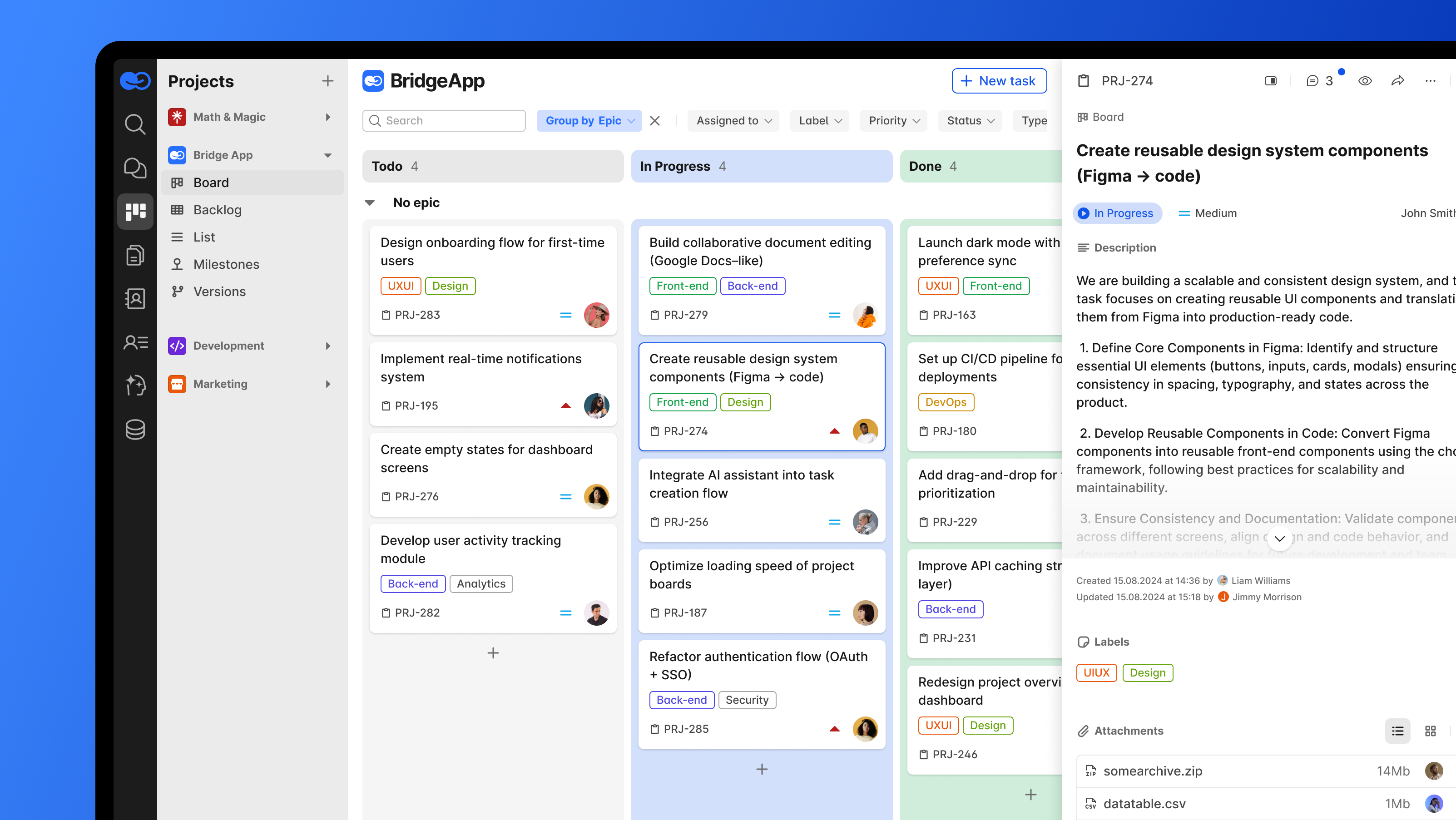
Magic Coder by BridgeApp runs from the terminal within a trusted repository, reads the codebase, and proposes plans for tasks like "fix failing tests" or "implement this ticket." It uses diff-based editing-focused patches rather than rewriting entire files-making generated code easy to review. Safety features include trust prompts, confirmation for shell commands, and scoped workspace roots. Engineers can switch models and reasoning levels during a session.
BridgeApp Workspace: Context and Control Around Coding Agents
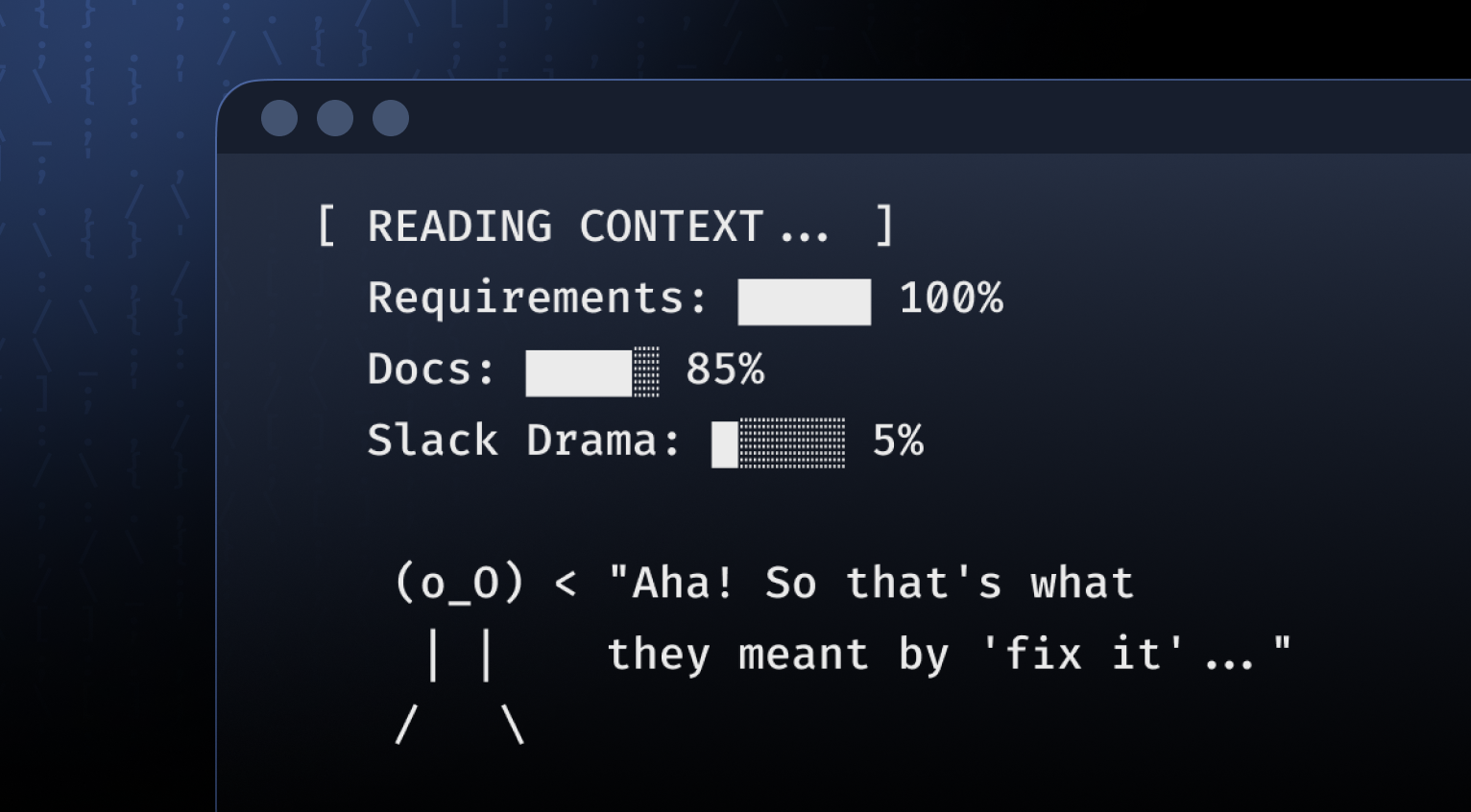
BridgeApp's chats, tasks, and documents give coding agents continuous, structured context about what the team is building. Project docs and ADRs attached as Knowledge ensure agentic coding aligns with documented decisions. Billing via Compute Credits and flexible deployment (cloud or on-premise) let organizations tune cost and data sovereignty while scaling agent usage, allowing teams to build software without fragmented tooling.
How to Get Started with Agentic Coding in Your Organization
Agentic coding provides hands-on experience with tools used in modern software development. Here is a phased approach:
Phase 1: Clarify Goals and Constraints
Define what you want: faster delivery, better code quality, reduced operational load. Map critical systems and regulations to determine where agents operate initially. Survey teams about pain points-slow refactors, chronic test failures, onboarding friction. Choose metrics from day one.
Phase 2: Run Focused Pilots with Clear Success Criteria
Start with 1–2 repos where risk is moderate but payoff is clear. Define specific tasks like "agent-assisted test coverage improvement for module X." Pair enthusiastic engineers with these pilots and use BridgeApp to coordinate-track tasks, capture successful prompts, log issues.
Phase 3: Standardize Workflows, Guardrails, and Training
Turn successful pilot patterns into documented workflows. Codify guardrails: where agents run, which branches they use, what tests must pass. Run team-wide training sessions. Integrate agent status into existing dashboards so leadership sees progress and risks clearly.
Phase 4: Scale Across Teams and Revisit Regularly
Scaling means adding repos and teams while keeping quality stable. Appoint cross-team stewards to maintain best practices. Review metrics quarterly-decide whether to increase agent autonomy or tighten controls. Explore advanced workflows like multiple agents orchestrating cross-repo migrations. BridgeApp and Magic Coder can serve as the backbone of scaled adoption across distributed teams, helping you build software with new features shipping reliably and with concrete examples of productivity gains across the organization.
FAQ: Common Questions About Agentic Coding
Do I need to rewrite my whole development process to use agentic coding?
No. Teams can layer agentic coding on top of existing processes by starting with small, low-risk tasks. The biggest shifts are cultural-treating AI as a collaborator-and procedural-more explicit planning and validation. Map your current stages (design, implementation, review) and decide where agents help first. Platforms like BridgeApp integrate without replacing existing version control or CI/CD. Iterative adoption is the norm in 2026.
How does agentic coding affect junior developers' growth?
When used consciously, agentic coding can improve learning. Juniors can study agent-generated code, explore alternatives, and pair with agents under guidance. Intelligent tutoring systems can guide learners through coding problems using agentic concepts. Practices like "explain this diff back to me" or "write the tests yourself, then let the agent implement the function" preserve skill development. Human mentorship remains irreplaceable-agents are tools, not teachers of human judgment or product sense.
Is agentic coding safe to use in regulated or high-security environments?
Yes, but only with strong controls: data residency guarantees, strict permissions, audit logging, and vetted models. On-premise deployments like those supported by BridgeApp are critical when data sovereignty matters. Treat coding agents like privileged contractors-limited access, clear scopes, technical vetting. Involve security and compliance teams early, especially around handling of sensitive data and secrets. No AI tool removes the need for human accountability in regulated production environments.
How do I choose between IDE agents, terminal agents, and general chatbots?
Tool choice depends on task type. IDE agents suit interactive feature work where developers interact directly with diffs. Terminal agents handle repo-wide or scripted tasks with multiple layers of automation. Chatbots work for exploration and learning. Many teams combine all three. Evaluate based on context handling, safety features, and deployment options. Consistency of agentic workflows and guardrails matters more than any single tool's feature list.
Will agentic coding replace human developers in the near future?
As of 2026, agentic coding amplifies developers rather than replaces them. Agents still struggle with ambiguous requirements, cross-team coordination, and deep domain knowledge not formalized in code. Organizations adopting agentic coding successfully have increased the leverage of their engineers-not reduced headcount. Human roles are shifting toward architecture, product thinking, and stewardship. View agentic coding as an opportunity to redesign work around higher-value engineering activities, not a threat to ignore.