BlogIndustry Insights
What Is Technical Debt? A Practical Guide for Modern Development Teams

BridgeApp Team
10 min read
Every software team makes trade-offs between speed and quality. Sometimes you ship code you know isn't perfect because you need to hit a deadline or validate an idea. That gap between what you built and what you should have built is called technical debt, and it affects every team that writes software at scale.
This guide breaks down what technical debt really means, why it matters to your business, and how to manage it without grinding feature development to a halt.
Key Takeaways
- Technical debt refers to future costs from shortcuts in code, architecture, design, and documentation taken to move faster today. It represents future rework costs from choosing easy solutions over better-designed ones.
- Some code debt, design debt, and architecture debt can be strategic when aligned with business needs and a clear repayment plan. Not all technical debt is bad; it can be a strategic decision to meet deadlines.
- Ignoring technical debt can lead to decreased productivity and increased costs, slower feature development, reduced reliability, and higher maintenance costs across the full development lifecycle.
- Development teams can systematically identify technical debt using code reviews, observability data, and developer feedback, then prioritize debt reduction based on risk and business impact.
- BridgeApp and Magic Coder by BridgeApp help engineering teams identify technical debt in real repos and automate safe refactoring to improve velocity and cost.
What Is Technical Debt? (Fast Definition)
Technical debt in software development is a simple concept: it's the extra work you'll owe later because you chose a faster, less optimal solution today. The term technical debt was first coined by software developer Ward Cunningham in 1992 while working on the WyCash portfolio management system. He introduced the debt metaphor by comparing it to financial debt, where shipping imperfect code is like borrowing money and every minute spent on workarounds is like paying interest.
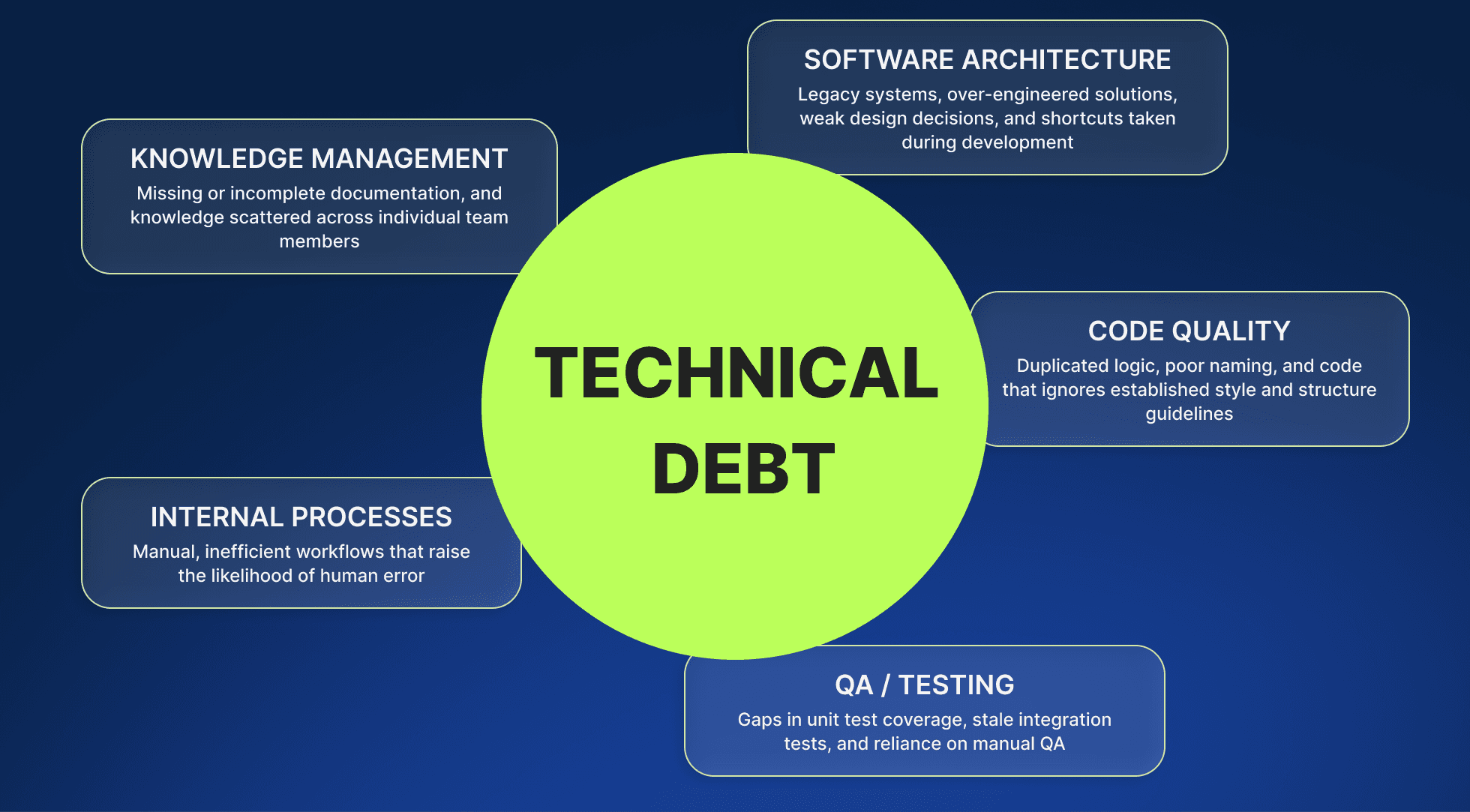
Technical debt refers to more than just messy code. It includes code debt (duplicated logic, deeply nested conditionals), design debt (service boundaries that no longer match the domain), documentation debt (missing or outdated docs), and architectural debt (system structures that block scalability).
Consider a microservice built in 2020 that still runs on a deprecated framework because no one prioritized the upgrade. Or a payment module with hardcoded business rules that require manual changes every time pricing logic shifts. These are everyday examples of how tech debt shows up in real codebases.
Every serious product company in 2026 has some existing technical debt. The issue is not whether it exists, but how well teams identify technical debt and manage technical debt before it compounds.
How Technical Debt Fits Into the Development Lifecycle
Technical debt accumulates across the entire development lifecycle, not just in legacy systems. It starts early and compounds at every stage.
- Prototypes and MVPs: Intentional technical debt is common here. Teams skip tests, hardcode configurations, and simplify designs to validate ideas fast. A little debt speeds development in these early stages.
- Alpha/beta phases: Bug deferrals pile up, test debt grows, and missing modular boundaries become visible. Feature toggles multiply without cleanup.
- Post-release and scaling: Architecture debt surfaces as performance bottlenecks, coupling issues, and deployment friction. Documentation debt accrues as the team grows and original context fades.
Imagine a SaaS product that went from MVP in early 2025 to v2.0 by mid-2026. Each release cycle added features on top of shortcuts from the previous phase. By v2.0, a two-day feature estimate regularly ballooned to two weeks because of tangled dependencies and missing tests.
Agile practices, regular code reviews, and continuous integration can limit the rate at which technical debt builds, but they cannot eliminate it entirely. Business needs like an urgent Q4 2026 client commitment often justify taking on debt, provided the team has a plan to pay it down.
Types of Technical Debt (Beyond Just Code)
Classifying the types of technical debt helps teams prioritize debt reduction work and avoid treating all debt as a single, undifferentiated problem.
Martin Fowler's technical debt quadrant divides debt along two axes: deliberate vs. inadvertent, and prudent vs. reckless. Deliberate, prudent debt is a strategic trade-off. Inadvertent, reckless debt is just a technical issue born from carelessness. Understanding where your debt falls changes how you respond.
In practice, these types overlap significantly. Architecture debt almost always creates new code debt and documentation debt too.
Code Debt
Code debt results from shortcuts in writing code under pressure. It focuses on the quality, readability, and maintainability of source code itself.
Common examples include duplicated logic across modules, deeply nested conditionals, inconsistent naming conventions, and outdated patterns spread across a large codebase. Code debt slows code reviews, increases bug rates, and makes new feature development unpredictable.
A function that started as 50 lines and grew to 500 without refactoring is a textbook case. Cleaning it up might mean extracting helper functions, clarifying variable names, and adding tests. The before-and-after difference in code complexity is dramatic.
Design Debt
Design debt occurs when object design, service boundaries, or abstractions no longer reflect the domain or business needs. Picture a "User" entity that since 2021 has absorbed billing, notification, and analytics responsibilities because the team kept extending it instead of creating proper domain models.
This kind of debt leads to ripple effects: one small requirement change forces modifications in many files or services. Good refactoring, guided by domain-driven design, helps reduce design debt without rewriting everything from scratch.
Architectural Debt / Architecture Debt
Architectural debt occurs from poor system design choices at the highest level. It covers decisions about services, communication patterns, and deployment models that now block scalability, performance, or reliability.
Examples include an overgrown monolith so tightly coupled that scaling requires a rewrite, or an early microservices split that introduced unnecessary network chatter and latency. This debt is expensive to fix, often requiring careful planning, migration strategies, and staged rollouts.
Modern AI tools, including Magic Coder by BridgeApp, can analyze a repo's structure and help plan incremental architecture improvements rather than risky big-bang rewrites.
Documentation Debt
Documentation debt arises when system documentation is outdated or missing. Specific examples include a critical service introduced in 2022 with no README, incomplete onboarding docs for new developers, or API contracts that haven't been updated in two years.
This kind of debt makes it harder for development teams to estimate work, safely change existing code, or share ownership. A minimal documentation checklist should include an architecture overview, API contracts, and runbooks for critical workflows.
Other Common Debt Categories
Several other categories deserve attention:
- Infrastructure debt occurs when systems are not updated or optimized. Think of a production app still running on a 2018 Kubernetes version or relying on unsupported database engines.
- Test debt means low coverage, flaky tests, or missing regression suites. A critical workflow without automated tests is a ticking time bomb.
- Process debt includes weak code review culture, siloed knowledge, and poor communication between teams.
- Defect debt refers to postponing the fixing of bugs or defects, letting known issues linger in production.
- Data debt involves poorly formatted or inaccurate data structures that create downstream problems.
These forms of debt increase operational risk, incident frequency, and long-term platform costs. Addressing process and people debt through training, pairing, and better workflows is often a prerequisite to fixing code and architecture debt effectively.
Why Technical Debt Matters: Impact on Business and Teams
Technical debt is not just a technical issue. It ties directly to measurable business outcomes.
Deloitte's 2026 Global Technology Leadership Study estimates that technical debt accounts for 21% to 40% of an organization's IT spending - budget that goes toward navigating complexity and maintaining what already exists instead of building new features. Technical debt can lead to decreased productivity over time, and ignoring it can decrease productivity and increase costs across the organization.
Technical debt can slow down feature development due to existing fragility, making delivery forecasts unreliable and pushing roadmaps off by weeks or months. It can lead to reduced software reliability and lower team morale, as developers grow frustrated working around the same problems repeatedly.
Accumulating technical debt can delay feature development significantly and lead to increased maintenance costs over time. It also damages employer brand when candidates hear about legacy messes during interviews.
Short-Term Gains vs Long-Term Costs
Technical debt can speed up delivery but incurs future costs. Shipping a critical feature for a 2026 contract might justify a shortcut, but ignoring technical debt increases long-term maintenance costs significantly.
The financial debt metaphor makes this clear: the "interest payments" are extra hours spent debugging, working around hacks, and carefully modifying fragile modules. A one-week shortcut today can easily translate into multiple weeks of rework across the following year as more features build on top of the compromised foundation.
Technical debt can be a reasonable trade-off if managed carefully and addressed regularly. The goal is not zero debt but no uncontrolled, invisible debt. Short term gains are only worthwhile when the team tracks the trade-off and commits to paying it down.
Effects Across the Development Lifecycle
Technical debt changes the shape of the development process. Teams spend more time in stabilization phases, endure prolonged QA cycles, and ship frequent hotfix releases.
Heavy debt disrupts planning, causing sprints to be dominated by unplanned work like production issues and urgent refactors instead of roadmap features. Technical debt can result in slower development velocity and increased maintenance costs. Unmanaged technical debt can result in increased operational risk and system downtime. Technical debt can also cause performance degradation in software systems, particularly those serving high-traffic workloads.
Teams with managed debt can adopt continuous delivery practices more confidently than teams fighting constant regressions. Being honest about debt in planning meetings improves transparency with product and business stakeholders.
Common Causes of Technical Debt
Some causes of technical debt are intentional and strategic. Others are symptoms of deeper organizational problems. Common causes of technical debt include tight deadlines and poor documentation, but the full picture is broader.
Rushed development can significantly increase technical debt accumulation. Fixed launch dates, client demos, and regulatory changes force teams into shortcuts. Evolving requirements and market shifts lead to software architecture and design that no longer fit current business needs. Poor communication between product and engineering, unclear ownership of legacy components, and reward systems that prioritize visible feature development over maintenance all contribute.
Strategic Shortcuts in Service of Business Needs
Sometimes software development teams knowingly accept intentional technical debt to seize a time-sensitive opportunity. Launching a beta with a major customer in Q1 2026 might justify shipping a simplified rules engine with hardcoded configurations.
This approach is strategic only when it meets clear conditions: explicit trade-off discussions, clear tracking of the debt, and a realistic repayment window. The debt should be visible on roadmaps and in backlogs, not hidden in the codebase. A documented plan to replace the shortcut within two quarters keeps the team honest.
Process, Culture, and Skill Gaps
Missing code reviews, inadequate testing practices, and weak onboarding lead to unintentional technical debt and reckless technical debt. Without knowledge sharing, a few senior engineers become bottlenecks and single points of failure. This is where documentation debt and process debt intersect.
Rapid team growth, common in 2021–2024 startup booms, frequently creates these gaps if processes do not mature in parallel. Investing in training, mentorship, and clear development standards can dramatically reduce the rate at which new debt enters the codebase.
How to Identify Technical Debt in Your Codebase
You cannot manage what you cannot see. The first step to addressing technical debt is to systematically identify technical debt across your systems.
Qualitative signals include areas every developer avoids, modules that frequently break, or features that always take longer than estimated. Frequent failures in systems often indicate accumulated technical debt.
Quantitative indicators include high cyclomatic complexity, large files, low test coverage, and frequent production incidents tied to the same components. Tools like SonarQube or CodeScene can scan for code smells, outdated dependencies, and risky patterns at scale, reducing manual effort in the identification process.
Using Code Reviews and Architecture Reviews
Regular code reviews help detect technical debt early, before it hardens into architecture debt. Reviewers should explicitly tag "tech debt" in review comments or backlog items when they notice shortcuts or risky patterns.
Architecture review sessions, held periodically, let teams review critical flows, boundaries, and dependencies for signs of architectural debt. Documenting known debt hot spots in living diagrams or docs helps new team members ramp up safely.
Developer Feedback and Observability Data
Collecting regular feedback from development teams about the hardest parts of the system reveals pain points that metrics alone might miss. Operational metrics like incident counts per service, mean time to recovery, and slowest endpoints often correlate with technical debt hot spots.
Incident postmortems should explicitly tag which issues were caused or amplified by existing technical debt. This combination of human feedback and observability data helps prioritize which debt to tackle first.
Strategies for Managing and Reducing Technical Debt
Managing technical debt involves tracking issues and prioritizing their resolution as an ongoing practice, not a one-time cleanup project. Tracking technical debt in a backlog prioritizes its resolution and makes it visible to stakeholders.
Regular refactoring and automated testing help manage technical debt over time. Companies like Zühlke dedicate 10% of development cycles to technical debt reduction, and many mature teams allocate 10–25% of sprint capacity to maintenance challenges. Automation, continuous integration, and AI coding agents can accelerate safe refactoring and make repayment less painful.
Prioritizing Which Debt to Pay Down
Not all debt is equal. Teams should focus first on debt that threatens reliability, security vulnerabilities, or core business flows.
Build a simple "debt register" documenting location, type (code, design, architecture, documentation), risk, and estimated fix cost. Prioritization criteria should include frequency of changes in the area, number of incidents, and impact on key roadmap features. Aligning debt items with upcoming initiatives lets refactors and new functionality ship together, which is more cost-effective than standalone cleanup work.
Embedding Testing and Automation
Integrating automated tests early in the development lifecycle reduces defect debt and makes refactoring safer. Automated testing reduces long-term costs of technical debt by catching regressions before they reach production.
Treat tests as part of "done," not optional extras. Use continuous integration pipelines to run test suites and static analysis on every change. When fixing bug fixes, add regression tests to prevent the same issues from recurring and accumulating debt further. Test driven development, while not universally adopted, remains one of the most effective ways to prevent technical debt at the source.
Improving Team Practices and Culture
Consistent code reviews, shared coding standards, and clear architectural guidelines reduce the inflow of new debt. Using governance frameworks helps manage technical debt effectively across engineering teams.
Cross-team knowledge sharing sessions, such as monthly architecture reviews, spread understanding of legacy areas and reduce reliance on a single expert. A psychologically safe culture where engineers can surface debt problems without blame is essential.
BridgeApp's unified workspace, which combines chat, tasks, docs, and databases, keeps discussions, decisions, and standards visible in one place, so the software community within your organization stays aligned.
How BridgeApp and Magic Coder Help Tackle Technical Debt
Modern AI tools can radically lower the cost of paying down technical debt without sacrificing control. This is where BridgeApp and Magic Coder by BridgeApp come in.
BridgeApp is an AI-native unified workspace where development teams coordinate chat, tasks, docs, and custom AI agents. Magic Coder by BridgeApp is a terminal-based AI coding agent that can analyze real repositories, propose plans, edit code via diffs, and run tests. Together, they help improve development velocity and total cost of ownership while systematically reducing technical debt. These tools support existing workflows and governance, including code reviews and testing, rather than bypassing them.
Architecture-Aware Refactoring with Magic Coder
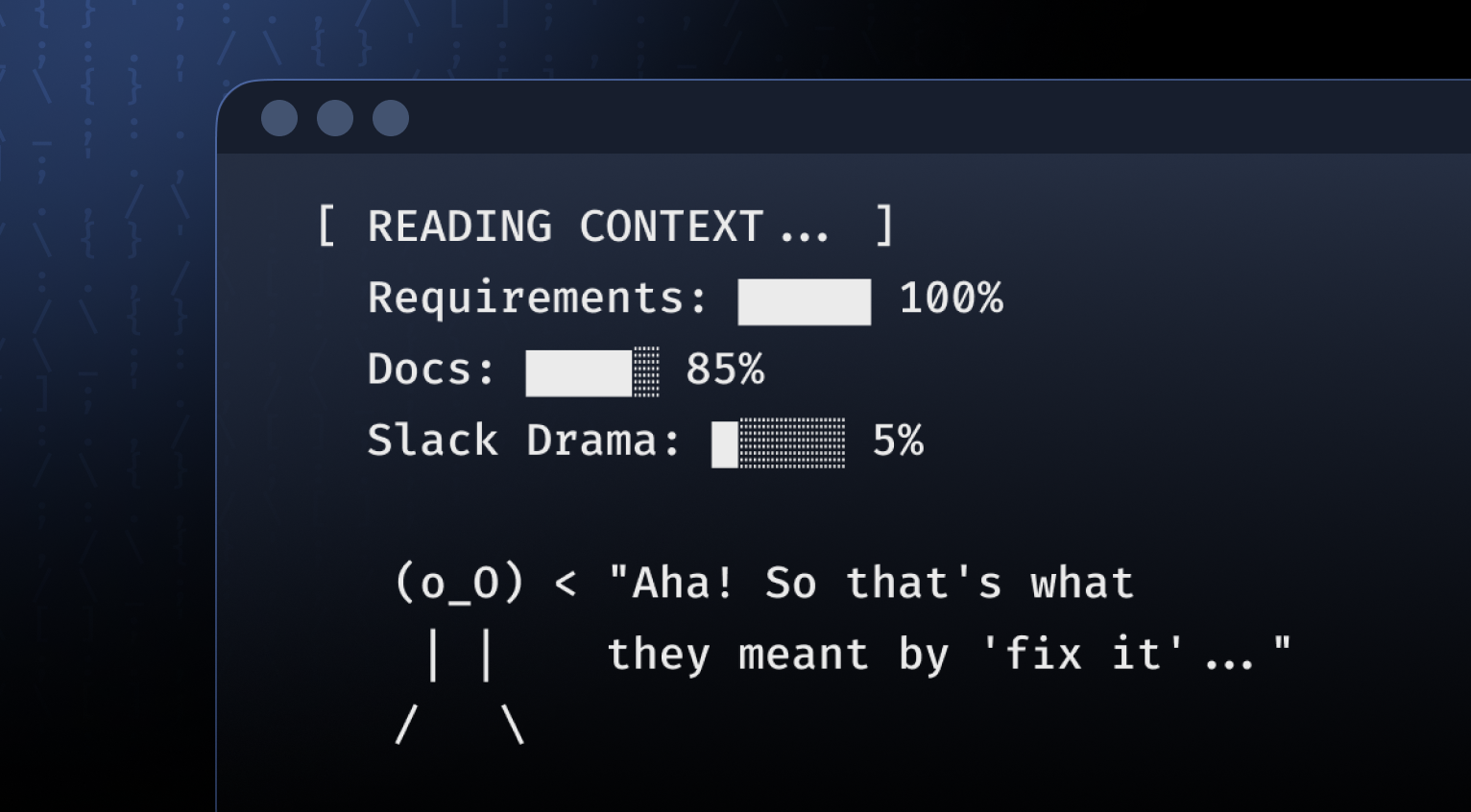
Magic Coder by BridgeApp reads the entire repository structure to understand software architecture, dependencies, and patterns before making changes. This architecture-aware approach means it writes code inside the existing system rather than generating disconnected snippets.
Its Plan mode proposes a step-by-step refactor plan for a debt-heavy area, such as splitting a giant module or modernizing a legacy component, before any files are edited. Automagic mode enables supervised but faster execution: the agent applies diffs, runs tests, and iterates while developers retain approval control. Teams can resume sessions conceptually to chip away at large technical debt initiatives across multiple sprints without losing context.
Bringing Business Context Into Technical Decisions with BridgeApp
BridgeApp connects chats, tasks, documents, and databases so technical debt discussions are always tied to concrete business needs and roadmap items. Architectural decision records, coding standards, and "known debt areas" can be stored as documents that both humans and custom AI agents reference.
Tasks related to debt reduction sit alongside new feature development in BridgeApp boards and backlogs, improving transparency for product and leadership. Custom AI agents can be configured to flag potential debt issues, such as large new modules without tests, during planning or reviews. This prevents more technical implementation shortcuts from slipping through unnoticed.
Reducing Cost While Improving Velocity
Using Magic Coder to automate repetitive refactor and upgrade work, such as dependency updates, API migrations, and test scaffolding, frees senior engineers to focus on high-value design and architecture changes. This is reducing manual effort where it matters most.
Centralized standards in BridgeApp keep AI-generated changes aligned with team practices, minimizing the risk of new code debt. This combination enables teams to pay down more technical debt per sprint without dramatically increasing budgets or delaying features. Organizations running BridgeApp in cloud or on-premise deployments can align this AI-powered workflow with their security and compliance requirements, supporting cloud technologies adoption and long term sustainability.
Conclusion
Technical debt is inevitable in modern software development but becomes dangerous when invisible and unmanaged. Whether it is code debt, design debt, architecture debt, or documentation debt, every form is manageable when consciously taken on, tracked, and prioritized. The software engineering discipline has spent decades refining how to explain technical debt and remediate technical debt. The software industry now has the tools and frameworks to act on that knowledge.
Integrate debt identification and prioritization into your regular development lifecycle rather than treating it as a separate cleanup project. Tools like BridgeApp and Magic Coder by BridgeApp can turn technical debt reduction into a continuous, cost-effective part of everyday development work, helping your team ship faster without accumulating debt that will slow future development.
FAQ
These FAQs cover common questions about technical debt that go beyond what the main article addresses in detail.
Is all technical debt bad, or can some of it be useful?
Technical debt itself is neutral. Intentional debt taken to meet a critical business deadline can be genuinely useful if the team documents it and has a realistic repayment plan. For example, shipping a simplified feature to close a deal in Q1 while scheduling a proper implementation for Q2 is a valid strategy that debt speeds development goals.
The problem is "mess" or neglect, such as skipping tests indefinitely or ignoring code quality without any strategic rationale. Unintentional debt and reckless debt provide no business upside and should not be treated as acceptable. The key distinction: strategic debt is a conscious loan; neglect is just accumulating debt without a plan.
How can my team measure technical debt in a practical way?
Combine qualitative measures like developer surveys and pain-point mapping with quantitative metrics such as code complexity scores, test coverage percentages, and incident counts per component. Maintain a simple technical debt register in a shared tool, tracking items by system area, risk level, and estimated effort. Review it in planning meetings alongside your feature backlog.
No single metric captures the full debt load, but trends over time reveal whether your debt management is improving. If high-risk items decrease and cycle time gets faster, you are heading in the right direction.
How much of our capacity should we spend on technical debt reduction?
Many mature engineering teams allocate a fixed percentage of each sprint, often 10–25%, to technical debt and maintenance. Companies may allocate 10% of development cycles to address technical debt as a baseline and adjust upward when incidents, regressions, or missed deadlines become frequent.
Start with a smaller allocation and increase it temporarily during periods of high risk. Using AI tools like Magic Coder by BridgeApp can increase the impact of that allocation by automating low-level refactor work, letting your team pay down more debt without pulling engineers off feature development.
What is the difference between code debt and architecture debt in practice?
Code debt is localized to technical implementation details within files or modules, such as messy functions, duplicated logic, or poor naming. You can fix it by refactoring a single component. Architecture debt affects how systems and services interact as a whole, such as tightly coupled services, missing event buses, or monoliths that resist decomposition.
In practice, code debt can often be addressed in a single sprint. Architecture debt typically requires changing communication patterns or data flows, which demands careful planning, backward compatibility, and solid test coverage, often spread across multiple quarters.
Can generative AI increase technical debt instead of reducing it?
Absolutely. Unmanaged AI-generated code can create new technical debt if it ignores team standards, existing software architecture, or documentation requirements. Studies from the software engineering institute and industry researchers suggest that AI-generated code can exhibit higher churn and complexity when governance is absent.
This risk is mitigated when AI agents are architecture-aware, operate within controlled workflows including diffs, reviews, and tests, and follow centralized guidelines stored in tools like BridgeApp. Magic Coder by BridgeApp is designed to work alongside code reviews and automated tests so humans remain in control of what gets merged, preventing the tool from silently introducing debt into your codebase.