BlogIndustry Insights
AI Agent Orchestration Trends

Maria ZhuHead of content
16 min read
In 2023, most companies were content deploying a single ai agent as a chatbot or copilot. Fast-forward to mid-2026, and the landscape looks radically different. Enterprises are now building coordinated multi agent systems where multiple ai agents work together to handle end-to-end business processes, from vendor onboarding to campaign management to incident response.
From Single Assistants to Enterprise-Scale Multi-Agent Systems
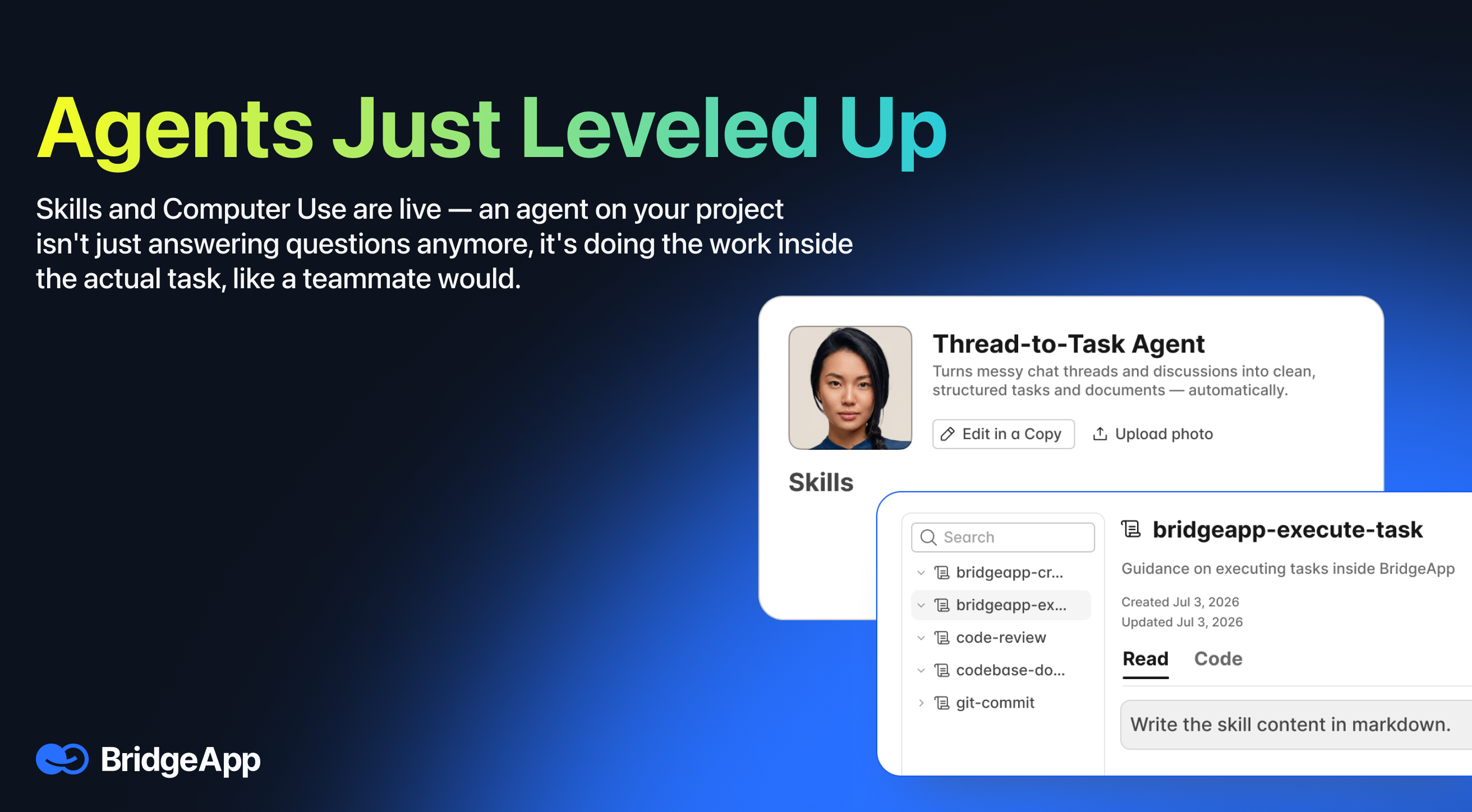
This shift from isolated ai systems to orchestrated, process-level "agent teams" spanning multiple specialized agents is not a niche experiment anymore. By 2026, vendors like OpenAI, Anthropic, Microsoft, Google, and AWS all ship agent frameworks, and dedicated orchestration platforms - among them BridgeApp - have emerged specifically to run and govern agent teams across a company's existing workflows, making ai agent orchestration a core platform capability. KPMG's Q4 2025 survey found that AI agent deployment jumped to over 26% of organizations, up from roughly 11% at the start of that year.
The question is no longer whether to use AI agents. It's how to orchestrate agents effectively at scale, without losing control, burning budget, or creating compliance nightmares.
This article will walk through key AI agent orchestration trends shaping 2025–2027, then dive into the orchestration patterns gaining traction, the human governance models emerging around them, the infrastructure required to support multi-agent orchestration in production, and the real challenges organizations face as they move from pilots to scaled deployments.
What Is AI Agent Orchestration Today?
Modern agent orchestration means coordinating multiple specialized agents through explicit workflows and shared context. These agents operate with defined roles: research, planning, execution, quality assurance, and monitoring. Unlike a generic LLM call, each agent has tools it can invoke, memory about past interactions or domain knowledge, goals it pursues, and a degree of autonomy in how it fulfills those goals.
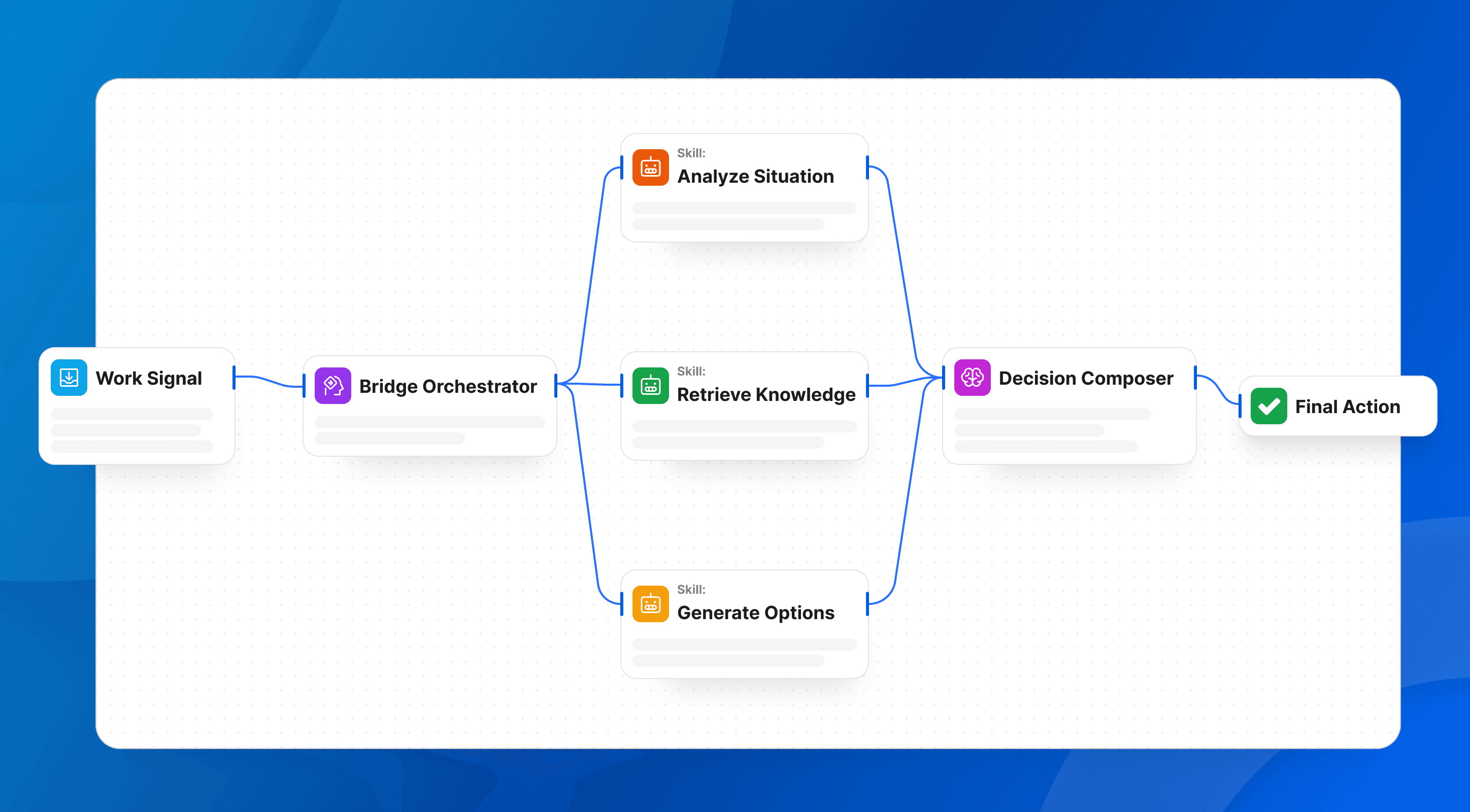
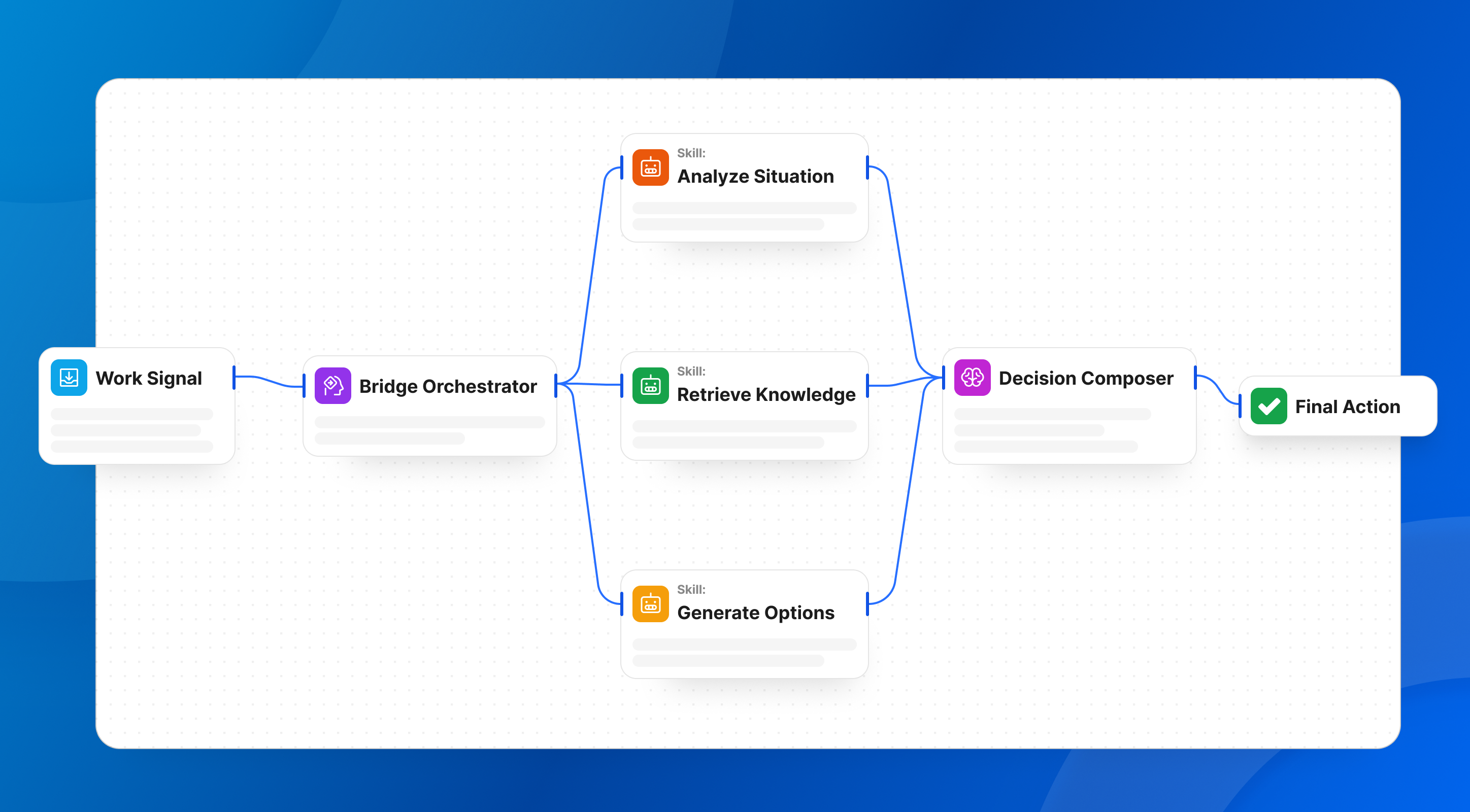
The orchestrator agent sits at the center of this system. Think of it as a supervisor agent responsible for decomposing complex tasks into subtasks, routing each subtask to the right agent, managing sequencing and conditional logic, and aggregating results into a coherent output. When one agent fails or produces low-confidence output, the orchestrator decides what happens next: retry, escalate, or reroute.
Here is a concrete example. Consider a 2025-style marketing campaign workflow. A campaign orchestrator agent breaks the goal into phases. It calls a research agent to gather market insights and competitive intelligence. A content agent drafts campaign messages. A compliance agent reviews the copy for regulatory and legal issues. An analytics agent sets up tracking and monitors early KPIs. If early metrics underperform, the orchestrator reroutes back to redesign content or adjust targeting. Multiple agents coordinate without anyone manually managing each handoff.
This is fundamentally different from traditional automation or business process management. Classical BPM uses fixed rules and predetermined state machines. Orchestrated ai agents make adaptive decisions based on probabilistic reasoning: confidence scores, risk levels, intermediate outputs. They can learn over time which agent combinations produce the best results. They handle unstructured inputs like natural language, messy documents, and ambiguous requests, which is something rule-based systems simply cannot do.
The evolution happened fast. Until 2023, most implementations centered on single-agent systems: one copilot, one chatbot. Through 2024, experimentation with chains and pipelines grew. By early 2025, the focus shifted decisively toward full orchestration with multiple agents, tools, context, and emerging standards. IBM's analysis of AI agents in 2025 notes that enterprises now see agent orchestration not as fringe R&D but as core to their AI strategy.
Key AI Agent Orchestration Trends for 2025–2027
This section covers the six most consequential trends shaping how organizations build and manage ai agents today. If you are scanning for what matters right now, start here.
These trends cluster around four broad themes: the shift from single to multi agent setups, the rise of specialized agent roles, standardization through protocols like the Model Context Protocol, and the growing demand for governance with human-in-the-loop controls. Two additional trends-observability and the move from pilots to production-cut across all four themes.
Trend 1: From single assistants to multi-agent and multi-step workflows
In 2024, many companies deployed copilots for discrete tasks like drafting emails or summarizing documents. By 2025–2026, those same workloads evolved into multi step workflows handled by multiple ai agents in concert. KPMG's 2025 survey reported that over 26% of organizations now deploy agent systems capable of independently executing multi-step business processes. This is not about replacing one agent with many. It's about designing systems where different agents own different parts of a process, and an orchestrator manages the flow.
Trend 2: Rise of specialized agents
Organizations are moving away from monolithic, generalist agents for each department. Instead, they design narrow, domain-specific agents: a KYC risk screener agent, a SOC triage agent, a billing agent, a technical analysis agent, a technical support agent. Each specialized agent uses fine-tuned models or carefully crafted prompts for its domain. This mirrors how human teams work-you don't ask your accountant to write marketing copy.
Trend 3: Open interoperability via the model context protocol and similar standards
The model context protocol, introduced by Anthropic in late 2024, has quickly become a widely adopted standard for enabling agents to access tools, data, and memory contexts in a uniform way. It is now integrated across OpenAI's Agents SDK, Microsoft, and other platforms. Alongside MCP, Google's Agent-to-Agent Protocol (A2A) handles discovery and delegation between agents. Academic surveys have analyzed several such protocols-MCP, A2A, ACP, ANP-covering security, communication semantics, and federation. These standards are making it possible for agents from different vendors to agents communicate and agents interact within the same orchestration framework.
Trend 4: Human-in-the-loop by design
Because agent systems make autonomous decisions, organizations are formalizing checkpoints, approval gates, and audit trails. Orchestration patterns now deliberately embed escalation rules and human oversight mechanisms. This is especially critical in regulated sectors like finance and healthcare, where compliance frameworks must not sacrifice accountability.
Trend 5: Observability and telemetry for agent systems
Enterprises are treating agents like microservices, monitoring latency, reliability, cost per invocation, success rate, and hallucination rate through dashboards. The practice of tracking agent performance with dedicated telemetry is becoming standard. Many organizations still lack reliable traceability across agents, but the tooling is maturing rapidly. Cloud-native ecosystems are flagging agentic AI platforms and MCP among top tools, with growing emphasis on observability metrics.
Trend 6: Shift from pilots to production
Analyst reports show most large enterprises moving from agent PoCs in 2024 to productionized multi-agent workflows by 2026. However, only about 23% have moved agentic AI beyond pilots so far. The gap between "we have a demo" and "this runs in production reliably" is where systemic complexity, reliability, and traceability challenges become acute.
Core Orchestration Patterns Emerging in Agent Systems
Orchestration patterns describe how multiple ai agents coordinate, sequence tasks, and share context to solve complex tasks. These patterns show up in popular frameworks like LangGraph, CrewAI, OpenAI Agents SDK, and Azure AI Agent Service, as well as in custom enterprise stacks.
Understanding which pattern fits which scenario is critical. Choosing the wrong pattern leads to unnecessary coordination overhead, wasted compute, or brittle workflows. The following sections describe several concrete orchestration patterns and when each makes sense, linking them to agent roles and business needs.
Sequential and Pipeline Orchestration
Sequential orchestration is the simplest pattern. Agents run in a fixed order, each consuming the previous agent's output before producing its own. It is the classic pipeline approach.
A typical example: a research agent gathers data, passes it to a drafting agent, whose output flows to a reviewer agent, and finally to a compliance agent before publication. Each step builds on the one before. For regulated content like financial reports or medical documentation, this linear flow creates a clear audit trail.
The benefits are straightforward. Sequential pipelines are easy to debug because you can trace exactly where a problem originated. They produce predictable, repeatable results and are ideal for standardized processes like content production, reporting, or regulatory filing where requirements are strict and the domain of uncertainty is narrow.
The drawbacks are equally clear. End-to-end latency stacks up because no two agents run at the same time. If an upstream agent produces poor output, downstream agents cannot compensate-they simply build on a flawed foundation. This makes sequential orchestration brittle under unexpected inputs or when complex workflows need to diverge from the plan.
Concurrent and Fan-Out/Fan-In Orchestration
Concurrent orchestration launches multiple specialized agents in parallel on independent subtasks, with the orchestrator agent merging their results afterward. Think of it as fan-out and fan-in.
Consider a Quarterly Business Review preparation. A finance agent, a sales agent, a support agent, and a marketing agent each prepare their respective sections simultaneously. The orchestrator aggregates all four into a unified document. This approach dramatically reduces total end-to-end time compared to running the same task sequentially.
Concurrency works well for broad research, multi-market analysis, multi-document review, and any scenario where concurrent agents can perform independent analysis on separate data without depending on each other's outputs. It is one of the most powerful ways to orchestrate agents when throughput matters more than strict sequencing.
The operational considerations are real, though. Coordinating shared context so each agent has the data it needs, resolving conflicting or inconsistent outputs when results are merged, and handling partial failures when one agent fails or lags behind are all challenges that require careful design. Context management becomes especially important to ensure consistency across the merged output.
Handoff and Event-Driven Orchestration
Handoff orchestration passes control between agents based on triggers, states, or conditions. When one agent produces a result that meets a specific threshold or rule, it hands off to the next. This is event-driven: agents respond to signals rather than waiting in a fixed queue.
A vendor onboarding process illustrates this well. A KYC agent begins by screening the vendor. If the risk score exceeds a defined threshold, the workflow hands off to a dedicated risk agent for deeper investigation. If compliance checks pass, a contract agent takes over. If the contract agent flags legal issues, a legal review agent is activated. Each phase has a different agent handling it, triggered by the previous agent's output and business rules.
This pattern fits processes with distinct phases where different agents own each phase and where agent logic determines flow. It mirrors how real teams escalate work-the triage agent handles initial intake, then routes to the right specialist.
Durable state management and messaging infrastructure are essential here. Handoffs must be reliable and auditable, with clear logs of why control transferred. Without robust state management, workflows can lose track of where they are, leading to duplicated work or dropped tasks.
Hierarchical and Hub-and-Spoke Orchestration
Hierarchical orchestration uses a top-level orchestrator agent that delegates to sub-orchestrators, each responsible for a subset of specialized agents. This mirrors how real organizations work: a VP oversees directors, who oversee managers, who oversee individual contributors.
In a product launch scenario, a top-level Product Launch Orchestrator manages timelines and major deliverables. It delegates to a Marketing Sub-Orchestrator (overseeing research, content, and ads agents), an Engineering Sub-Orchestrator (managing build, test, and deploy agents), and a Sales Sub-Orchestrator (coordinating outreach and enablement agents). This is centralized orchestration at the top with distributed execution below.
The benefits include better scalability, since the orchestrator load is split across sub-orchestrators instead of one agent trying to manage agents across every domain. Policy enforcement can be scoped per domain. Debugging is easier because you can isolate problems to a specific spoke. The drawback is complexity in defining domain boundaries and the risk of duplication or coordination gaps when sub-orchestrators need to share data across domains.
Adaptive and Feedback-Driven Orchestration
Adaptive orchestration dynamically changes which agents are called, in what order, and with what context based on real-time signals: agent performance metrics, cost constraints, risk scores, or user feedback. This is the most sophisticated pattern and the one gaining the most momentum heading into 2027.
Consider an incident response system. When anomaly detection triggers an alert, the orchestrator activates a first-responder agent. If the agent's confidence score drops below a threshold, a more specialized diagnostic agent is brought in. If costs are climbing or the situation escalates, real time human oversight is triggered and a human reviewer steps in. The system adapts its agent team composition on the fly.
Under the hood, this involves policy engines and sometimes reinforcement learning or bandit-style selection to determine which agent combinations produce the best outcomes over time. The orchestrator collects telemetry on every workflow, learns which routes succeed, and adjusts routing accordingly. Data pipelines feed outcome data back into the system to tune policies.
This pattern represents the frontier of multi agent coordination and is emerging strongly for 2026–2027 as organizations accumulate enough telemetry to make adaptive routing reliable. The practical implication is that you need accurate metrics, real-time decisioning infrastructure, safety fallback mechanisms, and traceability when adaptation causes unexpected behavior. It is not something to deploy on day one, but it is where the industry is heading.
Human-in-the-Loop and Evolving Agent Roles
Agent orchestration trends are as much about people and governance as they are about technology. No matter how capable autonomous ai agents become, human intervention remains essential for accountability, trust, and regulatory compliance.
Human in the loop, in the context of ai orchestration, means that humans approve, correct, or override multi-agent decisions at designed checkpoints. By 2025–2026, enterprises increasingly design orchestration with explicit "human-on-the-loop" and "human-in-command" models. This is not optional in regulated industries-it is a requirement.
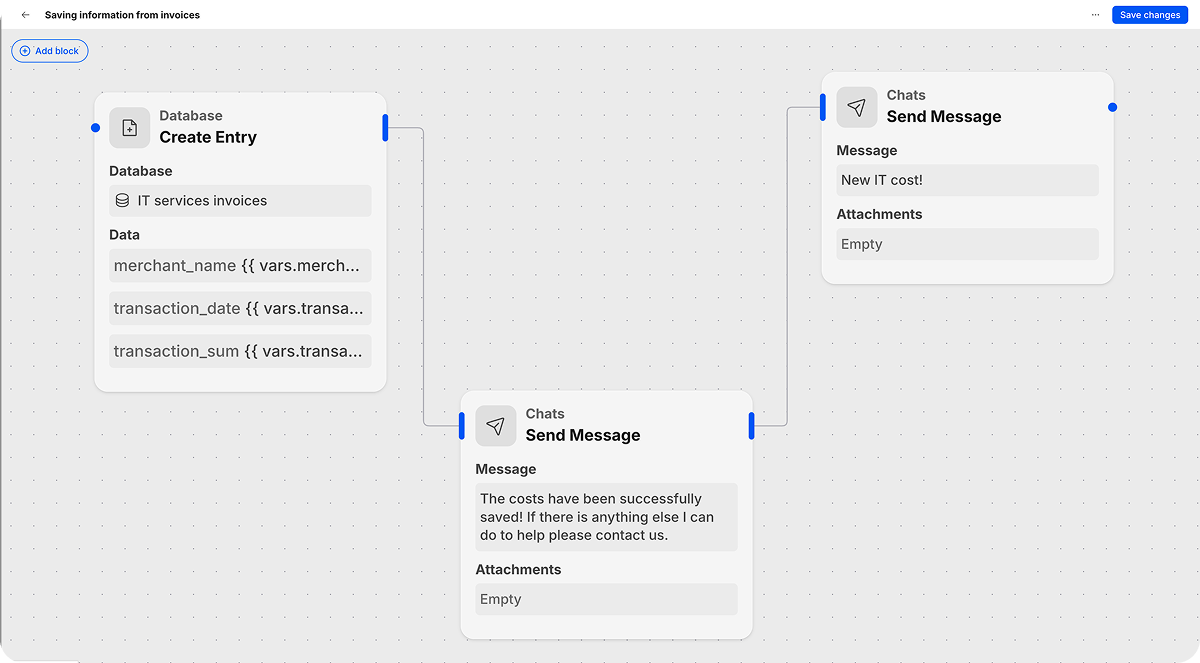
Typical agent roles are becoming formalized. A planner agent decomposes tasks. A researcher agent gathers information. An implementer agent creates content or executes actions through external systems. A critic agent reviews outputs for quality and accuracy. A routing agent decides which specialized agent gets a job. On the human side, roles include subject-matter experts, compliance officers, content owners, and a new function: the agent orchestrator, a person who designs, tunes, and supervises how collaborative agents work together.
Designing Human Approval Gates in Multi-Agent Workflows
Embedding human checkpoints follows three tactical patterns: pre-flight approval (reviewing the plan before agents execute), mid-flight sign-off on high-risk steps (human approves before a critical agent produces its output), and post-flight sampling audits (reviewing a random selection of completed workflows for quality).
In financial services, any credit decision above a certain threshold gets human approval before the agent's output is finalized. In pharma, legal review is mandatory for any agent-generated medical content. For contract workflows, a human legal reviewer signs off before any agreement goes out. These are not theoretical-they are production patterns in use today.
The UX matters enormously. Human reviewers need concise summaries of what the agent proposes, risk or confidence scores, and clear explanations of why the system reached a particular decision. Without these, human oversight becomes a rubber-stamp exercise. Best practice is to start with strong controls, then gradually reduce them for low-risk workflows as confidence in agent performance grows, while keeping robust gates for regulated areas and conflict resolution scenarios.
Aligning Agent Roles with Team Structures
Mapping existing team responsibilities to agent roles helps organizations adopt orchestration without disrupting workflows. A human product marketer might be paired with a research agent and a content agent. A human analyst works alongside a technical analysis agent. The agent ecosystem should mirror the org chart, not replace it.
Documenting and naming agent roles clearly ensures employees understand who does what within an agent system. When agents interact with human teams, transparency is non-negotiable. People need to know when they are reviewing an agent's work versus a colleague's, and what authority they have to override.
A growing trend is the emergence of "agent managers" or "agent bosses" as new job functions. These roles focus less on model training and more on orchestration tuning, governance, risk management, and data integration across agent workflows. Organizations are even creating RACI-style matrices that include agents as entities in process flows, so accountability is clear even when other agents handle intermediate steps and independent ai agents execute specific tasks.
Technical Foundations and Infrastructure Trends for Orchestrated AI Systems
Robust infrastructure is now a prerequisite for scaling ai agent orchestration beyond prototypes, especially when orchestrating multiple agents across departments. Without low-latency data access, shared memory, and reliable messaging, agent systems become slow, inconsistent, and impossible to debug.
By mid-2025, many production systems rely on in-memory data platforms, vector databases, and event streams to serve agent context and state in milliseconds. The infrastructure choices you make directly impact cost, speed, reliability, and observability for every agent in your system. Getting this wrong means your orchestration framework will buckle under real-world load.
Shared Memory, Context Stores, and Vector Retrieval
Orchestrated ai agents need shared context: conversation history, prior decisions, domain knowledge, user profiles. The trend is toward unified memory layers that combine structured data, unstructured documents, and vector embeddings for semantic retrieval. RAG pipelines feed this context into agents so they can reason with relevant, up-to-date information.
Fast context retrieval-sub-10ms to sub-100ms latency-enables real-time coordination among specialized agents. Consider a customer support agent system: when a customer calls back about an unresolved issue, a support agent retrieves past ticket context through vector search, while a billing agent simultaneously pulls payment history. Without fast shared memory, these agents operate blind.
Common patterns include short-term session memory for the current conversation, long-term profile memory for user preferences and company policies, and episodic memory for past workflows like previous campaign results or resolved incidents. These tiers ensure agents have the right level of context without overloading their input windows.
Messaging, Event Streams, and Orchestrator State Management
Orchestrator agents rely on message queues and event streams to dispatch tasks, receive results, and track workflow state. The typical architecture looks like a microservices system: the orchestrator writes events to a stream, worker agents consume tasks from queues, and results plus telemetry are logged back for audit and optimization.
Idempotency, retries, and dead-letter queues are essential in multi-agent workflows. When one agent fails mid-workflow, the system needs to handle that failure gracefully-retrying without duplicating work, routing to fallback agents, or alerting humans. Without these patterns, failure modes cascade unpredictably.
Observability ties directly into this layer. Logging, tracing, and per-agent metrics feed dashboards for SRE and MLops teams. They monitor agent interactions, track latency per step, measure cost per workflow, and catch drift or degradation before it impacts end users. Treating agent operations with the same rigor as production microservices is no longer optional.
Security, Permissions, and Cross-Department Data Access
As agents touch more systems-CRMs, HR platforms, ERPs, legal document stores-fine-grained permissions become critical. The trend is toward per-agent service accounts or API keys, scoped permissions for each tool and database, and centralized policy enforcement with comprehensive audit logs.
Cross-department context is powerful but risky. Orchestrated agents perform best when they can access data across marketing, sales, operations, and IT. But they must respect privacy and regulatory boundaries like GDPR and HIPAA. Standards like the model context protocol help enforce permissions when connecting external tools into enterprise data, though security vulnerabilities have already been discovered in some MCP implementations, underscoring the need for careful security engineering.
The common design pattern is defense in depth: per-agent scopes, per-tool access controls, policy engines enforcing attribute-based or role-based access, and audit trails that record every data access. Without this, a single ai agent with overly broad permissions becomes a significant risk vector.
Agent Orchestration Challenges and How Organizations Are Addressing Them
Agent orchestration challenges are real and persistent. As of 2025–2026, many organizations have working pilots but struggle to scale multi agent systems safely, predictably, and cost-effectively. This section is a pragmatic look at the friction points and how teams are addressing them.
Reliability, Drift, and Unexpected Agent Behavior
When multiple agents collaborate, compounding errors become a serious risk. If a research agent hallucinates a statistic, that fabricated number flows through the drafting agent, past the reviewer, and into the final report. One agent's mistake cascades through the entire workflow.
Organizations mitigate this through redundancy-two agents performing the same task and cross-checking results-critic or reviewer agents that validate outputs, guardrail models that filter dangerous or incorrect content, and policy filters that catch known failure modes. In a financial reporting workflow, for example, numbers from agents must reconcile against source systems like a data warehouse. If figures don't match, the workflow halts and alerts a human.
Monitoring for model drift is equally important. When underlying LLMs change or data distributions shift, agent behavior changes too. Teams are building regression tests for end-to-end multi-agent flows, not just testing individual prompts. This is a significant investment, but without it, you cannot trust that your agent system will behave the same way tomorrow as it does today.
Cost, Latency, and Resource Optimization
Naive multi agent orchestration can explode token usage and increase latency if too many agents are invoked for every request. Every additional agent adds cost and time. Without thoughtful design, you end up paying for agent capabilities you do not need on most requests.
Emerging optimization practices include conditional routing-only calling specialized agents when the situation demands it-caching intermediate results so agents do not repeat work, and using smaller, cheaper models for low-risk tasks while reserving larger models for complex problems. One team reduced their workflow from eight potential agents to four by merging overlapping roles and adding conditional logic that skips certain agents when they are not needed.
Organizations increasingly define SLOs for both latency and spend, with cost dashboards tracking spend per workflow and per agent invocation. This is standard practice in agent operations for teams running production workloads. The trade-off between model size, accuracy, and cost is continuous and requires ongoing tuning.
Skills Gaps, Governance, and Organizational Change
Many enterprises recognize that orchestrating multiple agents is not a purely technical problem. It requires process design, domain knowledge, change management, and cultural shifts. There is a meaningful shortage of practitioners who understand both enterprise process design and technical agent orchestration patterns.
New roles are emerging to fill the gap: AI product owners who define what agent workflows should accomplish, agent orchestrators who design and tune the multi agent coordination logic, and AI operations leads who bridge IT, data, and business teams. These roles are less about model training and more about governance, orchestration flow design, and performance metrics.
Governance is essential to avoid what some teams call "agent sprawl"-shadow deployments of independent ai agents that nobody centrally monitors. Organizations are forming governance councils, writing playbooks, and defining centrally managed risk thresholds and compliance standards. The practical advice is consistent: start with one cross-functional workflow, document responsibilities, define what happens when an agent fails, roll out training for business users working with the system, and expand from there. Change management interviews consistently show that leadership support and transparency are the biggest predictors of successful adoption.
Looking Ahead: The Future of AI Agent Orchestration
Agent orchestration trends point toward more autonomous, interconnected, and governed ai systems over the next three to five years. The trajectory is clear, even if the pace varies by industry and organization.
Expect growing convergence between workflow tools, LLM platforms, and observability stacks into unified orchestration layers. Rather than stitching together disparate tools, vendors will offer agent orchestration platforms that provide built-in logging, context stores, model routing, governance controls, and monitoring in a single, integrated environment. This will lower the barrier to entry and reduce the coordination overhead that plagues current deployments.
This convergence isn't only a forecast - it's already how platforms like BridgeApp are built. Instead of a company assembling a workflow tool, a vector database, an event bus, and a permissions layer separately, BridgeApp packages them as one environment: agents are built from prompts, variables, connected knowledge, and no-code flows, and they run inside the same workspace as the company's chats, tasks, documents, and databases - so an agent's shared memory isn't a separate system to wire up, it's the same task, document, or record a human teammate would already be looking at. Two of the concrete examples earlier in this guide - a billing agent, a specialized triage agent - are close cousins of agents already running this way in production: a finance agent that processes payment requests from a chat, a contact-extraction agent that populates a CRM database straight from a scanned card. Governance follows the same pattern this guide describes for approval gates: tool access resolves through a centralized, audited layer, so admins grant permissions rather than agents accumulating them by convention.
This is what an orchestration layer means in practice: not a single super-agent, but the infrastructure - memory, governance, model routing, observability - that lets many specialized agents, human and AI, work inside the same system of record instead of a patchwork of point tools bolted together after the fact.
Agent specialization will deepen. Domain-tuned models for legal, healthcare, engineering, and finance will become more common, along with richer tool ecosystems. Agents will integrate more seamlessly with existing enterprise software like CRMs, ERPs, and ticketing systems. This data integration will be standard rather than requiring custom work for every organization.
By around 2028–2030, a significant portion of routine digital workflows in large enterprises-onboarding, expense processing, routine compliance reporting, vendor risk management-will be executed by orchestrated agent teams with humans supervising. Humans will focus less on transaction work and more on oversight, policy, agent training, and tuning. The group chat pattern, where agents coordinate in real-time alongside human participants, may become a common interface for complex workflows that need both machine speed and human judgment.
The risks are as real as the opportunities. Organizations that build strong data foundations, invest in governance, define clear use cases, and iterate will have first-mover advantage. Those who ignore security, privacy, auditability, and cost controls may face failures and reputational damage.
The practical path forward is a phased strategy. Start small with a single high-impact workflow. Choose your orchestration patterns deliberately based on your process requirements. Invest early in shared memory, context stores, and policy engines. Monitor outcomes rigorously. Build human oversight into the design from day one, not as an afterthought.
Mastering AI agent orchestration is no longer optional. It is becoming the defining capability separating enterprises that successfully scale AI from those stuck in perpetual pilot mode. The organizations that manage agents well-governing how their agents coordinate, ensuring reliability, and keeping humans meaningfully in command-will be the ones that capture the full value of this technology.